Shelter Learniverse and Industry-Wide Calendar

Author: Elise Winn

  • Veterinary Care in Shelters: Who Can Legally Do What?

    Veterinary Care in Shelters: Who Can Legally Do What?

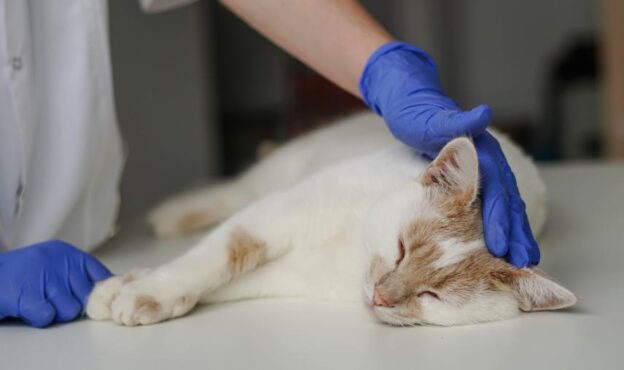
    When it comes to veterinary care in animal shelters, it’s crucial to make sure the right person does the right job—and the right person doesn’t always have to be a DVM or RVT! Amid staff shortages and other challenges, it’s more important than ever to recognize the potential of every team member, including front office staff, field officers, kennel attendants, volunteers, and fosters.

    Is your shelter fully leveraging the veterinary care capabilities of your entire team? Take this quiz to find out:

    • Can vaccines be administered during hold periods?
    • Who can give a Rabies vaccine, and under what type of supervision?
    • If you don’t have a veterinarian on-site, can you use standing protocols?
    • Are microchipping and administering snap tests considered the practice of veterinary medicine, or can any team member do these tasks?
    • Can an RVT perform emergency procedures on an animal?
    • Can an RVT or unlicensed veterinary assistant prepare animals for spay and/or neuter surgeries on pets who are to be adopted out? Which, if any, tasks involved can only be done by an RVT or DVM?

    If you’re not sure of the answers, this one-hour webinar is for you!

    On February 7 at 10 a.m. PT, join Bruce Wagman, Lead Counsel for San Francisco SPCA’s Shelter Policy and Legal Services (Shelter PALS), to clear up confusion around what must be done by a DVM or RVT and what other team members and volunteers can—and can’t—do.

    You’ll leave with a clearer understanding of which shelter tasks which team members can perform, from intake-related care and running diagnostics to providing treatment, surgery, euthanasia, public veterinary services and emergency care.

    After this webinar, you’ll be ready to maximize your shelter’s options for providing veterinary care while adhering to law and practice act requirements.

    Register now and bring your questions for the Q&A!

  • Kick Off the Year With Open Arms and $420,000 in Grant Prizes

    Kick Off the Year With Open Arms and $420,000 in Grant Prizes

    Pilot new approaches that open doors to new adopters and volunteers…and get a grant for doing it! Along with 21 national organizations, California for All Animals is inviting you to kick off the new year by joining the 2023 Open Arms Challenge. This Challenge is all about spending the month of April introducing more accessible, equitable, and inclusive policies, marketing, partnerships and customer service. PLUS, there’s $420,000 in grant prizes available, and your shelter could qualify for a grant of up to $10,000.

    What could your organization do in just 30 days? What could we all do together in 30 days? The possibilities are endless, and the impacts are measurable—and powerful. These month-long pilots prove you can start small to achieve big wins for pets and people in your community, as 2022 Open Arms Challengers like Animal Rescue League of Berks County can attest.

    Animal Rescue League of Berks County translated newsletter

    The Challenge gave ARL the perfect opportunity to explore new ways to connect more potential adopters to animals waiting for homes. They teamed up with their local Penn State University branch Spanish classes to bust language barriers and translate shelter communications, including newsletters and adoption-related materials.

    The result? More languages led to more love for animals who needed homes and for the families who adopted them. With the spark of a single partnership, ARL created a more welcoming and inclusive culture, enhanced customer service and customer success, and made their adoption process more inviting and equitable.

    “The bilingual signage incorporated around our building, the accessible website information, and our bilingual adoption paperwork made it possible for Spanish speakers such as Rafaela to have a smooth adoption experience,” notes Gen, ARL Adoption Counselor. “Upon arriving at our shelter, she was able to easily check-in online, complete an adoption profile, meet the animals she was interested in, and finally, adopt a dog, all in her native language. She was overjoyed to get to take her new companion home without feeling uncomfortable due to language barriers and can look back on her experience with a positive perspective.”

    The approach will be different for every organization, but the spirit and goals are the same: increase inclusivity and provide a welcoming environment for all staff (paid and unpaid) and community members; and keep pets in the arms of the people who love them when possible. Challenge activities can be as simple as returning voicemails in a timely manner, providing literature in multiple languages or completely rewriting or doing away with the adoption application, to undertaking bias training or choosing new neighborhoods for adoption events. Read about other Challengers’ translation transformations.

    Get ready, California! Register January 23–30 to join organizations across the country in this 30-day challenge.

  • New Course Covers Community Cat Program Dos and Don’ts

    New Course Covers Community Cat Program Dos and Don’ts

    Whether you’re curious about implementing a community cat program or already have one at your shelter that you’d like to improve, Community Cat Programs Legal Considerations, the latest course in the Maddie’s® Million Pet Challenge Shelter PALS Legal Series, has you covered.

    Community cat programs provide significant benefit to cats, community members, and shelters—there’s a reason Return to Field, which we now call Return to Home, was one of the five key initiatives of the Million Cat Challenge, helping shelters save over four million cats to date! Despite widespread support and documented success of these programs, questions about the legality of sterilizing, vaccinating, and returning unowned, healthy free-roaming cats to their homes can arise.

    In this short, Maddie’s® Million Pet Challenge Learniverse self-paced, on-demand training module (SPOT mod), Bruce Wagman, Lead Counsel for San Francisco SPCA’s Shelter Policy and Legal Services (Shelter PALS) program, explores what community cat programs (CCPs) are, explains why CCPs are needed, and describes how effective CCPs operate within legal considerations.

    You’ll learn how your shelter can address cat overpopulation and help cats thrive where they are by implementing humane, life-saving, evidence-based community cat programs, and you’ll leave with a list of important dos and don’ts surrounding:

    • Cat Eligibility
    • Intake Procedures and Flow Through the Shelter
    • Returning Cats to Their Outdoor Home
    • Program Data Collection
    • Engaging Shelter Staff and Gaining Community Support

    This course has been approved for 1.0 unit of CE by CAWA, NACA and RACE.

    Click to Start Learning

    Other courses in the Maddie’s® Million Pet Challenge Shelter PALS Legal Series

    Animal Intake Requirements and Holding Periods Legal Considerations

    Finder Foster Legal Considerations

    Learn more about the Maddie’s®️ Million Pet Challenge Learniverse.  


  • Help Big Dogs Through Tough Times (and Get Your 2022 CE)

    Help Big Dogs Through Tough Times (and Get Your 2022 CE)

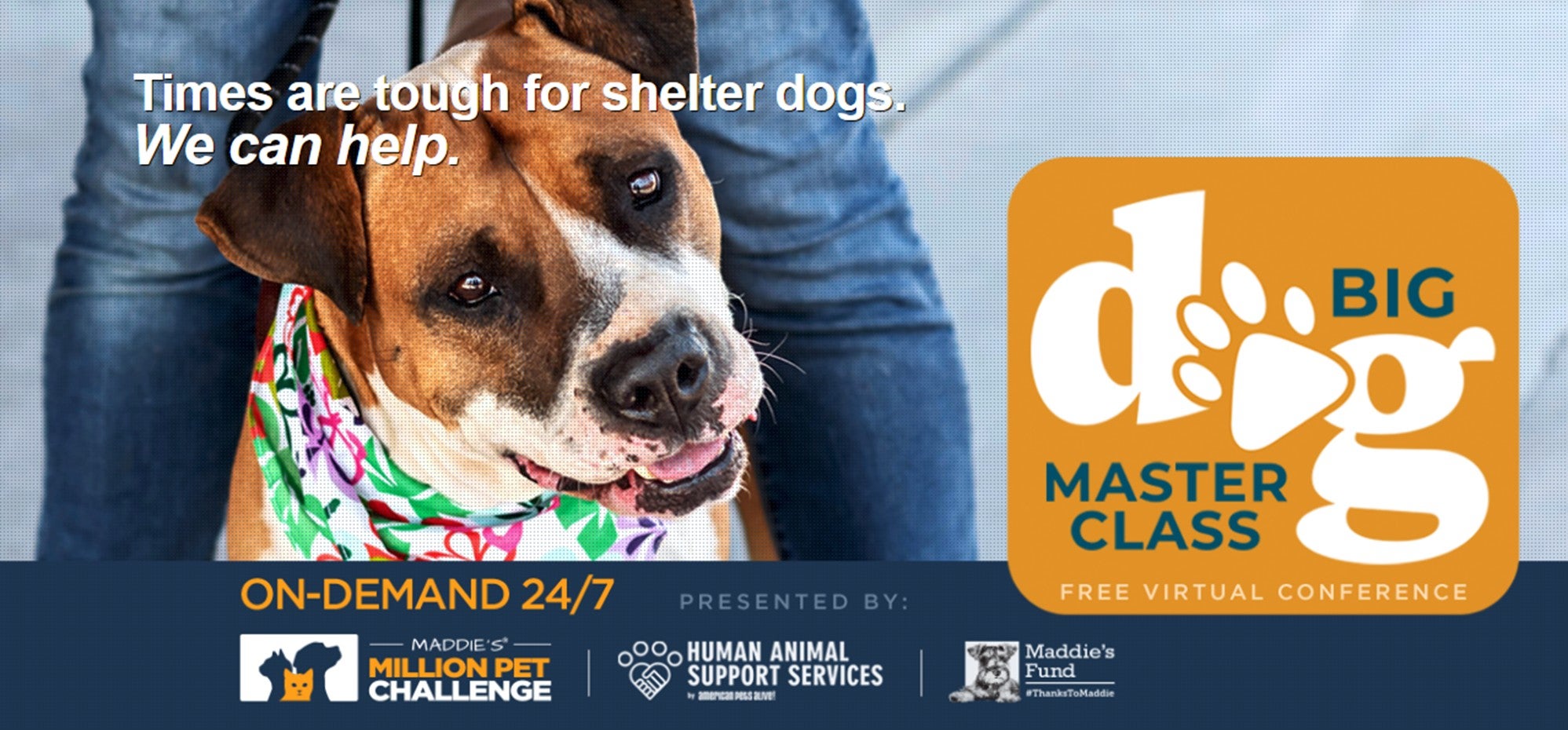
    With shelter dog populations exceeding pre-pandemic levels, outcomes slowing, transport destinations drying up, and historic levels of staffing turnover, shelters are struggling with medium and large dogs. Everybody is asking, “What do we do?”

    Just in time for end-of-year CE, the Big Dog Master Class online conference is now available free and on-demand at Maddie’s® University to help staff at all levels better manage big dog populations.

    Based on 5 Components of Big Dog Management:

    • Ensuring Public Safety
    • Intake Management
    • Maximizing Live Outcomes
    • Providing Humane Care
    • Cost-efficiency

    14 info-packed short sessions to explore at your own pace and learn how to maximize organizational efficiencies, utilize technologies, build proven programs, and implement transparent, effective policies

    We brought the nation’s top experts together – among them veterinarians, epidemiologists, veterinary behaviorists, shelter directors, trainers, and national leaders – to give you actionable programs that don’t require special skills or breaking the bank to make positive changes.


    Watch Big Dog Master Class Sessions

    This free, on-demand, virtual conference opportunity is made possible by support from Maddie’s Fund® and organized by the Maddie’s® Million Pet Challenge and Human Animal Support Services, and is approved for 8 hours of CE credit by RACE, NACA, and CAWA. 


    Learn More About the Maddie’s Million Pet Challenge


    image

    Learn More About Human Animal Support Services

    The Human Animal Support Services project is an international, collaborative effort of more than 2,100 animal shelters and 11,000 animal welfare professionals who are working together to keep pets with their families and reimagine animal services to better support their communities.


    image


    Big Dog Master Class On Demand from Maddie's Million Pet Challenge

  • Get Clear on the Ins and Outs of Intake and Holding Periods

    Get Clear on the Ins and Outs of Intake and Holding Periods

    Is the legal hold period for stray animals three days or six days?

    Can you count the day of impoundment?

    What if the shelter isn’t open that day?

    If you have questions like these, you’re not alone. Knowing which animals should enter the shelter and how long they must stay is crucial to prioritizing intake of the animals who truly need to be at your shelter; it’s just as crucial to minimizing length of stay and getting those animals to their right outcome as quickly as possible. For clarity around intake and holding periods, check out the newest Maddie’s® Million Pet Challenge Learniverse SPOT mod (self-paced online training module), Animal Intake Requirements and Holding Periods – Legal Considerations, developed in collaboration with San Francisco SPCA’s Shelter Policy and Legal Services (Shelter PALS).

    Shelter PALS Lead Counsel Bruce Wagman reviews the laws that shape intake and holding periods for animals in shelters in the state of California, but the basic concepts and discussion points will apply to all states. You’ll learn the California-specific state mandates and requirements surrounding intake, exceptions surrounding holding periods, and how to determine holding periods in various situations. And if you’re not in California, you can use this information to guide you in what to research in your own state.

    This course was adapted from a webinar by Bruce Wagman, Lead Counsel for the San Francisco SPCA’s Shelter Policy and Legal Services (Shelter PALS) program and hosted by the California Animal Welfare Association (CalAnimals). The country’s first and only legal aid organization dedicated exclusively to the needs of animal shelters, Shelter PALS leverages the expertise of the best minds in animal welfare and channels significant legal aid to animal shelters.

    The specific information in this course is applicable to and based on considerations of California state law, subject to modifications necessitated by state or local laws. Shelters in other states are encouraged to check their state, county, city, and local laws to determine intake and holding procedures.

    This short course has been approved for 1.0 Certified Animal Welfare Administrator (CAWA) continuing education credits by The Association for Animal Welfare Advancement (AAWA) and by National Animal Care and Control Association (NACA), as well as 1 hour of continuing education credit in jurisdictions that recognize RACE approval.

    Learn more about the Maddie’s®️ Million Pet Challenge Learniverse, an interactive, online learning community found at the intersection of Knowing and Doing. Hosted by a team of animal welfare’s leading experts, it is a space to question, test, and implement innovations in the pursuit of continuous discovery and improvement in animal sheltering. #ThankstoMaddie, Animal Intake Requirements and Holding Periods and other SPOT mods, along with cohort-style, coach-led Bootcamps, are available at no cost.

    Enroll now

  • How Your Team Can Tap into the Power of Yes to Send More Animals Home

    How Your Team Can Tap into the Power of Yes to Send More Animals Home

    If you’ve tried everything you can think of to connect with your community, reduced barriers to fostering and adoption, and still animals are sitting in your shelter, you may catch yourself feeling powerless to increase positive outcomes, but you do have the opportunity to make a difference, and it starts with one simple word: Yes! Yes to going further to simplify your adoption process; yes to partnering with the community and engaging in deep listening; and yes to mitigating bias and working to make your communications and materials more inclusive, welcoming, and accessible.

    In last week’s Maddie’s Million Pet Challenge webinar, The Power of Yes, California for All Animals State Director Allison Cardona invited us to dig into what might be keeping people who want to foster or adopt from coming to the shelter, and she outlined how we can use these three impactful and untapped practices to encourage engagement across our communities and send more animals home. If you missed this thought-provoking, tip-filled webinar, you can catch the recording here and continue the conversation at Maddie’s Pet Form.

    Want to engage more deeply with your staff and start a discussion around how you can lean into the power of these practices at your shelter? Enroll as a team in the short, self-paced online training module (SPOT mod) The Power of Yes! Removing Barriers to Adoption in the Maddie’s Million Pet Challenge Learniverse. While 70% of US households have a pet, only a fraction of those animals are adopted from animal shelters. This new course looks at barriers that typically push potential adopters away from animal shelters and towards other options. In addition to examining adoption barriers and the misconceptions that help them persist, you’ll look at strategies that can lower these hurdles, help more animals reach a live outcome and a happy life, and help your shelter embrace and welcome all members of your community.

    The webinar recording has been pre-approved for 1.0 Certified Animal Welfare Administrator continuing education credits by The Association for Animal Welfare Advancement and by the National Animal Care & Control Association. The self-paced course has been approved for 1.0 Certified Animal Welfare Administrator (CAWA) continuing education credits by The Association for Animal Welfare Advancement and by National Animal Care and Control Association and for 1 hour of continuing education credit until November 7, 2024 in jurisdictions that recognize RACE approval.

    Learn more about the Maddie’s®️ Million Pet Challenge Learniverse, an interactive, online learning community found at the intersection of Knowing and Doing. Hosted by a team of animal welfare’s leading experts, it is a space to question, test, and implement innovations in the pursuit of continuous discovery and improvement in animal sheltering. #ThankstoMaddie, The Power of Yes! and other SPOT mods, along with cohort-style, coach-led Bootcamps, are available at no cost.


    Watch the webcast


    Enroll in the course

  • New Course Helps Keep Animals on Track to the Right Outcome

    New Course Helps Keep Animals on Track to the Right Outcome

    Our goal for every animal in need is to get them as quickly as possible to the right outcome, whether that involves a trip to the shelter or assistance in the community. This could look like sterilizing, vaccinating, and returning a cat to their neighborhood home; reuniting a dog with their family; or helping a foster kitten make the move to their new family. The Right Outcome, the capstone course in the Maddie’s® Million Pet Challenge Learniverse Four Rights series, is here to help you match each animal with the outcome that is right for them and make a plan to achieve it.

    Click “Course Home Page” Button below to take this course hosted on
    Maddie’s®️ University.


    First, you’ll learn how weigh all possible outcomes to identify the right one—the outcome that best supports the well-being of animals, honors the connections between humans and pets, stabilizes communities, and maintains public health and safety.

    Subject matter experts from the UC Davis Koret Shelter Medicine Program will outline the most important Return to Home principles that enable us to get animals back to the homes they already have and lead you through identifying and removing barriers that can work against reunification efforts or make it harder for animals who need new homes to find them.

    Finally, you’ll learn strategies for avoiding decision fatigue and promoting team clarity and consensus, so that you can make decisions with more confidence, compassion, and empathy, including determining when the right outcome for an animal is humane euthanasia to relieve suffering.

    This short, self-paced online training module (SPOT mod) has been approved for 2.0 Certified Animal Welfare Administrator (CAWA) continuing education credits by The Association for Animal Welfare Advancement (AAWA) and by National Animal Care and Control Association, as well as two hours of continuing education credit until October 20, 2024 in jurisdictions that recognize RACE approval.

    Right Outcome is the final course in a self-paced series that explores each of the Four Rights, an evolution of the Million Cat Challenge’s Five Key Initiatives and the foundation of Maddie’s® Million Pet Challenge. Within the Four Rights, every element works in concert to support one another: animals and people are treated as individuals, empowering shelter staff to make the best decisions for everyone; community safety net services are in place and flourishing; and humane care within the shelter is provided, with appropriate outcomes for the animals that do come in, allowing shelters to deliver the Right Care, in the Right Place, at the Right Time, to the Right Outcome.

    Enroll today for free #ThankstoMaddie! The Right Place, The Right Time, The Right Care and other SPOT mods, along with cohort-style, coach-led Bootcamps, are available in the Maddie’s® Million Pet Learniverse at no cost.

    Do you have comments, questions, or ideas related to the Four Rights? Join the discussion on Maddie’s Pet Forum.

  • Boost Animal and Staff Well-being with the Right Care

    Boost Animal and Staff Well-being with the Right Care

    You know the Five Freedoms of Animal Welfare, but how do they differ from the Five Domains? How could an approach to care that also acknowledges Five Freedoms for people strengthen our teams and help them provide the “Right Care” for animals in our shelters and communities? The Right Care, the latest free course from the Maddie’s®️ Million Pet Challenge Learniverse, answers these questions and more, while breaking down the fundamentals of matching community need to community capacity and shelter services so that all animals receive the care that is right for them—and care and wellness for staff is prioritized too.

    In this Self-Paced Online Training Module (SPOT Mod), subject matter experts from the UC Davis Koret Shelter Medicine Program offer tactics for working within your capacity for care in the face of unprecedented staffing challenges so that you can provide the Right Care, ensuring animals are not left in dangerous circumstances to cause harm, suffer, or die because the shelter can’t admit them; nor are they are admitted to a crowded shelter.

    You’ll be guided through the ins and outs of Right Care inside and outside the shelter, including five integrated components needed for right care within the shelter: right-sizing the population, right housing, right staffing, right medical and emotional care, and right care for people. Facility Design Veterinarian Dr. Denae Wagner will walk you through the principles of humane housing for dogs and cats, plus you’ll learn how working within your shelter capacity can grow your capacity to extend Right Care beyond shelter walls, meaning not only safety, health, and well-being for animals and staff, but also access to care for pets and families in the community and the opportunity to plan, create, communicate, and sustain programs to provide care where it is needed, helping pets succeed in homes and preventing animals from unnecessarily entering the shelter.

    Enroll today and discover a holistic approach to Right Care, with strategies that build staff well-being, maximize your capacity to care for animals, and allow animals and people at your shelter to thrive.

    This short course has been approved for 2.0 Certified Animal Welfare Administrator (CAWA) continuing education credits by The Association for Animal Welfare Advancement (AAWA) and National Animal Care and Control Association (NACA); it has also been approved for 2.0 units of RACE credit.

    Right Care is the third course in a self-paced series that explores each of the Four Rights, an evolution of the Million Cat Challenge’s Five Key Initiatives and the foundation of Maddie’s® Million Pet Challenge. Within the Four Rights, every element works in concert to support one another: animals and people are treated as individuals, empowering shelter staff to make the best decisions for everyone; community safety net services are in place and flourishing; and humane care within the shelter is provided, with appropriate outcomes for the animals that do come in, allowing shelters to deliver the Right Care, in the Right Place, at the Right Time, to the Right Outcome.

    Join us in the Maddie’s®️ Million Pet Challenge Learniverse, an interactive, online learning community found at the intersection of Knowing and Doing. Hosted by a team of animal welfare’s leading experts, it is a space to question, test, and implement innovations in the pursuit of continuous discovery and improvement in animal sheltering. #ThankstoMaddie, Right Place and other SPOT mods, along with cohort-style, coach-led Bootcamps, are available at no cost.

    Do you have comments, questions, or ideas related to the Four Rights? Join the discussion on Maddie’s Pet Forum!


    Enroll now

  • ‘Sniptember’ Grant Blitz Aims to Cut Barriers and Boost Access to Spay/Neuter in California

    ‘Sniptember’ Grant Blitz Aims to Cut Barriers and Boost Access to Spay/Neuter in California

    So far already in September, Californians have worked together to conserve energy in the face of historic heat, record-breaking demand and strained grid capacity; California for All Animals’ latest grant cycle asks, What might we accomplish together through ‘Sniptember’? The 30-day spay/neuter grant blitz runs September 15 through October 15, and we invite you to submit proposals and join with your partner organizations to tackle another shared challenge—increasing spay/neuter capacity across the state.

    Through the Spring 2022 Open Grant cycle, California for All Animals awarded over 6 million dollars in funding to California animal shelters to help you provide the care and services that strengthen the bonds and remove the barriers between pets in your community and the people who care for them. Inside and outside the shelter, spay/neuter is one of many interconnected components that builds the health and well-being of pets and communities, and we know that barriers to access for pet owners, not race or ethnicity, are the primary determinants of companion animal spay/neuter rates. As will be the case for the entirety of this program, initiatives that expand access to spay and neuter are crucial. RFPs will be accepted from September 15 – October 15, 2022. Applicants will be notified via email by November 15, 2022.

    Who is eligible to apply?

    Municipal animal shelters, private animal shelters with municipal contracts, and private shelters are eligible to respond to this RFP. A shelter is defined as a brick-and-mortar facility that houses animals on-site and is open to the public a minimum of fifteen hours per week. The goal of this RFP is to increase capacity of spay/neuter services in animal shelters above and beyond what currently exists.

    Veterinary clinics and spay/neuter organizations without a brick and mortar intake facility are encouraged to partner with animal shelters on proposals. The shelter would act as the recipient of the funding and then contract with the spay/neuter organization for services. If you need help partnering with a shelter(s) in your region, don’t hesitate to reach out to us at grants@californiaforallanimals.comand we’ll connect you.

    What might a proposal look like?

    The funding priority for this grant cycle is to increase capacity for spay/neuter services for animal shelters, which is defined as spay/neuter of animals in the shelter, referred by field services and those at risk of ending up in the shelter; for example, pet owners experiencing homelessness, pet owners residing in zip codes of high intake, and priority community animals. Operational costs associated with increasing capacity should be included in the proposal.

    Examples of funding requests include but are not limited to:

    • Increase regional capacity for spay/neuter by offering services to another shelter(s).
    • Utilization of existing facilities on days when surgeries are not being performed to increase spay/neuter for the shelter or community. This can be in collaboration with another shelter or spay/neuter organization.
    • Increase capacity to train veterinarians on High Quality High Volume spay/neuter (HQHVSN), with a priority on supporting veterinarians currently practicing in shelters or low cost spay/neuter clinics or with a commitment to do so in the short term.
    • Increase non-veterinary support staff to optimize veterinary staff use.
    • Sponsorship of work visas and associated costs for international veterinarians to increase spay/neuter veterinary staffing and services.
    • Initiatives to recruit and train veterinarians not currently participating in the workforce or support transition from other areas of practice to HQHVSN.

    Where do I apply, and how can I learn more?

    We know you’re busy, so we’ve made the application process simple. For more information, visit California for All Animals. If you’d like to be notified when the grant portal opens on September 15, subscribe to the California for All Animals Newsletter.

  • Time’s on Your Side in a New Course from Maddie’s®️ Million Pet Challenge

    Time’s on Your Side in a New Course from Maddie’s®️ Million Pet Challenge

    If you’re seeing length of stay trending upward and adoptions slowing, it can be easy to feel overwhelmed and maybe lose sight of the many factors that we can control, which is why it’s so important to take stock of all the tools we have at our disposal to reduce bottlenecks and move animals as quickly as possible to positive outcomes. If you’re feeling challenged by the current climate, it’s the perfect time to check out Right Time, the newest Self-Paced Online Training module (SPOT mod) from the Maddie’s®️ Million Pet Challenge Learniverse.

    The Right Time has two dimensions, and you’ll learn how to work successfully within both: There’s the right time for an animal to come into the shelter (which could be immediately, at a scheduled time in the future, or, for animals who are best served where they are, maybe never), and then there are right times within the shelter, which include setting open hours and offering services by appointment, as well as managing animals in care through pathway planning, hold periods, and daily population management rounds, all components critical to keeping animals moving efficiently to appropriate outcomes.

    Subject matter experts from the UC Davis Koret Shelter Medicine Program will discuss strategies for streamlining tasks, reducing length of stay, capturing lost resources, and making the most of the resources you have, all while balancing community need, animal and human welfare and shelter capacity. You’ll learn about interventions you can make at your shelter to lead animals to the right outcome in the right time, and you’ll see how other animal shelters have successfully made changes to improve services in their communities.

    This short course has been approved for 2.0 Certified Animal Welfare Administrator (CAWA) continuing education credits by The Association for Animal Welfare Advancement (AAWA) and the National Animal Care and Control Association (NACA); it has also been approved for 2.0 units of RACE credit.

    Right Time is the second course in a self-paced series that will explore each of the Four Rights, an evolution of the Million Cat Challenge’s Five Key Initiatives and the foundation of Maddie’s® Million Pet Challenge. Within the Four Rights, every element works in concert to support one another: animals and people are treated as individuals, empowering shelter staff to make the best decisions for everyone; community safety net services are in place and flourishing; and humane care within the shelter is provided, with appropriate outcomes for the animals that do come in, allowing shelters to deliver the Right Care, in the Right Place, at the Right Time, to the Right Outcome.

    Whether we’re talking about the hours our shelter is open or the demands on our staff time, the system we build directly impacts the time an animal spends in our shelter. There’s no time like the present to make some improvements in your systems: Enroll today for free! #ThankstoMaddie, Right Time and other SPOT mods, along with cohort-style, coach-led Bootcamps, are available in the Learniverse at no cost.

    Do you have comments, questions, or ideas related to the Four Rights? Join the discussion on Maddie’s Pet Forum.