Shelter Learniverse and Industry-Wide Calendar

Author: Elise Winn

  • Five Essential Webinars for Kitten Season

    Five Essential Webinars for Kitten Season

    The kittens are coming! Are you ready? Depending on where you are, kitten season is here or fast-approaching. It’s a challenging time of the year for young cats and shelters, but the five-part kitten management webinar series from Million Cat Challenge and Royal Canin is here to help you—and the most vulnerable animals in your community—survive and thrive.

    From rethinking kitten intake to recruiting foster volunteers and exploring innovative adoption technology, every webinar is packed with tips and tools from experts in animal sheltering and kitten rescue to guide you step-by-step through providing the best kitten care and maximizing your shelter’s resources. Don’t stress—follow these steps!

    Step 1: Make a plan.
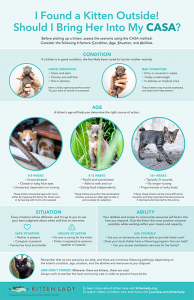
    The best time to plan potential kitten pathways is before that litter of very cute kittens arrives at the shelter. In “Kitten Intake Decisions in Animal Shelters,” KSMP Director Dr. Kate Hurley lays out what kittens really do need from us and identifies the most successful kitten management strategies, and “Kitten Lady” Hannah Shaw explains her CASA method for deciding when to intervene. Reduce decision fatigue and set the stage for positive outcomes with an internal kitten flowchart, so that everyone in your organization is on the same page, and post a community-facing flowchart like Shaw’s on your website. Watch the webinar.

    Step 2: Empower your community to support kittens where they are.

    The best place for young kittens, unless they are sick or injured, is not the shelter: we know kittens have the best chance of survival with Mama Cat as their caretaker. “Support for Kittens in the Field” outlines innovative ways to convey this message to your community and engage well-meaning finders in caring for kittens outside the shelter. Million Cat Challenge Co-founder Dr. Julie Levy talks with Dr. Heather Kennedy (KC Pet Project), Kristen Hassen-Auerbach (Pima Animal Care Center), and Nick Lippincott (Orange County Animal Services) to find out what field officers, volunteers and fosters are doing to give kittens the best chance of survival. Orange County’s Wait ‘Til 8 Program is a great example of how to divert intake and recruit finders through your organization’s website. Watch the webinar.

    Step 3: Build and nurture your foster network.
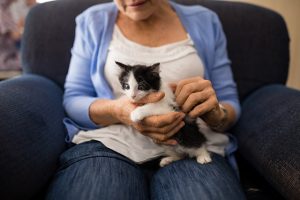
    Kittens who are on a path to adoption are healthiest and happiest in foster homes. For “Foster Greatness” Team Shelter USA’s Dr. Sara Pizano joins Doobert founder Chris Roy, Foster Programs Manager Sarah Aguilar, Community Engagement Coordinator Sarah Cano and others for a rundown of how to recruit, train and onboard volunteers quicker, better and faster. Watch the webinar.

    Step 4: Assess kitten care in your shelter.

    What about when the right place for a kitten is the shelter—how can you provide the best care to the best outcome? In “Kitten Care in the Shelter,” former shelter and emergency veterinarian and KSMP Online Education Coordinator Dr. Cindi Delany delves into pathway planning, wellness, pediatric spay/neuter, and discusses which shelter protocols are impacting flow-through and length-of-stay, which kittens should stay in the shelter and for how long, what you should consider when modernizing your sterilization protocols, and how technology is advancing our shelters by maximizing our efficiency. Watch the webinar.

    Step 5: Move kittens into their forever homes.

    This is what makes kitten season sweet—matching kittens with adopters who can’t wait to take them home! “Going Home” is all about how to use technology to make adoptions faster and easier for shelters of all sizes, while making better matches between pets and adopters. Hear from innovators like AdoptaPet.com’s April Harris, Adoptimize creator Jessica Schleder, Adopets founder Artur Sousa, Pensacola Humane’s Darra Flanagan and Aly Martinez, and Oregon’s Cat Adoption Team Executive Director Karen Green. Watch the webinar.

    Find the full webinar series and many other kitten resources at the Million Cat Challenge website. 

  • On the Bright Side: What’s Working for Shelters Across the Country

    On the Bright Side: What’s Working for Shelters Across the Country

    It’s human nature to overanalyze a problem in an attempt to solve it, but the real key to finding breakthrough solutions and generating positive change is studying successes, not failures. The Bright Spots podcast series is all about celebrating shelter wins and encouraging other shelters to copy—or adapt—what works. In every episode, Dr. Sara Pizano of the Million Cat Challenge and Team Shelter USA speaks with some of the animal sheltering world’s brightest stars about their successes and what other organizations can take away from their experience. 

    Here are just three bright spots among many featured on the podcast:

    Are you ready to shift your mindset? Want to know how these shelters pulled off their transformations? There are eight short and sweet episodes waiting for you!

    Explore The Bright Spots podcast

  • How to Decrease Decibels and Decrease Stress

    How to Decrease Decibels and Decrease Stress

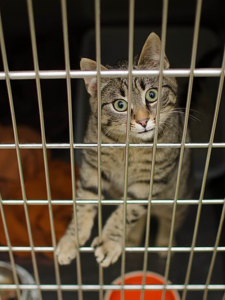
    Close your eyes for a minute. What do you hear? Maybe birds chirping, a gentle breeze rustling leaves, a happy cat purring. Or, more realistically, phones ringing, doors slamming, the clang of dishes being cleaned, trash bins being emptied, and the persistent hum of the people around you. Which soundtrack puts you at ease, and which makes you want to pull your hair out (or, if you’re a cat, squeeze into the corner of your hidebox)? Noise levels affect our mood and well-being, and of course the same is true for shelter animals, with a little added pressure: Eat well, get good sleep, and put your best self forward for potential adopters!

    If we want to improve animals’ health and well-being while they’re in the shelter and give them the best chance at finding a home, we need to think beyond optimizing cages and kennels to optimizing the rest of the shelter environment, and University of British Columbia researcher Bailey Eagan has some helpful tips on where to start. Based on data gathered at the British Columbia SPCA, Bailey and her fellow researchers found cats exhibited more fear behavior when noise levels in the shelter were highest and more maintenance behavior like eating or grooming when sound levels were lowest, and that, overall, sound affects behavior and likely also cat welfare and should be controlled as much as possible. 

    Lower the Volume on a Budget

    Yes, you can decrease decibels on a budget! Follow Bailey’s practical advice below for reducing four common sources of shelter noise.

    1
    2
    3
    4
    1

    Opening and closing doors and cupboards
    Budget fix: Use silicone or felt pads and line doors with weather-stripping tape. Try to keep doors closed when possible, which helps create a noise barrier.

    Splurge: Spring for a commercial door closer. 

    2

    Stainless steel enclosures rattle when opened or closed

    Budget fix: Add Plasti Dip coating to areas where metal meets metal, which can decrease sound by as much as 60 decibels. 

    Splurge: Install a ShorLine Quiet-Closing Latch.

    3

    Cleaning and filling metal food dishes

    Budget fix: Replace metal dishes with rubber-coated dishes or place a towel under the dish.

    4

    Filling and transporting garbage bins

    Budget fix: Place a foam pad between the bottom of the garbage bag and the bin and use a quiet dolly to move bins around.


    Though cats are especially sensitive to environmental stress, minimizing noise levels is good for dogs and humans too. Bailey points out that while hearing damage begins with prolonged exposure to sound measured at 70 decibels for humans and 100 decibels for dogs, noise levels in animal shelters can reach up to 120 decibels.

    For more tips on measuring and minimizing sound in your facility and the importance of preserving some peace and quiet for animals as shelters open back up—and an impactful demonstration of just how loud routine shelter activities can get—watch Bailey’s fascinating presentation to CASCAR, the California Animal Shelter COVID Action Response group (presentation slides available here).

  • San Francisco SPCA Says Veterinary Telemedicine Should Be Here to Stay

    San Francisco SPCA Says Veterinary Telemedicine Should Be Here to Stay

    Last summer California joined other states in temporarily allowing virtual vet visits via phone or videoconference—but only if the pet was already a patient. On May 3 the San Francisco SPCA filed a federal lawsuit challenging restrictions on veterinary telemedicine and aiming to make it possible post-pandemic.

    The lawsuit argues that current limits on telemedicine restrict veterinarians and pet owners’ constitutional right to free speech, as well as a pet’s access to veterinary care.

    “People can use telemedicine for themselves and their children, so why not for their pets?” asked Brandy Kuentzel, General Counsel at the San Francisco SPCA. “Telemedicine can be a vital tool to improve the lives of pets and the people who love them.”

    Read the full press release below.

    [embeddoc url=”https://www.sheltermedportal.com/wp-content/uploads/2021/05/Telemedicine-lawsuit-press-release.pdf” height=”800px” viewer=”google”]
  • No Place Like Home: How Shelters Can Serve Pets and Their People Where They Are

    No Place Like Home: How Shelters Can Serve Pets and Their People Where They Are

    On a recent episode of the Humane Network’s Shelter Success Simplified podcast, the KSMP’s own Dr. Cindi Delany explained what organizations can do to keep animals from coming into shelters in the first place, and why shifting resources to serve animals and their families right where they are—in the community—can lead to better outcomes for all.

    The Humane Network’s key takeaways from the conversation:

    • Time in a shelter is stressful for animals, anything we can do to reduce time spent there is beneficial to the animals. Providing support services to keep pets in homes and making return-to-owner processes easier and friendlier are two examples.

    • Having fewer animals in the shelter reduces the risk of disease transmission and allows you to put more time and resources into helping animals who truly need to be there or need special assistance.

    • The cost of taking in an animal is generally more expensive than helping keep that same animal in their original home, whether it’s providing food, medicine, veterinary treatment, or help with a rental pet deposit.

    • It doesn’t require more resources, instead you are shifting resources from caring for animals in the shelter to helping keep animals with their original families.

    • Start by looking at data to understand what animals are coming in and why.

    Listen to the full episode below and explore the library of other Shelter Success Simplified episodes at Humane Network.

  • New NACA Statement Benefits Cats and Communities

    New NACA Statement Benefits Cats and Communities

    Recently the National Animal Care & Control Association (NACA), a group representing officers responsible for public health and safety, issued a strong statement supporting humane community cat management and trap-neuter-return and advocating for continued community education.

    The statement acknowledges that impoundment of healthy adult cats reduces the likelihood of reuniting families with pets while disproportionately impacting under-served and marginalized communities.

    It is the position of NACA that indiscriminate pick up or admission of healthy, free-roaming cats, regardless of temperament, for any purpose other than TNR/SNR, fails to serve commonly held goals of community animal management and protection programs and, as such, is a misuse of time and public funds and should be avoided.

    Animal Control Intake of Free-Roaming Cats

    Download and read the full statement below.

    [embeddoc url=”https://www.sheltermedportal.com/wp-content/uploads/2021/04/NACA_Animal-Control-Intake-of-Free-Roaming-Cats.pdf” height=”800px” viewer=”google”]
  • Apply for a (Free!) Million Cat Challenge Shelter Assessment

    Apply for a (Free!) Million Cat Challenge Shelter Assessment

    Are you ready to elevate your shelter to the next level of lifesaving, but you are not exactly sure where to start and you don’t have the funds to cover a shelter assessment in your budget? We’ll meet you halfway: You bring the desire, we’ll bring the team of experts.

    Thanks to a grant from Maddie’s Fund, we’re giving three shelters a full onsite assessment ($30,000 value) led by Million Cat Challenge experts completely FREE OF CHARGE between April and June 2021.

    What about our dogs?

    Our team uses a holistic approach when reviewing sheltering systems, which means canine recommendations are included in all of our assessments. We’ll review your community and public policy, as well as your shelter and field operations. Newly added content will include operating safely in the COVID world.

    How to apply 

    Visit the Million Cat Challenge website for details and a link to the application.

    The application period is open until March 31, 2021. Recipients will be announced by April 8, 2021. Along the way, we are happy to answer any questions about the process and/or introduce you to shelter leaders who already had an assessment. You can also hear more about their assessment experience and successes by visiting the MCC podcast, Bright Spots. 

    No challenge is too big when we work together. We look forward to hearing from you!

    For #allthecats,

    Dr. Julie Levy, Dr. Kate Hurley, and Dr. Sara Pizano, and the Million Cat Challenge Team

    P.S. If you are not yet part of the Million Cat Challenge, it’s not too late to register. Everyone is welcome to apply!

  • Bright Spots Mini-Podcast Shares Success Stories

    Bright Spots Mini-Podcast Shares Success Stories

    Need a boost? Try the new mini-podcast series Bright Spots. In each brief episode, Team Shelter USA’s Dr. Sara Pizano talks to shelter leaders and other animal welfare heroes, shining a spotlight on a Million Cat Challenge success story.

    For those of you who enjoy binge-watching, we’ve got two under-15-minute episodes already queued up for you:

    How two savvy volunteers saved over 1,000 cats in one year

    Learn how Lucky Cat Adoptions reinvented their strategy and went from saving just under 300 cats a year to over 1,000.

    Once we stopped judging people and realized that the way we were working was not actually making a big impact, the magic happened. It’s now actually difficult to keep our stores filled because most cats and kittens are adopted within a day or two!

    Cameron Moore, Lucky Cat Adoptions Co-Founder

    Read more and listen to the episode

    New people, new policies bring new positivity to Kauai Humane

    Kauai Humane Society embraced change and innovation during the onset of the pandemic. Hear Dr. Pizano chat with Director Nicole Schafer and Director of Operations Erin Olsen about the journey and how their efforts have paid off.

    It’s a night and day transformation. […] A lot of people, not just in animal welfare but in life, are afraid to ask for help. Don’t be.

    Erin Olsen, Kauai Humane Director of Operations

    Read more and listen to the episode

    If you have a bright spot to share, leave a comment on the blog or email  #allthecats@millioncatchallenge.org.

  • When Cats Belong in Their Community

    When Cats Belong in Their Community

    A concerned or frustrated community member arrives at the shelter with a lost cat they found hanging around the neighborhood. Traditionally shelters have accepted that cat into their care and, when possible, put it on the path to adoption. That may well be the response the community expects. But what if that’s not actually in the best interest of the cat, lost or not?

    On a recent episode of the Humane Network’s Shelter Success Simplified podcast, KSMP director Dr. Kate Hurley explains why returning a cat to home often means returning a cat to its community.

    • Cats are 10 to 50 times more likely to be reunited with their families if they are in the area of their original home rather than at a shelter.

    • Many times some quick research reveals the cat is already being loved and cared for by someone in the community. Scan the cat for a microchip. Encourage the finder to talk with neighbors, post about the cat on Nextdoor or look for lost-pet posts on Facebook.

    • Recognize that cats are disproportionately brought to the shelter from underserved communities. Look for opportunities to build community trust and provide pet caregivers with support and resources, such as pet food, vaccinations or spay/neuter.

    For more tips on adapting your shelter’s approach to healthy, free-roaming cats, listen to the full conversation below and explore the library of other Shelter Success Simplified episodes at Humane Network.

  • CARE Kicks Off Black History Month with Scholarship Fund

    CARE Kicks Off Black History Month with Scholarship Fund

    Pet ownership in the US is growing, AVMA data shows, and owner demographics are increasingly diverse: 61% of Hispanic households and nearly 37% of African American households have pets. The veterinary profession, though, has a long way to go in reflecting the diversity of the communities it serves: over 90% of vets in the US are white. As VIN News Service reporter Lisa Wogan notes, there are so few Black veterinarians, “they don’t even register as a percentage of the profession in federal data.” Over the past year they have shared their experience in the field through YouTube videos and Zoom conversations, and individuals and organizations have come together to demand change—not just talk about diversity, equity and inclusion, but action.

    Founded in March 2020, Companions and Animals for Reform and Equity (CARE) is one of many organizations working to make the animal welfare industry more inclusive. This month CARE is partnering with Black DVM Network, the National Association for Black Veterinarians and other animal welfare organizations to start a scholarship fund aimed at breaking down barriers for African American students pursuing careers in veterinary medicine.

    The Dr. Jodie G. Blackwell Scholarship Fund, named in honor of the late pioneering veterinarian, has already received support from Maddie’s Fund in the form of an initial $50,000 grant, as well as from New York Giants Cornerback Logan Ryan, founder of the Ryan Animal Rescue Foundation (RARF). As of February 4, CARE had raised over $71,000.

    To celebrate Black History Month and the launch of the endowment, CARE is hosting CARE Caucus, a weekly series of panel discussions exploring issues people of color face in animal welfare. This Thursday, February 11, the series continues with the topic “Diverse Workforce Creates Unique Solutions,” featuring CARE president James Evans in conversation with guests Logan Ryan (RARF) and Akisha Townsend Eaton, Senior Pro Bono Manager at the Animal Legal Defense Fund.

    All donations made at careawo.org/donate this month will go toward the scholarship fund. Check out the full list of CARE’s upcoming events, register to join the conversation and donate to keep this essential seed fund growing for future students.