Shelter Learniverse and Industry-Wide Calendar

Blog

  • Webinar – 6/16/21 – Access to Veterinary Care: Community Care Models to Prevent Relinquishment – The AAWA

    Webinar – 6/16/21 – Access to Veterinary Care: Community Care Models to Prevent Relinquishment – The AAWA

    Many animals are surrendered to shelters due to medical issues that an owner cannot afford to treat, but many of these owners would keep their pets if they could. There is usually no option for low cost/free, full-service (incremental care) medicine, due to laws, vet associations, and a lack of providers. The situation is also complicated by the lack of data to help target a solution to an affordable level. We’ll discuss how to calculate a goal and fit a solution to your shelter’s needs. Learn about the 3 types of medical care that communities can start providing to families now in an effort to decrease shelter surrender and increase reclaim of pets with inaccessible medical needs.

    This webinar will especially benefit shelter medical staff, shelter executives, and other operational leaders.

    This session is part of the Shelter Medicine series, a collaboration between the Association of Shelter Veterinarians and The Association for Animal Welfare Advancement.

    This live and recorded program is approved for 1 Certified Animal Welfare Administrator continuing education credit and pending approval for 1 hour of continuing education credit in jurisdictions which recognize RACE.

    If you wish to earn RACE CEs, you MUST submit your veterinary/tech license number + license state when you join the live session or after you watch recording (due to new AAVSB RACE requirements)!  Participants have to attend at least 50 minutes of the live session / watch 50 minutes of the recording in order to receive the 1-hour credit of RACE CE.

    WEBSITE LINK:  https://learning.theaawa.org/products/61621-access-to-veterinary-care-community-care-models-to-prevent-relinquishment

  • Online Course – 5/14/21 to 5/16/21 – Ophthalmology in general practice – IVS (fee applies)

    Online Course – 5/14/21 to 5/16/21 – Ophthalmology in general practice – IVS (fee applies)

    This seminar series is designed to provide you with updates on how the speakers actually do things in practice- how they actually manage a patient with a particular ocular disease or disorder, how they do certain techniques, how they combine certain drugs for treatment etc. Actual cases will be presented to emphasize the clinical indications for the techniques.

    Kathryn Good D.V.M.

    Diplomate, American College of Veterinary Ophthalmologists
    Clinical Ophthalmologist
    U.C. Davis

    Joshua Seth Eaton, VMD

    Diplomate,  American College of Veterinary Ophthalmologist
    Assistant Clinical Professor, Comparative Ophthalmology
    School of Veterinary Medicine
    University of Wisconsin—Madison

    Seminar Schedule:

    Single day registration available:All times are Eastern time.Seminars start each day at 8.00am Pacific, 9.00am Mtn, 10.00am Central  & 11.00am Eastern

    Friday May 14 (5.5 CE hrs)

    8:00am – 1:30pm Pacific Time11:00am – 4:30pm  Eastern TimeUntangling uveitis in small animals, Under PressureGetting a grip on glaucomaCataracts in Dogs and Cats – Caring for the cloudy eyeFeline conjunctivitis – a common conundrum


    Saturday May 15  (5.5 CE hrs)

    8:00am – 1:30pm Pacific Time11:00am – 4:30 pm   Eastern timeRolling with EntropionWhen it’s time to enucleate …Non-healing corneal ulcerationsCanine dry eye


    Sunday May 16 (5 CE hrs)

    8:00am – 1:00pm Pacific Time11:00am – 4:00 pm   Eastern timeThrough the looking glass, Part I: Examination of the anterior segment in animalsThrough the looking glass, Part II: Examination of the posterior segment in animals

    Seminar Topics:

    Non-healing Corneal Ulcerations – How to handle the ulcer that just won’t go away

    Corneal ulcerations can be frustrating to treat in dogs, particularly when despite all of your therapeutic efforts, the ulcer just won’t heal.  However, if the attending clinician follows a few key guidelines when diagnosing and examining eyes with non-healing corneal ulcerations, the path to success can be much faster! This discussion will concentrate primarily on non-healing corneal ulcerations in dogs, and will present a practical approach to making the correct corneal diagnosis and choosing the best therapy to produce a successful outcome.

    Canine Dry Eye – What’s next when cyclosporine fails?

    Treatment of keratoconjunctivitis sicca (KCS), or “dry eye” in dogs has made incredible strides over the last few decades, principally due to the success of medications like topical cyclosporine. However, there are those canine patients that just don’t respond to topical therapy, resulting in frustrated owners and doctors and squinty, unhappy patients. In this hour, we’ll review not only routine management of KCS but also focus on those patients that are refractory to treatment, specifically addressing special considerations in examination and assessment of those cases, exploring possible underlying causes, and how to best approach them therapeutically.

    Feline conjunctivitis – A common conundrum

    Conjunctivitis is one of the most common ophthalmic conditions affecting cats; and as we know, infectious causes are always at the top of our differential list.  However, distinguishing one infectious etiology from another can be very difficult as clinical signs are often non-specific.  Furthermore, despite an ever-expanding menu of ophthalmic infectious assays at commercial and academic laboratories, diagnostic tests remain difficult and ambiguous to interpret.  This lecture will review the infectious causes of feline conjunctivitis, discuss the diagnostic approach to each, and explore the numerous available therapies and their respective advantages and disadvantages, taken from the most current literature.

    Cataracts in dogs and cats – Caring for the cloudy eye

    Cataracts are a very common cause of vision loss in dogs and, while less common, can also lead to vision impairment in cats.  To date, the definitive treatment for cataract in any species is surgical removal using phacoemulsification.  Over the past 10-15 years, however, there has been an explosion of advertisement and scientific publication touting medical therapies for cataracts.  On its face, these drops and supplements appear to offer a miraculous “magic bullet”, sparing pets and owners the cost and hassle of surgery.  But are these therapies the “real deal”?  This hour will explore this question, while also reviewing the approach to diagnosis of cataracts in animals as well as the most common causes, the approach to surgical candidacy, and the current standards-of-care in cataract surgery and peri- and postoperative considerations.

    Through the looking glass, Part 1 – Examination of the anterior segment in animals

    Examination of the eye can be intimidating for a number of reasons, not the least of which is the complexity and diversity of its tiny structures.  Furthermore, the structures that comprise the anterior portion of the eye in cats are largely clear and lie in direct apposition to one another, making localization of lesions in the front of the eye very confusing.  However, by using an organized approach armed with the correct instrumentation and the necessary tools and techniques, assessment of the anterior structures of the eye can be much easier and maybe even fun!  This lecture will focus on techniques and tips for examination of the anterior segment, focusing on the cornea, anterior chamber (and aqueous humor), iris, and lens.

    Untangling uveitis in small animals  – After diagnosing a dog or cat with uveitis, the practitioner is presented with two concurrent challenges; to determine the cause (if possible), and to suppress intraocular inflammation and mitigate uveitis’ potentially blinding complications. In some cases, the cause of uveitis may be obvious (i.e. following trauma), but in many cases, the ophthalmic manifestations are ambiguous and difficult to interpret. This discussion seeks to demystify the approach to clinical diagnosis of uveitis in small animals, and elucidate guidelines for treatment, management, and formulation of a prognosis.

    Under pressure – Getting a grip on glaucoma – Glaucoma is one of the most frustrating ophthalmic diseases to manage and treat in veterinary medicine, causing not only pain for affected animals, but the inevitable consequence of irreversible blindness without swift treatment. Furthermore, determination of an underlying cause and formulation of a treatment plan can be confusing at least partially due to the large number of available topical and systemic drugs. This in-depth look at glaucoma seeks to provide the small animal practitioner with a practical perspective on tonometry and diagnosis of glaucoma, current standards and best practices for treatment in dogs and cats, and how to approach prognosis in affected animals.

    Rolling with Entropion  – Entropion is commonly encountered in dogs and cats and can be painful in addition to causing corneal scarring, vascularization, and even corneal rupture and loss of vision. There are numerous anatomical and conformational factors that may contribute to entropion in both species. Therefore, the best surgical approach to entropion is to carefully consider such factors and choose a surgical technique accordingly.  This will minimize the chance for recurrence and maximize postoperative success. This surgical discussion will review the anatomical factors that predispose to entropion in dogs and cats, and review the key surgical approaches that can be used for correction in both species.

    When It’s Time To Enucleate … – Eyes that have been blinded by disease and carry the long-term potential to cause pain in an animal are candidates for enucleation. Before gowning up for surgery, however, it’s important for any practitioner to know the safest surgical technique for removing the diseased eye, and to understand the periocular and orbital anatomy.  Furthermore, awareness of local anesthetic block techniques and other anesthetic considerations will serve to ensure a smooth and uneventful recovery.  This surgical discussion will provide the practitioner with a comprehensive approach to pertinent preoperative, intraoperative, and postoperative considerations when performing enucleations, as well as the advantages and disadvantages associated with different surgical techniques.

    Through the looking glass, Part II – Examination of the posterior segment in animals

    The eye’s posterior segment is an enigma to many practitioners as assessment of structures like the retina and optic nerve poses unique challenges.  However, examination of these posterior structures is not only critical to accurate diagnosis and treatment of ocular diseases, but may also provide insight regarding neurologic and even non-ophthalmic systemic disease.  Without a doubt, examination of the posterior segment is a challenging skill that takes practice.  However, knowing how and when to use the right equipment and techniques, and better understanding the advantages and disadvantages of each, the practitioner can refine their skills and become quite adept at posterior segment examination in a relatively short period of time. This hour will be spent reviewing the structures of the posterior segment and how to evaluate them with a focus on tips and techniques for getting that perfect view of the ocular fundus.
     

    WEBSITE LINK:  https://www.ivseminars.com/seminars/ophthalmology-in-general-practice-live-online/

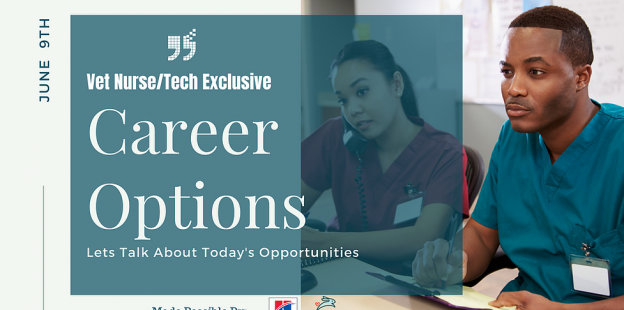
  • Online Event – 6/9/21 – Let’s Talk About the New Career Options for Vet Nurses/Techs – The Bridge Club

    Online Event – 6/9/21 – Let’s Talk About the New Career Options for Vet Nurses/Techs – The Bridge Club

    The opportunities available to veterinary nurses and technicians is vast! In this conversation, we will highlight the newest career opportunities in companion animal and food animal practices, industry opportunities and showcase how these professionals are changing the future of veterinary medicine. More details to come, but grab your spot now.

    A huge thank you to Wellhaven Pet Health and Hills Pet Nutrition for bringing this conversation forward.

    WEBSITE LINK:  https://www.thebridgeclub.com/events/lets-talk-about-the-new-career-options-for-vet-nurses-techs

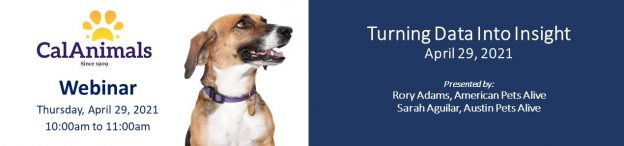
  • Webinar – 4/29/21 – Turning Data Into Insight – CalAnimals

    Webinar – 4/29/21 – Turning Data Into Insight – CalAnimals

    Data is one of the essential tools that leadership, staff, and advocates have, yet it often seems overwhelming and impossible to understand. How might we use our own data to inform programs, decisions and share with advocates and staff to work toward common goals and understanding?

    Leave this presentation knowing the common discrepancies in shelter data, significant differences between micro and macro data (and what they can and can’t show us), the data you need to understand to make informed decisions and answer commonly asked questions. You will learn how to understand what these numbers are telling you and how to use this information to advocate for your programs and save more lives.

    WEBSITE LINK:  https://us02web.zoom.us/webinar/register/WN_5dLudWBFQseqIXhRqi8vog

  • Webinar – 4/13/21 – The Link between Animal Abuse and Domestic Violence – Center for Domestic Peace and Marin Humane

    Webinar – 4/13/21 – The Link between Animal Abuse and Domestic Violence – Center for Domestic Peace and Marin Humane

    Join Center for Domestic Peace and Marin Humane to build community around this critical topic. We’ll take a deeper dive into the research, explore ways to identify abuse, and provide practical steps to take to help people and animals in need. April is dedicated to the Prevention of Cruelty to Animals.

    National expert Dr. Phil Arkow*, the coordinator of the National Link Coalition – the National Resource Center on the The Link between Animal Abuse and Human Violence, will be the speaker at this important event. You will also learn about resources both Marin Humane and Center for Domestic Peace offer to people and pets in our community.

    This free seminar is designed for professionals in the fields of law enforcement, veterinary medicine, animal welfare, and human services, yet all interested are welcome.

    *Phil Arkow is coordinator of the National Link Coalition – the National Resource Center on The Link between Animal Abuse and Human Violence – and editor of its monthly LINK-Letter. He chairs the Latham Foundation’s Animal Abuse and Family Violence Prevention Project. He teaches Animal Abuse and Human Violence at the University of Florida and Animal-Assisted Therapy at Harcum and Camden County Colleges. He trains internationally and has authored or edited over 60 key reference works in human-animal interactions and violence prevention. He has founded and served with a dozen national and state veterinary, animal welfare, human-animal bond, and criminal justice organizations.

    WEBSITE LINK:  https://www.eventbrite.com/e/the-link-between-animal-abuse-and-domestic-violence-tickets-142931468871

  • No Place Like Home: How Shelters Can Serve Pets and Their People Where They Are

    No Place Like Home: How Shelters Can Serve Pets and Their People Where They Are

    On a recent episode of the Humane Network’s Shelter Success Simplified podcast, the KSMP’s own Dr. Cindi Delany explained what organizations can do to keep animals from coming into shelters in the first place, and why shifting resources to serve animals and their families right where they are—in the community—can lead to better outcomes for all.

    The Humane Network’s key takeaways from the conversation:

    • Time in a shelter is stressful for animals, anything we can do to reduce time spent there is beneficial to the animals. Providing support services to keep pets in homes and making return-to-owner processes easier and friendlier are two examples.

    • Having fewer animals in the shelter reduces the risk of disease transmission and allows you to put more time and resources into helping animals who truly need to be there or need special assistance.

    • The cost of taking in an animal is generally more expensive than helping keep that same animal in their original home, whether it’s providing food, medicine, veterinary treatment, or help with a rental pet deposit.

    • It doesn’t require more resources, instead you are shifting resources from caring for animals in the shelter to helping keep animals with their original families.

    • Start by looking at data to understand what animals are coming in and why.

    Listen to the full episode below and explore the library of other Shelter Success Simplified episodes at Humane Network.

  • Online Event – 4/27/21 – Maddie’s® Candid Conversations Series – Ariel Zhang, Animal Foundation – Maddie’s Fund

    Online Event – 4/27/21 – Maddie’s® Candid Conversations Series – Ariel Zhang, Animal Foundation – Maddie’s Fund

    Join us for an open, informal 30-minute conversation and Q+A with Ariel Zhang, Senior Director of Strategic Initiatives at the Animal Foundation. Hosting the talk is Mary Ippoliti-Smith, one of Maddie’s Fund’s executive leadership team members.

    As a young immigrant who moved across multiple continents and countries, Ariel watched her parents work hard to start something better for their family. They had no roots or connections in the US but that made Ariel recognize, in her words, a “world of opportunities.” But those came at a steep price – one that forged Ariel’s determined drive for compassion among humans and animals.

    Come away inspired to promote lifesaving by engaging your local community through global language. Afterwards, continue the conversation with Ariel on Maddie’s Pet Forum.

    WEBSITE LINK:  https://us02web.zoom.us/meeting/register/tZYtcOihrzkrHNSjsaIaYZ3jbFSWGqg48lmq

  • Webinar – 4/25/21 – Lyme Disease Vaccine – A Historical Perspective – VETGirl

    Webinar – 4/25/21 – Lyme Disease Vaccine – A Historical Perspective – VETGirl

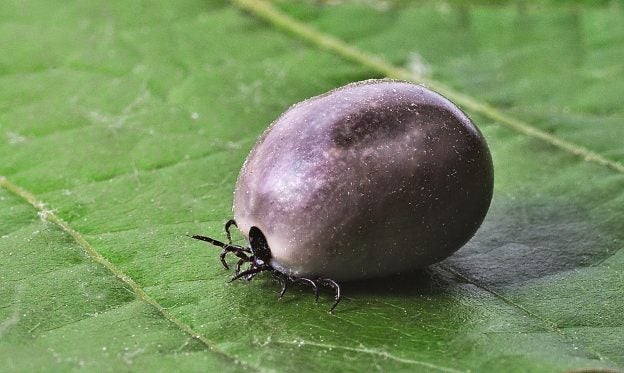
    Join us for a complimentary 1-hour, online VETgirlMerck Animal Health CE webinar, where Steve Callister, PhD reviews Lyme disease and the historical perspective on development of vaccines. Tune in for a brief discussion of human and canine Lyme disease, historical perspective of efforts/strategies to develop vaccines to prevent Lyme disease, mistakes and successes, and the current ‘state of the art’ of vaccinating canines against the illness.

    Thanks to sponsorship from Merck Animal Health, this webinar is free to all!

    Not a VETgirl ELITE member? VETgirl ELITE members receive 100+ hours of RACE-approved, online veterinary CE/year ($249). That way, you know that you have flexibility to view any of our webinars (including small animallarge animalveterinary technicianleadership, and listen to our podcasts when you have time.

    All the webinars are recorded and can be viewed 24/7 after their release date for CE credit. If you’re watching the recording later on, don’t forget to take the CE quiz with it when you’re done to get your CE certificate! Don’t see the quiz? Please check our our HELP CENTER for answers for important information, specific quiz information here!

    *Note: Viewing this webinar is for individual use only; VETgirl webinars are not designed nor meant to be viewed in a group setting due to RACE-CE audit purposes. Inappropriate sharing or viewing of the webinar may result in revoking of membership.

    RACE-CE provider name: VETgirl, LLC
    RACE Provider number: 20
    RACE Program number: 809312/810024

    This program has been approved for continuing education credit in jurisdictions which recognize AAVSB RACE approval; however participants should be aware that some boards have limitations on the number of hours accepted in certain categories and/or restrictions on certain methods of delivery of continuing education. Call VETgirl (858.859.1838) for further questions.

    WEBSITE LINK:  https://vetgirlontherun.com/webinars/april-25-2021-lyme-disease-vaccine-a-historical-perspective/

  • Webinar – 4/16/21 – An Evidenced-Based Comparison: Alfaxalone vs. Propofol – Think Anesthesia

    Webinar – 4/16/21 – An Evidenced-Based Comparison: Alfaxalone vs. Propofol – Think Anesthesia

    Think Anesthesia® live, interactive webinar, An Evidenced-Based Comparison: Alfaxalone vs. Propofol, presented by Amanda M. Shelby, VTS (Anesthesia & Analgesia) on Friday, April 16th, 2021 at 10:00 a.m. PDT | 12 p.m. CDT | 1:00 p.m. EDT provides the audience an evidence-based review of literature comparing the chemical/pharmacological properties of alfaxalone and propofol and the clinically appreciable similarities and differences. The presentation compares these two common induction and maintenance agents in healthy patient populations within on-label applications and explores more diverse patient populations or patients with co-morbidities that may require anesthesia. Upon completion participants should have sufficient literature-based evidence to best select the appropriate induction agent for their patient and clinical situation.

    This presentation is RACE approved for 1 CE credit for both veterinarians and technicians.

    Following the live presentation, an on-demand version of this webinar will be available at www.thinkanesthesia.education/on-demand.

    WEBSITE LINK:  https://www.thinkanesthesia.education/live-webinar/2021/03/think-anesthesiar-an-evidenced-based-comparison-alfaxalone-vs-propofol

  • Webinar – 5/13/21 – Using Fear Free Principles to Improve Anesthetic Safety in Complicated Patients – Fear Free

    Webinar – 5/13/21 – Using Fear Free Principles to Improve Anesthetic Safety in Complicated Patients – Fear Free

    Decreasing fear, anxiety, stress (FAS), and pain leads to safer anesthesia by allowing a lower dose of sedative and anesthetic drugs needed for anesthesia premedication, induction, maintenance, and recovery. Lower drug dosages are especially critical in complicated patients with underlying disease and physiologic compromise. In this discussion Dr. Tamara Grubb will explore the role of Fear Free principles in anesthetic safety, especially in the compromised/complicated patient.

    Attendees will:
    1. Review the physiologic/pathologic impact of fear, anxiety, stress, pain and anesthesia on the patient.
    2. Understand how these physiologic/pathologic impacts can magnify pathologic changes of select diseases, increasing the likelihood of anesthetic adverse effects.
    3. Learn how to incorporate Fear Free principles into anesthetic protocols to improve anesthetic safety for complicated patients.

    About the Presenter

    Dr. Tamara Grubb is a Diplomate of the American College of Veterinary Anesthesia & Analgesia with a strong focus in pain management. She owns an anesthesia/analgesia/continuing education consulting practice that serves both small and large animals (VetAACE). Dr. Grubb is a national/international educator and lecturer, a certified acupuncturist, an Adjunct Professor of Anesthesia & Analgesia at Washington State, a Fear Free Certified Practitioner, and on the International Veterinary Academy of Pain Management’s (IVAPM) Board of Directors. She is co-author of two books, including “Veterinary Anesthesia & Pain Management for Nurses & Technicians.” Dr. Grubb’s favorite achievement is winning the Distinguished Teaching Award at two universities.

    This program has been submitted (but not yet approved) for 1 hour of continuing education credit in jurisdictions that recognize AAVSB RACE approval.

    Brought to you by Zoetis Petcare.

    WEBSITE LINK:  https://us02web.zoom.us/webinar/register/WN_WkGmleG3S_2DujNU_mFWcw