Shelter Learniverse and Industry-Wide Calendar

Blog

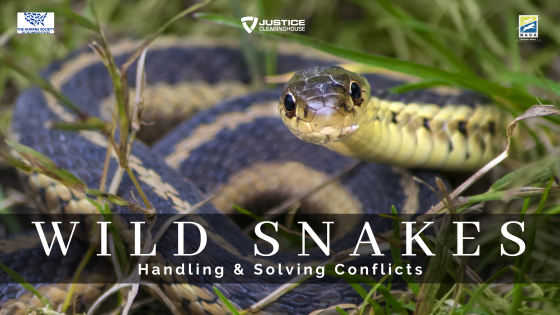
  • Webinar – 8/1/24 – Handling and Solving Conflicts with Wild Snakes – NACA/Justice Clearinghouse

    Webinar – 8/1/24 – Handling and Solving Conflicts with Wild Snakes – NACA/Justice Clearinghouse

    This webinar will explore the issues, the challenges, and the opportunities for agencies and individuals to promote non-lethal snake policies and protocols.  We will cover a brief overview of snake biology, the identification of venomous, non-venomous, and exotic snakes, and handling and response protocols for animal control and wildlife professionals.

    A few case studies will highlight issues like historic hibernaculum (den) location and relocation. Resources will be provided to help attendees enhance their snake response and advisement policies and protocols.

    About the Presenter

    Dave Pauli started his animal career in 1979 by opening a wildlife rescue business in Madison, Wisconsin called Humane Animal Controls, Inc.    Since that time he also served as a Superintendent of Animal Control (Billings Animal Shelter), Director of bi-county Humane Society in Eastern Washington (Tri-Cities) and for the past 29 years as a field responder/director for The Humane Society of The United States.

    Dave has responded to domestic animal/exotic/wild animal projects in all 50 states and two dozen countries. Dave currently responds to natural disasters, major cruelty and hoarding cases, and participates in Chemical immobilization, and immunocontraception projects for deer and horses. He also participates in volume capture projects for prairie dogs, feral dogs and cats, and many other species. He also supports and advises all HSUS Wildlife, Animal Rescue Team, Humane Society International and the Wildlife Land Trust teams with field projects or programs.  He is an HSUS point person on Wild Pigs, Prairie Dogs, Turtles and Tortoises, Florida Gopher Tortoises, Trapping Issues and Wildlife Contraception. Dave serves on the boards of six NGO’s and serves on the USDA Wild Pig Task Force and Montana Fish Wildlife & Parks Species Classification and Trapping Advisory committees.
    WEBSITE LINK:  https://www.justiceclearinghouse.com/webinar/handling-and-solving-conflicts-with-wild-snakes/

  • Webinar – 8/21/24 – APCC: Backpack Hazards: Protecting Pets from Hidden Toxins – ASPCAPro

    Webinar – 8/21/24 – APCC: Backpack Hazards: Protecting Pets from Hidden Toxins – ASPCAPro

    About this Webinar
    The start of the school year is an exciting time for many families, but it can also pose unexpected dangers to their beloved cats and dogs. Backpacks are often filled with hidden hazards, such as ADHD medication, ibuprofen, toxic snacks, and even earbuds.

    Join us for an informative and engaging session with Dr. Dzienisiewski as she highlights some of the most hazardous items lurking in children’s backpacks and discusses how to treat these toxicities in a clinical setting.

    Takeaways
    You’ll learn key information about:

    • Art supplies and their toxicity
    • Common medication ingestions, including albuterol inhalers, ADHD medications, and OTC medications, as well as how to treat them\
    • Food toxicities, including Xylitol-containing compounds, and how to manage them
    • Technology hazards, including batteries, earbuds, and AirTags

    Suited For
    This session is suited for veterinarians and veterinary technicians, but all are welcome.

    Credits
    This session has been submitted for one hour of RACE credit and is pending approval.

    WEBSITE LINK:  https://www.aspcapro.org/training/webinar/apcc-backpack-hazards-protecting-pets-hidden-toxins

  • Online Event – 7/25/24 – Maddie’s Monthly Behavior Connection: Managing Separation Anxiety in Shelter Dogs – Maddie’s Fund

    Online Event – 7/25/24 – Maddie’s Monthly Behavior Connection: Managing Separation Anxiety in Shelter Dogs – Maddie’s Fund

    Join us on July 25 for Managing Separation Anxiety in Shelter Dogs with Dr. Valerie Tynes of the SPCA of Texas (12n Pacific / 3pm Eastern for one hour)

    Separation-related problems result in extreme mental suffering in affected dogs and negatively impact the quality of life of their owners as well. With time, these types of problems can severely damage and eventually destroy even the strongest of human animal bonds. Helping pet owners to understand that affected dogs are not “acting out” and that they don’t just need “more structure” or “more exercise” is imperative if we are going to solve these problems. This presentation will review the most common clinical signs of separation anxiety, some of the “red flags” in a dog’s history that suggest it may have a separation-related problem and how to accurately identify the problem. Some practical approaches to treatment will also be presented. Can’t attend live? Register anyway and you will get a link to the recording within a day or two after each meeting.

    Join us on the fourth Thursday of every month as we talk about dog and cat behavior – supporting pets in our community and animal shelters. Each month, we hear from speakers about topics of interest to our group, such as behavior medications, modifying animal behavior, assessing and improving animal welfare, and how organizations successfully provide behavior support to dogs and cats.

    Who should join: Animal welfare staff and volunteers who are interested in dog and cat behavior, and everyone who works to keep pets out of shelters and in homes.

    You only need to register once for all meetings: https://maddies.fund/MonthlyBehaviorRegistration

    Can’t attend live? Register anyway and you will get a link to the recording within a day or two after each meeting.

    All recordings and resources shared during the webcast will also be available in the Maddie’s Monthly Behavior Connection group on Maddie’s Pet Forum – https://maddies.fund/monthlybehaviorconnectionMPF

    Maddie’s Fund does not share registration information.

    The opinions expressed by webinar presenters are their own and do not necessarily represent those of Maddie’s Fund.

    WEBSITE LINK:  https://maddies.fund/MonthlyBehaviorRegistration

  • Online Event – 7/11/24 – Hatching Hour: Wellness Redefined – Hatching

    Online Event – 7/11/24 – Hatching Hour: Wellness Redefined – Hatching

    Join us for a fun and inspiring hangout with our wonderful friend and wellness guru, Janna Hicks. Discover the hidden wellness in your daily routine and soak up her refreshing wisdom to make your days even better.

    Thursday July 11, 2024, at
    11:30am PST / 1:30pm CST / 2:30pm EST!

    Session Highlights include:

    • Discover the 8 dimensions of wellness
    • Reframe what wellness means to you!
    • Connect & gain new insights with like-minded individuals

    Meet the Speaker
    Janna has 15 years of experience spanning the health and wellness industry. From her time with public and private sector clients and academic teaching roles, to corporate wellbeing management and employee health and wellbeing benefits, Janna’s experience from various sides of the industry guides the wellness lifestyle principles and strategies she offers through one-to-one consulting, wellbeing courses and immersive retreats. Based a balanced approach to the 8 dimensions of wellness to improve total wellbeing. Janna’s philosophy is applicable and adaptable for any wellness journey, Janna’s areas of expertise include:

    • Health education – foundations of wellbeing
    • Wellbeing strategy and lifestyle integration
    • Chronic condition management and total wellbeing

    Janna is always learning. Currently she is particularly interested in exploring the intersectionality of wellbeing and DEI/SDoH. She has a strong knowledge base of the wellness industry perspective and challenges and leverages her experience to provide access and assistance to anyone seeking to be balanced and live well. Education and Credentials: Janna holds an MS in Exercise Physiology from Texas Christian University and BS from Northern Arizona University as well as NWI-CWP and ACE-CPT credentials.

    Join us in welcoming Janna to the Hatching community, we are excited to share her knowledge with you all!

    (Photo credit: Janna Hicks)

    WEBSITE LINK:  https://us06web.zoom.us/meeting/register/tZErfuyupz8oE9KB9X316GBmZb8-mNuaCxy8#/registration

  • Webinar – 7/11/24 – Is Intermittent Reinforcement Always Good? – PPG (fee applies)

    Webinar – 7/11/24 – Is Intermittent Reinforcement Always Good? – PPG (fee applies)

    Intermittent reinforcement is a common method used in positive dog training. For mot trainers, continuous reinforcement is recommended until the learner successfully understand the behavior that is being cued, then the trainer will often recommend switching from continuous to intermittent reinforcement. Many trainers use the example of intermittent reinforcement being like a slot machine sometimes you get a pay out and sometimes you don’t. The phycology behind the idea is to get the learner to continue to do the behavior even when a reward is not immediately present.

    Intermittent reinforcement can be a great method but we also need to look at the other side of intermittent reinforcement. In abuse situations, intermittent reinforcement can also be associated with something called a “trauma bond”. This is where an abuser brings flowers one day and abuses the next. This type of intermittent reinforcement will “bond” the victim to the abused but as positive reinforcement animal trainers, we need to make sure that our training methods are not turning into something aversive.

    Learning Objectives

    • Why intermittent reinforcement is commonly recommended in the dog training world
    •  How intermittent reinforcement is “supposed to” work
    • Why intermittent reinforcement can backfire
    • Understanding trauma bond in domestic violence and how it relates to dog
      training
    • Important things to consider when using or recommending intermittent reinforcement
    • Ways to make intermittent reinforcement positive

    Presenter Riley  BA, RVT, CPDT KA, KPA-CTP

    Shannon Riley is a Certified Professional Dog Trainer, Registered Veterinary Technician, Wellness Coach, and Karen Pryor Academy Certified Training Partner. Shannon has been a pet lover all her life and a dog trainer for over 20 years. She has spent her life observing, caring for and training animals of all kinds. She has worked in the Bird Department at Marine World Africa USA, and worked as a handler and trainer for an African Serval Cat at Safari West, a private zoo in Santa Rosa, California. She has participated in behavior studies including observations of bald eagles and addax antelope through the San Francisco Zoo and Safari West.

    Her education includes a Biology Degree, specializing in Zoology from Sonoma State. She is a Registered Veterinary Technician, a Certified Professional Dog Trainer, a member of the Association of Professional Dog Trainers, a Karen Pryor Academy Certified Training Partner and a member of the International Association of Animal Behavior Consultants. Shannon has also spoken at the Annual APDT (Association of Professional Dog Trainers) conferences and covered topics such as “Compassion Fatigue” and “What Is Your Dog’s Currency?” In 2021, she spoke at Pet Professional Guilds Geek Week.

    WEBSITE LINK:  https://www.petprofessionalguild.com/webinars-events/webinars/is-intermittent-reinforcement-always-good-with-shannon-riley/

  • Webinar – 7/11/24 – Why is My Dog “Ignoring” My Cue? – FDSA (fee applies)

    Webinar – 7/11/24 – Why is My Dog “Ignoring” My Cue? – FDSA (fee applies)

    We’ve all experienced that moment where we deliver a cue, and our dog just doesn’t respond. It could be in a training session at home, it could be when we are asking our dog to demonstrate their new trick to a friend, it could be in a class setting, or it could be in the middle of a competition run.

    It is common to hear people say that if a dog doesn’t respond to a cue, then they “didn’t understand”, but sometimes we are sure that our dog does know what the cue means. At other times we hear people say that their dog is “blowing them off” (i.e. that their dog does know what the cue means, but their dog is actively choosing to ignore the person / cue), but is this really a common reason for a dog to “ignore” a handler’s cue?

    In this webinar we discuss the myriad of reasons why our dog may not respond to our first cue when cued to perform a behavior, including; lack of understanding, enjoying an alternative behavior, lack of adequate motivation, arousal in excess of optimal levels, physical discomfort (present or anticipated), mental / emotional discomfort (present or anticipated), fatigue (physical / mental), and situations when the behavior is perceived as too “high effort”.

    Obviously understanding why our dog is not rapidly and accurately responding to our first cue to perform a behavior is crucial to resolving the issue, hence in this webinar we discuss all the potential reasons in detail. We also discuss strategies for ensuring that our dog does respond to our first cue on each occasion.

    Presenter: Sharon Carroll

    WEBSITE LINK:  https://www.fenzidogsportsacademy.com/index.php/self-study/webinars

  • Webinar – 7/21/24 – An Update on Feline Infectious Peritonitis: Diagnosis and New Treatment Options for Cats With FIP – VETGirl (fee applies)

    Webinar – 7/21/24 – An Update on Feline Infectious Peritonitis: Diagnosis and New Treatment Options for Cats With FIP – VETGirl (fee applies)

    This is a game-changer!

    In this 1-hour, VETgirl small animal webinar, Dr. Petra Cerna, PhD MRCVS CertAVP (SAM – F) AFHEA AdvCertFB will review the differences between feline enteric coronavirus (FECV) and feline infectious peritonitis virus (FIPV), the pathogenesis of FIP as well as most common clinical signs. Tune in as Dr. Cerna reviews the different diagnostic tests and new options for therapy, including immunomodulatory drugs and antivirals, to help with monitoring and possible complications seen with FIP therapy.

    Not a VETgirl ELITE member? Get your learning on with the #1 veterinary CE resource – clinically relevant, practical, and accessible 24/7 on your own time! Don’t miss out – click HERE to check out your options, including our new  14-day, no-commitment ELITE Trial.\

    WEBSITE LINK:  https://vetgirlontherun.com/webinars/july-21-2024-an-update-on-feline-infectious-peritonitis-diagnosis-and-new-treatment-options-for-cats-with-fip/

  • Online Event – 7/9/24 – YouTube Live: Management of Skin Lesions in Chronic Allergic Disease – VETGirl

    Online Event – 7/9/24 – YouTube Live: Management of Skin Lesions in Chronic Allergic Disease – VETGirl

    What’s the itch all about?

    In this complimentary, 30-minute VETgirlElanco YouTube LIVE event, Dr. Michael Rossi, DVM, MNS, DACVD will review some of the understanding behind the management of skin lesions in chronic allergic disease. Tune in as Dr. Rossi focuses on strategies to reduce these lesions for a better long-term outcome in clinical management.

    Thanks to sponsorship from Elanco, this webinar is FREE to all! (Remember: you must be logged in as a free Basic, ELITE Trial or ELITE member to register for the live event)

    WEBSITE LINK:  https://vetgirlontherun.com/webinars/july-9-2024-management-of-skin-lesions-in-chronic-allergic-disease/

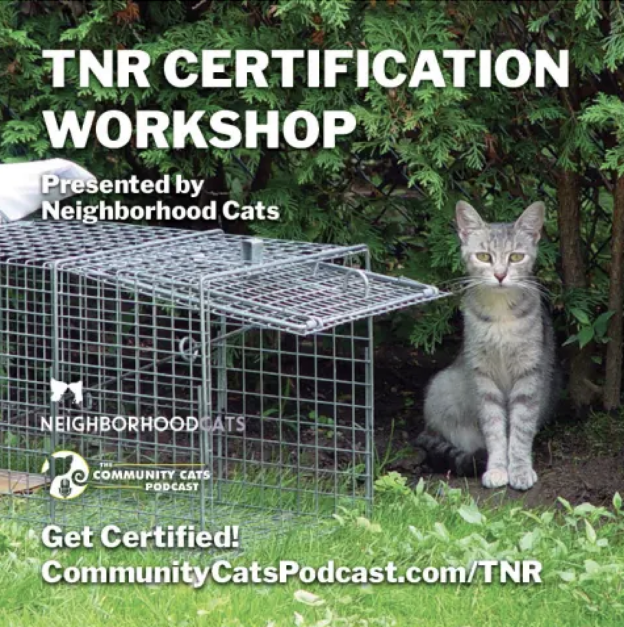
  • Online Event – 7/14/24 – Neighborhood Cats TNR Certification Workshop – Community Cats Podcast (small fee applies)

    Online Event – 7/14/24 – Neighborhood Cats TNR Certification Workshop – Community Cats Podcast (small fee applies)

    July 14, 2024 | 2:00-4:30PM EDT.

    REGISTRATION OPEN NOW
    Are you ready to be part of the solution for feral and stray cats in your neighborhood? Our expert instructors will teach you best practices for Trap-Neuter-Return (TNR) and colony management. Learn what TNR is and why it works. We’ll cover getting along with neighbors, preparations for trapping, trapping itself (including entire colonies at once), feeding, providing winter shelter, and more. Take advantage of the interactive format, extensive handouts, and video footage of actual projects. Attendees will receive a certificate of attendance and gain access to an ongoing Facebook group for networking with other TNR activists. Instructed by Susan Richmond, executive director, and Bryan Kortis, national programs director.

    Session duration is 2.5 hours, followed by an optional 15-minute Q&A session.

    This course/webinar/series/conference has been approved for Continuing Educational Units by the National Animal Care & Control Association (NACA). National certificate holders can submit for credit consistent with the NACA CEU policy located https://nacatraining.org/continuing-education-recertification/


    WEBSITE LINK:  https://www.communitycatspodcast.com/events/the-neighborhood-cats-tnr-certification-workshop-july-2024/

  • Webinar – 7/25/24 – Help for the Helpers: Recognizing and Addressing Stress Injury in Animal Control Officers – NACA/Justice Clearinghouse

    Webinar – 7/25/24 – Help for the Helpers: Recognizing and Addressing Stress Injury in Animal Control Officers – NACA/Justice Clearinghouse

    The past few years in animal welfare have been especially difficult, leaving many profoundly depleted. Given the challenges in our field, what can we do to care for ourselves, our peers, and our staff? This webinar will provide an introduction to common occupational stressors in animal protection services and evidence-based strategies to support well-being in complex stress, trauma-exposed work.

    Participants will learn terminology, symptoms, and risk factors related to empathic strain aka compassion fatigue, secondary traumatic stress, PTSD, burnout, and moral distress. The session will provide practical, effective strategies that can be implemented on and off the clock to reduce stress and distress, create healthier workplaces, and tap into career-sustaining compassion satisfaction.

    At the end of the session, participants will:

    • Identify key signs and symptoms that characterize stress injury in self and others
    • Understand five evidence-based elements shown to reduce the harmful impact of stress and adversity in ongoing stressful work
    • Implement simple strategies to support physical and mental recovery
    • Offer targeted support to peers and staff through more effective check-ins


    This webinar has been certified by the National Animal Care & Control Association and is approved for 1 Continuing Education Unit. Please refer to your NACA membership portal for current CEU submission process. Current NACA Members who attend the live presentation or watch the recording will be able to download a jointly issued attendance certificate that includes the National Animal Care & Control Association logo. Visit the NACA training page for a complete list of future trainings.


    This webinar has been pre-approved by the Maine Animal Welfare Program for 1 Continuing Education Unit in Core Area 4 (Officer Wellness & Mental Health) for the State of Maine’s ACO annual training. You can find more information about Certification, required annual training or submitting materials for credit at Maine’s Animal Control Officer Resource Page.


    About the Presenter:

    Jessica Dolce, MS CCFE, is a Certified Compassion Fatigue Educator, receiving her training from TEND Academy. She brings 20 years of experience working with and for companion animals to The Compassion in Balance® Program, her online education platform for animal shelters.

    She is an instructor with The Shelter Medicine Program at the University of Florida where she teaches wellbeing courses for veterinary students and animal welfare professionals. Jessica has worked with organizations such as the ASPCA, HSUS, The Animal Legal Defense Fund, The National Wildlife Rehabilitators Association, and Animals Asia.

    Jessica holds a Master of Science in Adult and Higher Education degree and is certified in Mental Health First Aid. She lives in Maine and can be found online at her website, jessicadolce.com.

    WEBSITE LINK:  https://www.justiceclearinghouse.com/webinar/help-for-the-helpers-recognizing-and-addressing-stress-injury-in-animal-control-officers/