
Shelter Learniverse and Industry-Wide Calendar

Blog

  • Webinar – 5/11/23 – Strategies for Surviving (and Enjoying) Canine Adolescence – FDSA (fee applies)

    Webinar – 5/11/23 – Strategies for Surviving (and Enjoying) Canine Adolescence – FDSA (fee applies)

    Our dogs transition through several phases across their lifetime. From a behavior perspective adolescence is perhaps the phase with the most potential to cause disruption in a household and can really test our skills as a trainer.

    Adolescence is the time between puppyhood and adulthood. In dogs, this developmental phase starts anywhere between 6 and 12 months and typically ends somewhere between 18 months and 24 months. Adolescence is accompanied by physical changes, endocrinological changes, and neurological changes. During this phase there can be significant changes to motivation, preferences, energy levels, ability to focus, emotion regulation, impulse control, and decision-making skills.

    Many of the overt and challenging behaviors exhibited during adolescence are driven by frustration; increased evidence of frustration is common at this time due to our dog struggling with conflicting motivations, and/or due to them being blocked from engaging in the (inappropriate / unsafe) activities they would choose to undertake. Frustration can be a particularly challenging emotion for an adolescent dog to manage. The intensity of the emotions and urges experienced, together with the dog’s reduced ability for impulse control during this phase, frequently leads to “undesirable” and challenging behaviors that the human needs to manage or modify. The exact behaviors exhibited will depend on the individual dog’s coping style as well as other factors influenced by genetics and prior learning. Some of these behaviors are only evident in training scenarios, whereas others are evident in day-to-day life. Common examples include:

    • Reverting to performing behaviors that had previously ceased during early training (e.g. jumping up on people, pulling/lunging when on leash, mouthing / nipping / grabbing, etc.)
    • Excessive barking and/or whining.
    • Destructive behaviors (e.g. digging, ripping up objects, etc.)
    • Unable to maintain a stay or other durational behavior particularly when “distractions” are added.
    • Unable to focus or remain attentive for more than brief periods.
    • Reduced interest in their human, combined with increased interest in the environment.
    • Low levels of perseverance (i.e. rapidly disconnecting from training at the first moment of confusion / frustration / uncertainty – resulting in either zoomies, running off to visit people/dogs, wandering off sniffing, leaving and lying down, leaving and hiding, the development of avoidance behaviors, etc.).
    • An apparent deterioration of previously “known” behaviors (e.g. not able to follow “known” cues, not able to perform a fast or accurate recall, etc.)
    • In some dogs we may also start to see aggressive responses occurring that were not previously present. These may be directed at other dogs or humans.

    Adolescence can be an extremely challenging time for both the dog and their human/s. Sadly in the pet dog sector adolescence is the primary developmental phase where re-homing and relinquishment occurs. In the dog training sector, it is the phase where handler’s skills and emotions can get pushed to the limit. Having our dog emerge into adulthood as a confident, capable, relaxed, and well-rounded individual requires us to be strategic in our training and management during the adolescent phase.

    In this webinar we discuss the changes that are occurring in our dog as they transition from puppyhood into adulthood, as well as practical adjustments we can make to our training during this developmental phase. These adjustments will:

    • Reduce frustration for both us and our dog.
    • Allow us to enjoy our time with our adolescent dog.
    • Allow our dog to enjoy their adolescence.
    • Assist in forming a stronger relationship with our dog that will carry forward for the longer-term.
    • Create beneficial habits that will support our long-term training goals.
    • Increase the probability of reaching our long-term training and competition goals.

    Presenter: Sharon Carroll

    WEBSITE LINK:  https://www.fenzidogsportsacademy.com/index.php/self-study/webinars

  • Webinar – 5/11/23 – Reducing the Baseline: Setting Your Dog Up for Success Before B-mod – FDSA (fee applies)

    Webinar – 5/11/23 – Reducing the Baseline: Setting Your Dog Up for Success Before B-mod – FDSA (fee applies)

    Changing behavior is hard work for your dog; are there things you can do right now to make sure your dog is feeling their best before engaging in behavior modification?

    This webinar will give you tools and exercises to help create a more thoughtful and focused dog. Both are beneficial when working with a fearful or reactive dog prior to exposing it to potential triggers during the behavior modification process. We will explore ways to decrease the dog’s adrenaline (fight or flight), increase their dopamine and serotonin, and take advantage of the oxytocin you share.

    Presenter: Karen Deeds

    WEBSITE LINK:  https://www.fenzidogsportsacademy.com/index.php/self-study/webinars

  • Webinar – 5/31/23 – Cardiovascular Emergencies: The Beat Goes On – VETGirl (fee applies)

    Webinar – 5/31/23 – Cardiovascular Emergencies: The Beat Goes On – VETGirl (fee applies)

    Blue doesn’t look good on you!

    In this 1-hour, VETgirl veterinary technician webinar, Tiffany Gendron, CVT, VTS(ECC) will review the veterinary technician’s role in assessing and providing treatment for the cardiac patient. What are commonly encountered cardiovascular emergencies, and how do you recognize them? Tune in to learn the importance of your role in management and treatment, as well as monitoring considerations you need to know!

    Not a VETgirl ELITE member? Get your learning on with the #1 veterinary CE resource – clinically relevant, practical, and accessible 24/7 on your own time! Don’t miss out – click HERE to check out your options, including our new  14-day, no-commitment ELITE Trial.

    WEBSITE LINK:  https://vetgirlontherun.com/webinars/may-31-2023-cardiovascular-emergencies-the-beat-goes-on/

  • Webinar – 5/30/23 – DAPPv x L4: An Alphabet Soup Review – VETGirl

    Webinar – 5/30/23 – DAPPv x L4: An Alphabet Soup Review – VETGirl

    Vaccine decoder HELP!

    In this complimentary, 1-hour VETgirlMerck Animal Health webinar, Dr. Sara Gonzalez, MS, DABVP (Canine and Feline Practice) reviews the antigenic components of DAPPv x L4 vaccination and dives deeper to decode the “alphabet soup.” Tune in for a review of these diseases and the updated recommendations from the 2022 AAHA Canine Vaccination Guidelines.

    Thanks to sponsorship from Merck Animal Health, this webinar is FREE to all! (Remember: you must be logged in as a free Basic, ELITE Trial or ELITE member to register for the live event)

    WEBSITE LINK:  https://vetgirlontherun.com/webinars/may-30-2023-dappv-x-l4-an-alphabet-soup-review/

  • Webinar – 5/21/23 – Wait: No Syringes, Needles, or Insulin? Meet the Newest Option in Therapy for Diabetic Cats – VETGirl

    Webinar – 5/21/23 – Wait: No Syringes, Needles, or Insulin? Meet the Newest Option in Therapy for Diabetic Cats – VETGirl

    U-100, U-40, U-don’t need insulin?

    In this complimentary, 1-hour, VETgirlElanco webinar, Dr. Natalie Marks, CVJ reviews the clinical presentation and diagnostics encountered with a new feline diabetic. What are the treatment options, and specifically, how do I use the new SGLT2 inhibitor Bexacat™ (bexagliflozin tablets)? Tune in to learn about the mechanism of action, dosing, possible adverse events (and how it differs from insulin therapy), case selection, monitoring guidelines, and frequently asked questions.

    Thanks to sponsorship from Elanco, this webinar is FREE to all! (Remember: you must be logged in as a free Basic, ELITE Trial or ELITE member to register for the live event)

    WEBSITE LINK:  https://vetgirlontherun.com/webinars/may-21-2023-wait-no-syringes-needles-or-insulin-meet-the-newest-option-in-therapy-for-diabetic-cats/

  • Online Course – 6/3/23 – Neighborhood Cats TNR Certification Workshop – Community Cats Podcast (small fee applies)

    Online Course – 6/3/23 – Neighborhood Cats TNR Certification Workshop – Community Cats Podcast (small fee applies)

    Are you ready to be part of the solution for feral and stray cats in your neighborhood? Our expert instructors will teach you best practices for Trap-Neuter-Return (TNR) and colony management. Learn what TNR is and why it works. We’ll cover getting along with neighbors, preparations for trapping, trapping itself (including entire colonies at once), feeding, providing winter shelter, and more. Take advantage of the interactive format, extensive handouts, and video footage of actual projects. Attendees will receive a certificate of attendance and gain access to an ongoing Facebook group for networking with other TNR activists. Instructed by Susan Richmond, executive director, and Bryan Kortis, national programs director.

    Session duration is 2.5 hours, followed by an optional 15-minute Q&A session.

    Proudly sponsored by Tomahawk Live Trap

    WEBSITE LINK:  https://www.communitycatspodcast.com/events/the-neighborhood-cats-tnr-certification-workshop-june-2023/

  • Webinar – 7/13/23 – Everyday Ethics for Animal Control Officers – NACA/Justice Clearinghouse

    Webinar – 7/13/23 – Everyday Ethics for Animal Control Officers – NACA/Justice Clearinghouse

    Wearing a badge brings a certain amount of power and great deal of responsibility. Animal control and humane officers make many decisions daily that impact people’s rights, public safety, animal welfare, and—most importantly—themselves and their career. Almost all of us want to do the “right” thing in each case. But, with so many competing interests, how do we know what the “right” thing is? Is it ‘right’ to allow an animal to remain in a place where it will likely suffer? Is it ‘right’ to bend the rules to stop or prevent animal suffering? Who should own an animal, and what can they do to/with that animal? And, what about euthanasia? We will explore some of the real-world dilemmas that officers face regularly and discuss how to make the best decisions possible.

    This session will cover:

    • Animal, mineral or vegetable: what is a profession and are we one?
    • What are the most important qualities in an animal control/humane officer?
    • What influences can move the needle on our moral compass?
    • Right vs. wrong; is it really black and white?
    • Truth or consequences: When is it okay to lie?
    • Should you compromise your principles?

    This webinar has been certified by the National Animal Care & Control Association and is approved for 1 Continuing Education Unit. Please refer to your NACA membership portal for current CEU submission process. Current NACA Members who attend the live presentation or watch the recording will be able to download a jointly issued attendance certificate that includes the National Animal Care & Control Association logo. Visit the NACA training page for a complete list of future trainings.

    About the Presenter
    Harold Holmes has been the Executive Assistant for The County of Los Angeles Department of Animal Care and Control since 2016. Prior, he was a Deputy Director for the County of San Diego Department of Animal Services and before that retired as a Chief of Police in northern California.

    Harold is a former U.S. Marine who was recalled to active duty for the Gulf War.

    A hostage negotiator and police canine handler of an award-winning patrol dog at Redlands P.D., when he retired from police work, he began a new career as an animal control officer. While at San Diego County Animal Services, he developed the Responsible Pet Ownership Program for animal-law violators, which won an award from the California State Association of Counties. He has experience drafting and shepherding legislation that became law at both the State and local level.

    Managing San Diego County’s Dangerous Dog Task Force for three years inspired him to attend law school. Harold graduated as the Valedictorian from Western Sierra Law School and was admitted to the Bar in June 2013. He is also a hearing officer, a trained mediator and teaches a variety of legal and law-enforcement related topics.

    He has completed management and executive level trainings, including the County of Los Angeles/USC Executive Leadership Development Program.

    WEBSITE LINK:  https://www.justiceclearinghouse.com/webinar/everyday-ethics-for-animal-control-officers/

  • Hybrid Conference – 7/14/23 to 7/18/23 – AVMA Convention 2023 – AVMA (fee applies)

    Hybrid Conference – 7/14/23 to 7/18/23 – AVMA Convention 2023 – AVMA (fee applies)

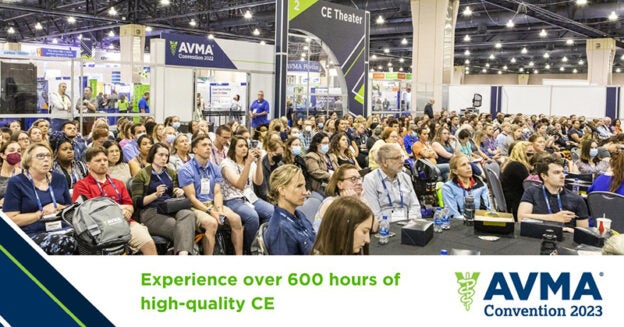
    AVMA Convention 2023 heads west to beautiful Denver this summer. Taking place July 14 – 18, AVMA Convention is the premier event for veterinary professionals. Step back from the day-to-day and rekindle your energy and passion for veterinary medicine. Experience over 600 hours of high-quality CE, highly rated special events, innovative solutions, and so much more. Everyone is welcome—it’s your convention! Reach new heights with the veterinary profession and gain an educational edge through best-in-class CE—including hands-on labs and workshops, panels, and lectures taught by veterinary experts. Network with colleagues, make new friends, and discover products and services that will enhance your veterinary career.

    Select sessions will stream live and be available on demand following Convention.

    The AVMA is proud to partner with the Colorado Veterinary Medical Association (CVMA) for this year’s Convention.

    WEBSITE LINK:  https://www.avma.org/events/avma-convention

  • Webinar – 5/9/23 – Compassionate Communication: Supporting People and Pets Through Human-Centered Language – HASS

    Webinar – 5/9/23 – Compassionate Communication: Supporting People and Pets Through Human-Centered Language – HASS

    Have you ever been scrolling through social media and read through a post calling someone a “horrible pet owner” or worse during a time of need or crisis? The answer is probably yes; we’ve all seen this, and perhaps we’ve even used harmful language ourselves not knowing the full story. The words we use have an impact and can push away the people who need support so we’d like to take the time to evaluate how we can have more compassionate communication.

    Shannon Glenn, Executive Director of My Pit Bull is Family and the North Minneapolis Pet Resource Center program, will share how animal welfare professionals can shift their language to be more human-centered and human-supportive to and keep more families together.

    WEBSITE LINK:  https://zoom.us/webinar/register/6016782060176/WN_UoCI8zCWQMmcSlHkaiBjng

  • Online Course – Starts 6/5/23 – The Forensics of Aggression: Working With and Evaluating Canine Aggression – IAABC (fee applies)

    Online Course – Starts 6/5/23 – The Forensics of Aggression: Working With and Evaluating Canine Aggression – IAABC (fee applies)

    Jim Crosby is widely recognized as an expert in the field of dog bites, dog aggression, and fatal dog attacks. In this four-part course, Jim is sharing his hard-won knowledge and experience about dog aggression, bites, communication, and what we can do with all of this as we go through our personal and professional journeys through the canine world.

    Four Modules, four live meetings (Full Students only), and experience that literally only exists in a hand full of places in the world, Jim is here to share those experiences and the understanding he has gained in nearly twenty years of dealing with the worst of the worst – and a few dogs too.

    By the end of this course, you will be able to:

    • Recognize the purpose of aggression and when it is or is not appropriate
    • Analyze how bites happen and what evidence they leave
    • Evaluate WHICH dog did it, and the basis of inclusion and exclusion of potential suspects
    • Exchange signals with problem dogs and build the beginnings of trust
    • Explore dog case evaluations and their application to individual dogs

    Graphic Content Warning: Course contains images of fatal dog bites and injuries.

    IMPORTANT INFORMATION ABOUT WEEKLY ONLINE MEETINGS 

    • Auditors do not attend online meetings
    • Meetings are not recorded
    • Meetings take place on Mondays at 1:00 pm Eastern (first meeting June 12th)
    • Meetings are 1 hour in duration
    • There are 4 meetings for this course

    WEBSITE LINK:  https://iaabcfoundation.org/courses/forensics-of-aggression/