Fellow animal welfare colleagues and large-scale change leaders, we are conducting a search for a Deputy Director of the Koret Shelter Medicine Program (KSMP), our small but mighty program dedicated to serving as change agents in our field. If you or someone you know is inspired by building and sharing the tools needed to implement humane, community-centered approaches to shelter management – click on the link below or email sheltermedicine@ucdavis.edu.
Author: Cindi Delany, DVM
-
ASPCA has grant funds of $2,000,000 for COVID-19 Relief for Shelters – deadline to apply 10/12/20!
ASPCA® COVID-19 Emergency Relief Request for Proposals
Timeframe: October 5th, 9:00 a.m. ET – October 12th, 2:00 p.m. ET
The ASPCA is reopening its Request for Proposals under the COVID-19 Relief Initiative and is inviting grant applications from animal welfare organizations negatively impacted by the COVID-19 pandemic. We awarded $2,000,000 for this purpose in the spring and recognize that this national emergency continues to affect programs, operations, and fundraising. To provide support to counter these challenges, the ASPCA is accepting applications for general operating or program expenses to help meet budget shortfalls and support essential lifesaving services for animals such as safety net, adoptions and foster programs, and veterinary services, which are proving to be crucial in this crisis. The ASPCA is making an additional $2,000,000 available to fund grants made under this initiative.
Grant Amount
Grants will range generally from $25,000 – $50,000 and should not exceed 5% of an organization’s annual budget.
Eligibility
Applicants must meet the following criteria:
- Must be an established 501(c)(3) or governmental entity located within the United States and territories
- If a past ASPCA grant recipient, must be current on all reporting requirements
- If a 501(c)(3) organization:
- Must be an incorporated or organized legal entity in good standing with the Secretary of State in the state where the organization is incorporated or organized
- Must have a board of at least 4 members with a majority of independent members with neither board chair nor treasurer receiving compensation from the organization
This grant opportunity is available to all organizations meeting the above criteria, including organizations that applied to and/or were funded by the ASPCA’s COVID-19 Emergency Relief grant initiative in the spring of 2020.
Qualifying Fund Uses
Funding may be requested for general operating expenses to mitigate crisis-related reductions in revenue (from programs, fundraising, or other sources) or for program expenses or capacity support such as the following:
- Food distribution
- Access to veterinary care
- Eviction support
- Adoption and foster capacity
- Capacity-building for fundraising, board development, etc.
Applicants will be evaluated on our assessment of the need for the services being provided by the organization, the effectiveness of the organization’s plans to respond to the crisis, and its ability to deliver quality animal welfare services.
Complete Timeline
- The application opens Monday, October 5th at 9:00 a.m. ET and closes Monday, October 12th at 2:00 p.m. ET
- Candidates will be notified via email no later than Monday, November 9th if their organizations have been selected to complete formal applications in our grant management system
How to Apply
- Review the complete requirements (pdf) and gather your documentation
- Launch the application form
Organizations that applied to the ASPCA’s COVID-19 Emergency Relief grant initiative in the spring, including those that were funded, will be routed to a shorter, supplemental application.
We recommend you prepare the required information in advance to allow you to complete the form in one session. Please be sure that all requested information is included in your responses. Applications cannot be revised after submission.
Please direct all questions to grants@aspca.org
-
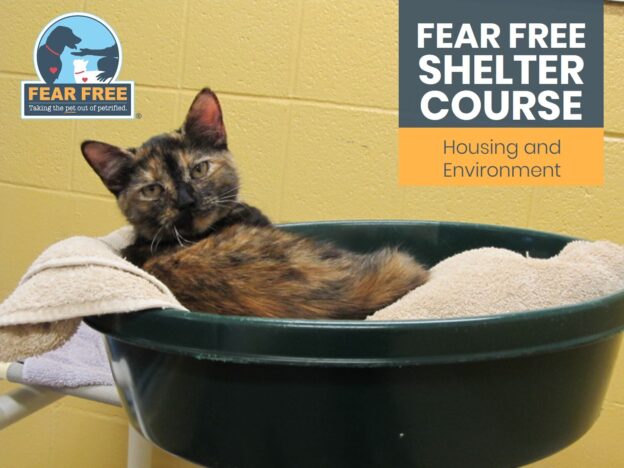
Brand New Fear Free Course for Shelters! – Fear Free Housing and Environment
Exciting news! Fear Free has just launched a brand-new bonus course: Fear Free Shelter Housing and Environment. (and it’s FREE)
In this course, you will learn how to create a safe, comfortable, and Fear Free environment for shelter animals and understand how housing and environment impact the behavior, health, and wellbeing of shelter animals.
This course contains three one-hour modules, which need to be taken in consecutive order.
Part A: The Physical Environment
- Learn essential shelter housing considerations, including maintaining a variety of housing styles
- Understand why separating animals into a variety of different housing wards is beneficial
- Learn how to prevent or reduce crowding and reduce average length of stay for animals
Part B: Housing Facilities
- Discover ways to reduce stress in shelter dogs and cats by adjusting their housing areas
- Learn valuable tips for providing hiding spots and perches for cats and comfortable resting areas for dogs
- Understand the benefits and challenges with each of the different styles of housing for dogs and cats
Part C: The Emotional Environment
- Describe the pros and cons of animals having roommates in their enclosures
- Learn what an emotionally healthy routine looks like for shelter dogs and cats
- Understand important considerations for group housing cats
Fear Free Shelters Graduates can find this course by logging in at fearfreeshelters.com and navigating to Bonus Courses. Haven’t taken the Fear Free Shelter Program yet? Sign up for free today!
-
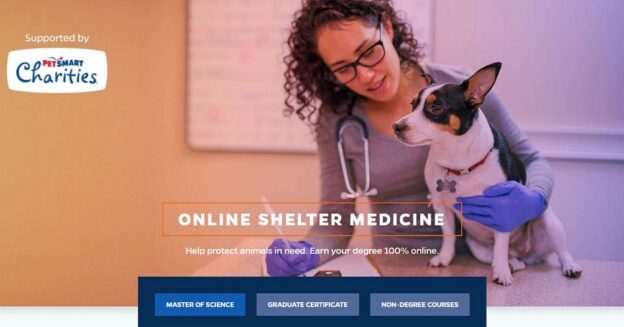
Take Your Learning to the Next Level!
Considering expanding your knowledge of shelter medicine, infectious disease, forensics, shelter animal behavior and welfare?
Seeking a more structured online learning experience and possibly even pursuing a certificate or degree?
The University of Florida offers an online shelter medicine distance learning program. Sponsored by PetSmart you can learn how to recognize and manage infectious diseases in a shelter, collect forensic evidence in a current investigation, and prevent behavioral and welfare problems in large populations of animals.
This program fills an existing curriculum gap in shelter medicine by providing quality online courses for veterinary professionals, animal welfare professionals, and students. Even career changers interested in getting a start in shelter medicine or assisting local shelters with non-profit leadership issues can transition into the program as a non-degree seeking student. Demand continues to grow for qualified professionals in this ever-expanding field.UF’s shelter medicine graduate program offers competitive in-state tuition for all students, regardless of location.
Anyone who has an undergraduate degree (not just veterinarians), can take one course as a non-degree seeking student: https://onlinesheltermedicine.vetmed.ufl.edu/programs/continuing-education/ to check things out.
-

Timely Advice and a Great Download from the Kitten Lady
Timely advice from Kitten Lady about “I Found a Kitten Outside! Should I Bring Her Into My CASA?” The CASA method helps Good Samaritans determine whether kittens are better off being left with their moms for the time being or should be taken in and cared for right away. And don’t forget . . . kittens are clues that there are adult cats around to followup with TNR as well.
Visit her website for other great materials to share with the public and your foster parents: https://www.kittenlady.org/
Download this great resource here thanks to the Kitten Lady.
View it below and/or use the “Download” button under it to download for your own use.
[embeddoc url=”https://www.sheltermedportal.com/wp-content/uploads/2020/06/CASA-poster-FINAL.pdf” height=”900px” viewer=”google”] -
NEW COURSE Available on the ShelterMedPortal: Shelter and Public Safety During COVID-19
As we continue to find our way through the COVID-19 pandemic each phase brings new challenges for our organizations to continue fulfilling our roles and missions while also taking all steps necessary to protect the health and well-being of both humans and animals.
In this course we’ve tried to gather a variety of materials that we feel could be of value to you as you make your way through the phases of re-opening during a pandemic. The focus is on human and animal safety as organizations adjust which services they offer and how.
-

Confirmed Pet Cases Update 6/3/20 —But Our Messaging to Public Remains the Same
Reposting from the Animal Welfare Daily Digest:
In the U.S., two pets—one dog and one cat—have been confirmed to be infected with SARS-CoV-2 (the virus that causes COVID-19). In each case, the animal lives with humans who are COVID-19 positive.
As Dr. Scott Weese says in his recent blog, “Overall, [the dog case] doesn’t change our main talking points much, and it highlights the need for more study.” Continue to use this set of shareable graphics and flyers from the North American COVID-19 Communication Task Force to answer many of your communities’ most important questions.
-

New Course Available on the ShelterMedPortal – Animal Outcomes and Adoptions During COVID-19
The COVID-19 pandemic presents the animal sheltering industry with unprecedented challenges. Shelters throughout the country (and around the world) are rising to meet these challenges. As most work to focus shelter intakes on animals with the most urgent need the challenge of finding an appropriate outcome for each animal (from the finder’s care, from the shelter, from rescue or from foster) remains a challenge.
In this focused course we will explore concepts related to finding appropriate and timely outcomes for animals presenting to shelters or being found by members of the public in this difficult time. We’ll also be exploring protocols, tools and practices that could be carried forward into the future.
Takes this newly opened course now.
A Certificate of Completion is available for 10 hours of online learning once you have finished the course.
New materials may be added over the days, weeks and months to come. If you have any materials you would like for us to review for inclusion please forward them to us at webmaster@sheltermedportal.com.
-
New Course Available on the ShelterMedPortal – Part 2 – Spay/Neuter and Other Surgery During COVID-19 – Re-Opening Considerations and Process
As areas of the United States and other regions around the world contemplate and then begin the process of returning to a new normal, each shelter, clinic and rescue will need to decide when and if they are ready to return to providing some services that were affected by the pandemic.
We’ll each need to consider how we can continue to reduce resource use, workload, and the potential for human exposure while deciding which services we can contemplate beginning to offer again.
This will be an ongoing process, anticipated to continue for some time. As operations resume we’ll need to re-assess these areas routinely to make the best use of current available resources while emphasizing human and animal health and safety.
This course utilizes resources developed by a group of veterinarians and clinic experts to help guide the industry on spay/neuter and wellness clinics can begin to prepare for re-opening when the time is appropriate for this for each of us.
- Staff and Public Safety Considerations During COVID-19
- Clinic Operations Considerations
- Surgery and Anesthesia Considerations
- Client Communications
-
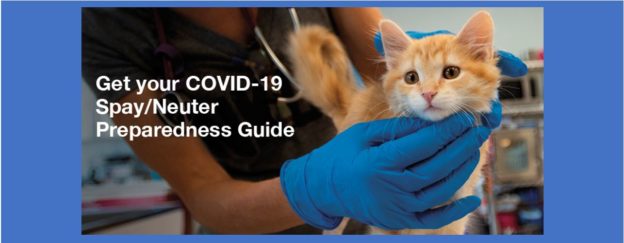
4/29/20 – ANNOUNCING: Just Released – COVID-19 Spay/Neuter and Wellness Clinic Preparedness Guide
This COVID-19 Spay/Neuter and Wellness Clinic Preparedness Guide is a collaborative effort led by shelter and spay/neuter professionals representing different aspects of veterinary clinic operations. In all cases, the intention is advisory in nature and based on current knowledge. This guidance is not a standard or regulation and creates no legal obligation. It is intended to help clinic leadership formulate the safest and most reasonable approaches to operating spay/neuter and wellness clinics and maintain life-saving functions. Communities vary greatly and what may be safe and feasible for one community may not be for another. Organizations should always adhere to state and local laws and regulations.
Visit the BestFriends Website to download the Guide and see other related resources
[embeddoc url=”https://www.sheltermedportal.com/wp-content/uploads/2020/04/COVID-preparedness-guide_0.pdf” height=”800px” viewer=”google” ]