
Shelter Learniverse and Industry-Wide Calendar

Category: COVID-19

  • Communication Through Transition

    Communication Through Transition

    When we are going through a big change, especially change that was unplanned, it can be difficult to stop and communicate the process with our stakeholders. Not only are we consumed with managing our evolving processes, but it’s hard to speak with certainty when things are fluid. When you think about speeding down an unfamiliar hill on your bike, it’s probably not your first instinct to narrate your every move.

    Still, change management experts tell us that now is not the time to keep quiet. Even when our process is in flux, it is to our advantage to communicate early and often with stakeholders to ensure we are telling our own story and not leaving space for blanks to be filled in by those that are not fully informed. Does the idea sound daunting? Not sure where to start? 

    The role of strategic communication during change management cycles is a popular topic any day, but the shift of our world on its axis has propelled this discussion to the front of the interwebs. There’s a plethora of sound guidance to be had and, for once, an almost unanimous agreement: A good change management strategy requires a detailed plan that considers each of your stakeholder groups and addresses the fears associated with their particular investment.

    In this downloadable eBook, Change Management: The Role of Strategic Communication, offered by Brighter Strategies, you’ll be walked through the Change Cycle and the corresponding exercises of developing your communication strategy. You’ll also learn why Stage 2 is the most dangerous stage, making Stage 1, straight out of the gates, the most important time to start communicating and telling your story. 

    Example: Here’s a great little video created by VIN for the veterinary community to communicate with their clients why it’s been difficult to schedule an appointment.

    Why has my veterinarian been SO busy? from VIN Practice Communications on Vimeo.

    If you were a frustrated client, would you still be upset after watching this? Or does the vulnerability, clarity, transparency,  and your-safety-first messaging have you making a note to send a thank you message (with a hug inside) to your own veterinarian right now? 

    If we want our community to have our back during times of transition, we have to remember to take them along for the ride from the beginning. Tell your story before someone tells it for you. Show your stakeholders how you are not only adapting but thriving (or at least trying to) in the face of crisis. Talk to them even when you are just trying something out. 

    Have you created a video similar to the one VIN created? We’ll be talking about communication during transition for the next few weeks and we’d love to hear from you. Email us at sheltermedicine@ucdavis.edu and tell us about your communication strategy with your stakeholders. How are you training staff to communicate with clients? What you’re noticing is really resonating with your community members? Would you try anything differently next time? 
  • ASPCA has grant funds of $2,000,000 for COVID-19 Relief for Shelters – deadline to apply 10/12/20!

    ASPCA has grant funds of $2,000,000 for COVID-19 Relief for Shelters – deadline to apply 10/12/20!

    ASPCA® COVID-19 Emergency Relief Request for Proposals

    Timeframe: October 5th, 9:00 a.m. ET – October 12th, 2:00 p.m. ET

    The ASPCA is reopening its Request for Proposals under the COVID-19 Relief Initiative and is inviting grant applications from animal welfare organizations negatively impacted by the COVID-19 pandemic. We awarded $2,000,000 for this purpose in the spring and recognize that this national emergency continues to affect programs, operations, and fundraising. To provide support to counter these challenges, the ASPCA is accepting applications for general operating or program expenses to help meet budget shortfalls and support essential lifesaving services for animals such as safety net, adoptions and foster programs, and veterinary services, which are proving to be crucial in this crisis. The ASPCA is making an additional $2,000,000 available to fund grants made under this initiative.

    Grant Amount

    Grants will range generally from $25,000 – $50,000 and should not exceed 5% of an organization’s annual budget. 

    Eligibility

    Applicants must meet the following criteria:

    • Must be an established 501(c)(3) or governmental entity located within the United States and territories
    • If a past ASPCA grant recipient, must be current on all reporting requirements
    • If a 501(c)(3) organization:
      • Must be an incorporated or organized legal entity in good standing with the Secretary of State in the state where the organization is incorporated or organized
      • Must have a board of at least 4 members with a majority of independent members with neither board chair nor treasurer receiving compensation from the organization

    This grant opportunity is available to all organizations meeting the above criteria, including organizations that applied to and/or were funded by the ASPCA’s COVID-19 Emergency Relief grant initiative in the spring of 2020.

    Qualifying Fund Uses

    Funding may be requested for general operating expenses to mitigate crisis-related reductions in revenue (from programs, fundraising, or other sources) or for program expenses or capacity support such as the following:

    • Food distribution
    • Access to veterinary care
    • Eviction support
    • Adoption and foster capacity
    • Capacity-building for fundraising, board development, etc.

    Applicants will be evaluated on our assessment of the need for the services being provided by the organization, the effectiveness of the organization’s plans to respond to the crisis, and its ability to deliver quality animal welfare services.

    Complete Timeline

    • The application opens Monday, October 5th at 9:00 a.m. ET and closes Monday, October 12th at 2:00 p.m. ET
    • Candidates will be notified via email no later than Monday, November 9th if their organizations have been selected to complete formal applications in our grant management system

    How to Apply

    1. Review the complete requirements (pdf) and gather your documentation
    2. Launch the application form

    Organizations that applied to the ASPCA’s COVID-19 Emergency Relief grant initiative in the spring, including those that were funded, will be routed to a shorter, supplemental application.

    We recommend you prepare the required information in advance to allow you to complete the form in one session. Please be sure that all requested information is included in your responses. Applications cannot be revised after submission.

    Please direct all questions to grants@aspca.org

  • NEW COURSE Available on the ShelterMedPortal:  Shelter and Public Safety During COVID-19

    NEW COURSE Available on the ShelterMedPortal: Shelter and Public Safety During COVID-19

    As we continue to find our way through the COVID-19 pandemic each phase brings new challenges for our organizations to continue fulfilling our roles and missions while also taking all steps necessary to protect the health and well-being of both humans and animals.

    In this course we’ve tried to gather a variety of materials that we feel could be of value to you as you make your way through the phases of re-opening during a pandemic. The focus is on human and animal safety as organizations adjust which services they offer and how.

  • Confirmed Pet Cases Update 6/3/20 —But Our Messaging to Public Remains the Same

    Confirmed Pet Cases Update 6/3/20 —But Our Messaging to Public Remains the Same

    Reposting from the Animal Welfare Daily Digest:

    In the U.S., two pets—one dog and one cat—have been confirmed to be infected with SARS-CoV-2 (the virus that causes COVID-19). In each case, the animal lives with humans who are COVID-19 positive.

    As Dr. Scott Weese says in his recent blog, “Overall, [the dog case] doesn’t change our main talking points much, and it highlights the need for more study.”  Continue to use this set of shareable graphics and flyers from the North American COVID-19 Communication Task Force to answer many of your communities’ most important questions.

  • New Course Available on the ShelterMedPortal – Animal Outcomes and Adoptions During COVID-19

    New Course Available on the ShelterMedPortal – Animal Outcomes and Adoptions During COVID-19

    The COVID-19 pandemic presents the animal sheltering industry with unprecedented challenges. Shelters throughout the country (and around the world) are rising to meet these challenges. As most work to focus shelter intakes on animals with the most urgent need the challenge of finding an appropriate outcome for each animal (from the finder’s care, from the shelter, from rescue or from foster) remains a challenge.

    In this focused course we will explore concepts related to finding appropriate and timely outcomes for animals presenting to shelters or being found by members of the public in this difficult time. We’ll also be exploring protocols, tools and practices that could be carried forward into the future.

    Takes this newly opened course now.

    A Certificate of Completion is available for 10 hours of online learning once you have finished the course.

    New materials may be added over the days, weeks and months to come. If you have any materials you would like for us to review for inclusion please forward them to us at webmaster@sheltermedportal.com.

  • BLOG: Pets, Mental Health & COVID-19

    BLOG: Pets, Mental Health & COVID-19

    Since I was a young child I have had a deep understanding of how animals can bring happiness into peoples’ lives. My first word as a 1 year old was “dog” and I grew up wanting to become a veterinarian due to my passion for animals and the love they give.  However, in my later years I began to recognize the impact pets can have on your mental health as well. 

    During my undergraduate education I started to struggle with depression and anxiety that affected my daily routine. Being a busy college student in a difficult major made it easy to slip into a rut where I was greatly lacking balance and calmness in my life. 

    Enter in Molly- my ten year old rescued supermutt who has been our family dog since 2011. I made the decision to bring her with me to college my junior year, and little did I know it would be one of the best choices I could have made for myself, and for her. Despite the challenges that come as a result of being a full time student and dog mom, I became stronger and more focused on incorporating stability and happiness into my life. Having her with me allowed me to be more intentional with how I spend my time, get outside to appreciate nature, and have an appreciation for all the little things in life-even if that means having to deal with lots of barking at squirrels….

    The role that animals play in the happiness and mental wellbeing of their owners is being further exhibited during social distancing as a result of the ongoing coronavirus pandemic (COVID-19). As of Early March 2020, California began a shelter in place protocol, as businesses began to close and people were ordered to stay home to prevent the spread of COVID-19. As the majority of the United States followed swiftly we have seen a tremendous increase in unemployment (Cox, 2020), as well as many Americans working from home as their jobs allow. This has resulted in millions of people-many of whom may live alone- being stuck inside with their pets.

    Pets are now stepping up to the plate as being the sole source of physical contact for many Americans who live alone or are socially isolated from others. Not only do pets get us to literally get up and move around more (ahem-potty breaks!), but they can have a significant physiological impact on human health. For example, studies have shown that people experience lower blood pressure and heart rates when they live with a pet (Vormbrock, 1988). But the powerful impact that pets have on people goes beyond just our physical health.

    It’s no coincidence that there are therapy animals in some of the most mentally stressful places in society as well: airports, prisons, hospitals, memory care facilities, universities, etc… Animals have been proven throughout the ages to be incredible sources of positive energy, emotional stability, and comfort. For instance, Johns Hopkins Hospital works with Pet Partners to bring in therapy dogs “to improve patients’ psychological status” (Hedin, 2018). It is abundantly evident that animals serve as a strong source of comfort to many people in vulnerable states. However, it’s not just healthy for a select group of individuals- we can all benefit from our pets during the time of COVID-19. 

    There have been studies illuminating how companion animals assist with coping during a crisis. Schools that have experienced on-campus shootings have started using therapy animals as a way to help students recover from these traumatic events. Research indicates that the use of animal assisted therapy can greatly reduce depression, symptoms of PTSD and anxiety (O’Haire et al., 2016). Being at home with our pets during this crisis may prove to have an immeasurable impact on the coping success and recovery from COVID-19. 

    Keeping one’s mental health afloat during a crisis is no simple task, especially when this crisis is impacting everyone across the globe. However, having a pet is certainly something to be taking advantage of during this time. Companionship and love is a priceless gift that our furry (or fur-less) friends bring to our lives. Now more than ever, let us be extra thankful for the snuggles, laughs and distractions from the stressful world around us. The bonds that we share with our animals could also help us all recover from this in the future. 

    With that all being said, I’m going to go hug my dog now! 

  • New Course Available on the ShelterMedPortal – Part 2 – Spay/Neuter and Other Surgery During COVID-19 – Re-Opening Considerations and Process

    New Course Available on the ShelterMedPortal – Part 2 – Spay/Neuter and Other Surgery During COVID-19 – Re-Opening Considerations and Process

    As areas of the United States and other regions around the world contemplate and then begin the process of returning to a new normal, each shelter, clinic and rescue will need to decide when and if they are ready to return to providing some services that were affected by the pandemic.

    We’ll each need to consider how we can continue to reduce resource use, workload, and the potential for human exposure while deciding which services we can contemplate beginning to offer again.

    This will be an ongoing process, anticipated to continue for some time. As operations resume we’ll need to re-assess these areas routinely to make the best use of current available resources while emphasizing human and animal health and safety.

    This course utilizes resources developed by a group of veterinarians and clinic experts to help guide the industry on spay/neuter and wellness clinics can begin to prepare for re-opening when the time is appropriate for this for each of us.

    • Staff and Public Safety Considerations During COVID-19
    • Clinic Operations Considerations
    • Surgery and Anesthesia Considerations
    • Client Communications
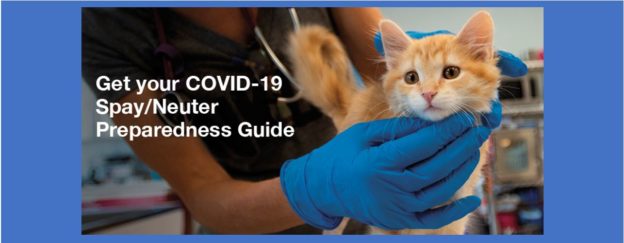
  • 4/29/20 – ANNOUNCING: Just Released –  COVID-19 Spay/Neuter and Wellness Clinic Preparedness Guide

    4/29/20 – ANNOUNCING: Just Released – COVID-19 Spay/Neuter and Wellness Clinic Preparedness Guide

    This COVID-19 Spay/Neuter and Wellness Clinic Preparedness Guide is a collaborative effort led by shelter and spay/neuter professionals representing different aspects of veterinary clinic operations. In all cases, the intention is advisory in nature and based on current knowledge. This guidance is not a standard or regulation and creates no legal obligation. It is intended to help clinic leadership formulate the safest and most reasonable approaches to operating spay/neuter and wellness clinics and maintain life-saving functions. Communities vary greatly and what may be safe and feasible for one community may not be for another. Organizations should always adhere to state and local laws and regulations.

    Visit the BestFriends Website to download the Guide and see other related resources

    [embeddoc url=”https://www.sheltermedportal.com/wp-content/uploads/2020/04/COVID-preparedness-guide_0.pdf” height=”800px” viewer=”google” ]
  • New Course Available on the ShelterMedPortal – Part 1 -Spay/Neuter and Other Surgery During COVID-19 – for Areas Under Strict Distancing/PPE Rationing

    New Course Available on the ShelterMedPortal – Part 1 -Spay/Neuter and Other Surgery During COVID-19 – for Areas Under Strict Distancing/PPE Rationing

    Given the current pandemic, in an effort to reduce resource use, workload, and the potential for human exposure, shelters and spay-neuter clinics have had to make decisions about which spay-neuter surgeries and other procedures are non-emergency procedures and discontinue those that could be deferred. As operations resume we’ll need to re-assess these areas routinely to make the best use of current resources while emphasizing human and animal health and safety.

    In this course we’ll cover current recommendations regarding:

    • Conservation of PPE
    • Human health and safety considerations
    • Animal health and safety considerations
    • Alternatives to surgical sterilization
    • Resources for people living with intact animals
    • How and when to return to “normal” or a new normal (we’ll add information as the situation develops, acknowledging that different areas will be in different stages of recovery over time).

    Course Link

  • New Course Available on the UCD ShelterMedPortal – Responding to Kittens During COVID-19

    New Course Available on the UCD ShelterMedPortal – Responding to Kittens During COVID-19

    Kittens and Kitten Season bring special challenges this year.

    Learn about some options and resources for how your facility should deal with these challenges and then transition to a “new normal” once we are through this crisis.

    Course Link