Shelter Learniverse and Industry-Wide Calendar

Category: Uncategorized

  • Lifesaving Legal Advice from Shelter PALS

    Lifesaving Legal Advice from Shelter PALS

    Quiz time! Take a minute to see if you know the answers to these common questions:

    • Can vaccines be administered during holding periods?
    • Do veterinarians have to administer rabies vaccines or can that be delegated?
    • Does your shelter need a premise permit?
    • When is a VCPR necessary for treatment?
    • How do protocols change if you’re treating an animal without an identifiable owner?

    If you’re confused about the legalities involved when shelter staff and volunteers take on certain medical tasks, you’re not alone! Luckily, attorneys Brandy Kuentzel and Bruce Wagman of San Francisco SPCA Shelter PALS are here to help you understand foundational law basics and optimize your shelter’s medical team.

    Last week the legal expert duo demystified these questions and others in a presentation for CASCAR, the California Animal Shelter COVID Action Response group, and we’re excited to share it with you.

    In this one-hour video, Brandy and Bruce clarify what registered vet technicians, vet assistants, and volunteers can—and can’t—do, guide you through optimizing care during intake, emergency treatment scenarios, and public vaccination clinics, and reveal why having SOPs and standing orders in place can be your shelter’s superpower.

  • No Money? No Problem: Moving from Surrender to Support on Any Budget

    No Money? No Problem: Moving from Surrender to Support on Any Budget

    A pet guardian shouldn’t have to choose between making rent or buying groceries and a trip to the vet for vaccinations or an overdue wellness exam, but this is exactly the choice too many face. A recent Access to Care Coalition Report coupled with American Veterinary Medical Association data revealed that 59 million pets live with guardians making under $20,000 a year, and one out of every four households has experienced a barrier to veterinary care in the last two years.

    San Francisco SPCA Director of Community Medicine Jena Valdez, DVM, is working to narrow this gap with a community clinic model that provides preventative pet care to historically underserved neighborhoods in her city. In a new UC Davis Koret Shelter Medicine Program webinar, Valdez shares the path to opening a reduced-cost walk-in preventative care clinic as part of the SF SPCA’s efforts to ensure all San Francisco pets and guardians have access to humane care by 2030.

    Sustainable from year one, the SF SPCA Walk-in Wellness/Call-Ahead Clinic is an accessible and practical model for all shelters, regardless of their budget or access to eager donors. In fact, Valdez noted, the clinic ended up using exactly $0—zip!—of the $50,000 initially budgeted to get the project off the ground.

    If you’re hoping to make a difference in access to care in your shelter or community—or if you just want to be inspired to dream big!—join us in celebrating the clinic’s first birthday and learn how to start and sustain your own community clinic. Discover how Valdez and staff made the case to SF SPCA senior leadership and board to open the clinic and how they’ve succeeded in making it sustainable, scalable, and valuable to pets and their people.

  • Tips to Dip: Best Practices for Ringworm Treatment

    Tips to Dip: Best Practices for Ringworm Treatment

    Ringworm is not a worm. A lime sulfur “dip” doesn’t involve lowering a kitten into a bucket of liquid. You don’t have to be the San Francisco SPCA’s Laura Mullen to know that.

    But you do have to be Laura Mullen, CAWA, to combat dermatophytosis in animal shelters by creating a program known as SPORE (Shelters Preventing Outbreaks of Ringworm through Education). Since 2013, Laura has trained folks from dozens of shelters how to prevent and manage the disease.

    To further her fungus-fighting mission, last month Laura gave a presentation to California shelters during our weekly CASCAR Zoom call. CASCAR, a group formed in response to COVID-19, gives animal shelter leaders in California and KSMP team members a chance to meet regularly and support each other through this challenging time.

    Laura’s presentation focused on empowering volunteers to safely foster cats and kittens with ringworm. Soon after, Laura shared a ringworm treatment video with us that we want to share with you.

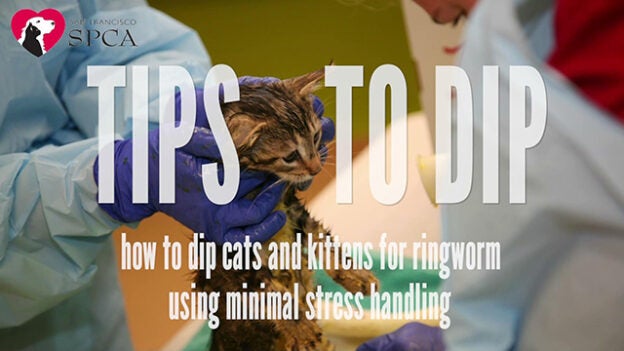
    Find “Tips to Dip: How to Dip Cats and Kittens for Ringworm Using Minimal Stress Handling” at sheltermedicine.com in the Treating Ringworm chapter of the Ringworm Guidebook in our online resource library.

    Thanks to Laura and the SF SPCA for spreading the word about how not to spread ringworm!

  • The Association for Animal Welfare Advancement conferences are FREE for veterinary students!

    The Association for Animal Welfare Advancement conferences are FREE for veterinary students!

    Hello Portalers,

    The KSMP wants to be sure that every veterinary student knows about the generous offer extended by our friends at the Association for Animal Welfare Advancement (AAWA). If you are actively enrolled in a veterinary college, you can attend AAWA’s conferences for FREE!

    The Association’s next conference will be held the first week of December and will include special guest Vu Le, executive director of Nonprofit AF.

    It’s an especially exciting time for veterinary students to be able to attend conferences and gain an insider’s peek at the changing landscape of animal welfare. Here are a few of the topics students are invited to participate in:

    • Equity, Diversity, and Inclusion in Hiring Philosophy and Practices
    • Collaboration: Understand, Align, and Transform
    • Practicing Compassionate Badassery: How to Cope with COVID-19
    • Technology to Safely Onboard, Support & Engage Volunteers During and Past COVID
    • Breaking Happy: A Path to a Sustainable Career
    • Recruiting Today’s Hourly Workers: It’s Different. And It’s Not.

    Please help spread the good word and forward this message along to any students that can benefit from this offer.

  • Value-First Storytelling

    Value-First Storytelling

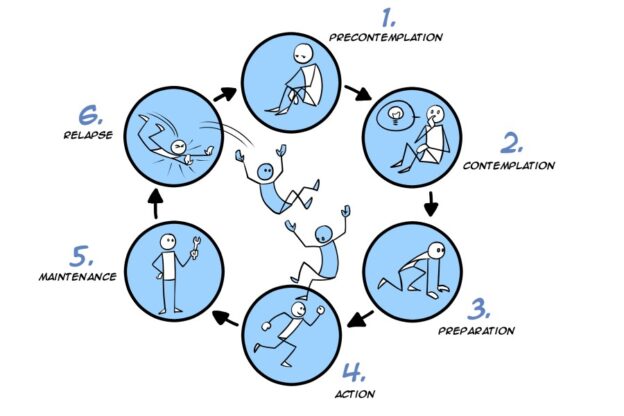
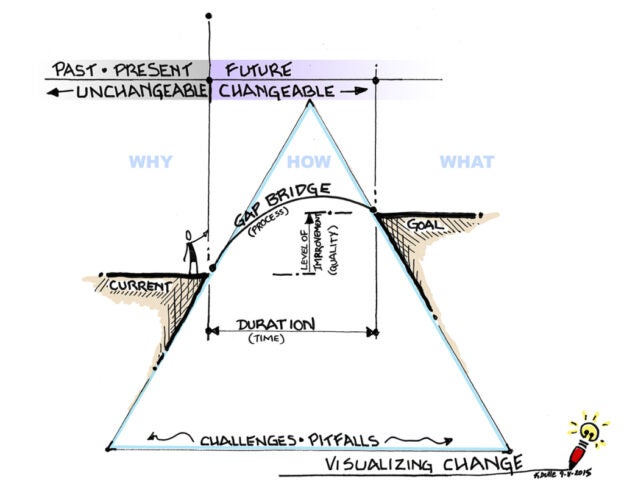
    Last week we talked about change curves and took a moment to recognize that important change goes through a cycle just like grief. In fact, if you took a moment to glance at the Kubler-Ross Change Curve you might have noticed it looked pretty dang familiar to you. The five stages of change happen to be, you guessed it, the exact same five stages of grief! It’s true: Our minds grieve change even when it’s good. A big breakup still hurts even if we know it’s time to move on.

    Understanding that letting go of the way we did things is a process, even if the way we did things wasn’t serving us, helps us prepare for the ride and know when we need to act vs when we simply need to hold on. Knowing that stakeholders’ fear, anxiety, anger, frustration, and helplessness are to be expected, we can see those reactions as a sign that we are on the right track when we are managing the change appropriately.

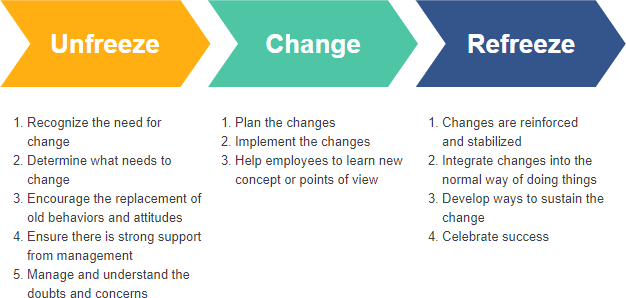
    That doesn’t mean we should let go of the wheel, of course. What we can do to successfully set our organization up for the change ahead, the “unfreeze” stage of the Kurt Lewin Change Model, is to prepare our organization by:

    + Framing the problem and breaking down the status quo. This stage includes challenging the beliefs, values, attitudes, and behaviors that currently define the problem and being willing to look at the biases that enabled us to land here in the past. Using the analogy of a building, we must examine and be prepared to change the existing foundations as they might not support new additions. This may evoke strong reactions in people, and that’s exactly what needs to be done. We’re effectively creating a controlled crisis, which in turn can build a strong motivation to seek out a new equilibrium. Without this motivation, you won’t get the buy-in and participation necessary to effect meaningful change. Covid, of course, accelerated our first step- for better or for worse.

    + Communicating to our stakeholders why the status quo isn’t working and why we need the change. This might be especially hard when we’ve found ways to celebrate old policies/metrics that really weren’t serving us. This step requires a bit of honesty, humility, and an honest effort to change the narrative going forward. (Thankfully, those are all traits of a great leader and showing openness and vulnerability during change serves to deepen trust and respect.)

    + Soliciting feedback: Openly, honestly, anonymously, regularly and without repercussion. Whether it’s a conversation, a survey, a private suggestion box, town hall meetings or just picking up the phone to call individual staff members, the answer is YES. Make clear the only promise associated with the feedback is that it will be heard and the concern will be addressed.

    + Addressing, managing and responding to fears and…

    + Messaging, messaging, messaging and messaging some more about the gains made along the ride, not just at the end. The change cycle tells us there will be dips and losses along the way. Don’t let those expected setbacks become the narrative that keeps fears stoked.

    When it comes to the community, tell your story through a service-oriented lens. 

    Abe Lincoln once said, “Give me six hours to cut down a tree and I’ll spend the first four sharpening the axe.”

    You might feel like you’ve been messaging and talking about policy changes for 24 hours a day 7 days a week since March, 2020, but it’s easy for us to forget that our shelter world, the thing we live and breathe every single day, is a place, a service, that most people only interact with a few times in their lives. The most well-resourced shelters in the country with a team of marketers behind them are doing great to have an online following that’s 10% as large as the city or county they serve. Of those, less than 6% will see a post you make on social media. The point: Don’t be surprised to find your community is still surprised by the improvements you’ve made to your customer and animal experience. Expect that they have no idea what or why things are different and relish in the opportunity to tell them how you are realigning and expanding your services to meet their needs and the needs of the animals.

    How do these changes directly benefit the animals? How do they benefit stakeholders? 

    ●  If you fumbled around for a few weeks testing new technologies that would allow your animals to meet their match online and now they’re out there swiping left with potential adopters– tell that story! Does every person visiting your website know they can meet their next best friend without getting off the couch? 

    ●  If you implemented an appointment-based system, whether it be for adoption or to surrender, tell your community what it means to be able to give your undivided attention to the pet and person sitting in front of you. Can they go online and schedule an appointment using a convenient calendaring app? Great! No one likes to wait, everyone likes clean surfaces, and, rest assured, every animal and adopter/guardian receives your team’s full attention when it’s their turn. Focused attention is the gold standard of good service, even more so when big decisions are being made. 

    ●  If you stopped taking in healthy cats, communicate why this change is in alignment with the recommendations made by leading national organizations. Most people simply don’t know that cats are ten times more likely to be reunited with their guardians when left in their neighborhood of origin. 

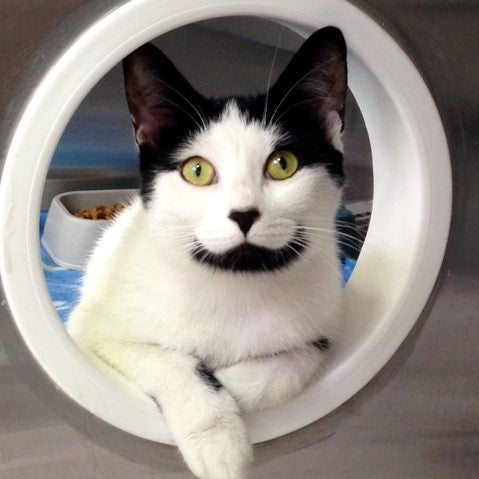
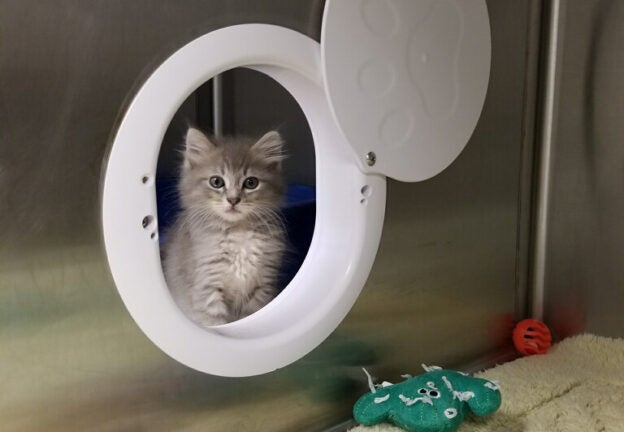
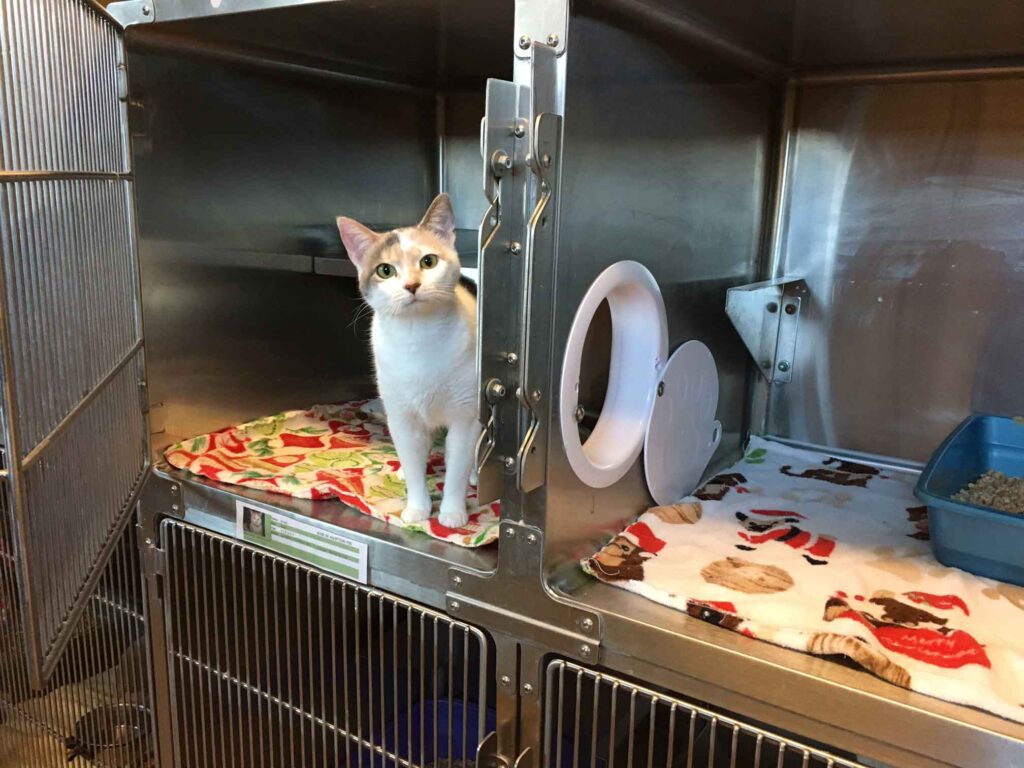
    ●  If you emptied your shelter to upgrade your cat housing, show your supporters what it looks like when a cat steps through a portal. We all understand how critical having adequate space to move around is to our wellbeing now more than ever.

    This is our story of change and it’s a great one. The most recent Shelter Animals Count data shows us that euthanasia is down by at least 100k lives this year compared to last and animals are spending a record low number of nights in cages. If your organization is feeling weary, unappreciated, misunderstood, or even under attack, bless and release what is not yours to worry about and hand it over to the life cycle of grief so you can spend all your time and attention shouting the positive changes for both animals and the people that love them from the mountaintops.

  • What?  KSMP is Hiring for One Special Role!

    What? KSMP is Hiring for One Special Role!

    Fellow animal welfare colleagues and large-scale change leaders, we are conducting a search for a Deputy Director of the Koret Shelter Medicine Program (KSMP), our small but mighty program dedicated to serving as change agents in our field. If you or someone you know is inspired by building and sharing the tools needed to implement humane, community-centered approaches to shelter management – click on the link below or email sheltermedicine@ucdavis.edu.

  • Cha Cha Cha Changes

    Cha Cha Cha Changes

    As the months move on and we settle into our new rhythm, some of our redesigned-by-Covid programs are starting to feel old hat now. While there is not a one-size-fits-all solution for every shelter, we know many of you have attempted to safeguard your shelter staff and community by reducing touch points. You moved to appointment-based services and extended your care options to include online/phone consultations, and you implemented curbside drop-off/pickup to manage contact and avoid crowded lobbies. You added parking spots with “text for service” messaging and moved your foster training online. Some of you launched home-to-home programs that bypass the shelter altogether, while others changed the direction of field officers’ vehicles by offering “foster delivery” services and suspending healthy “stray” (were they really lost?) cat pickup. 

    Despite most of these changes taking place rapidly under crisis conditions, we seem to be getting it right. The overwhelming response from shelter professionals has been clear: We’re not going back! 

    “Our animals are less stressed, dog bites are down, our staff loves the new appointment-based model…it started out scary, but it’s been great for our animals!”

    California Animal Shelter Covid Action Response member

    As a sheltering community, we’ve accepted chaos as inevitable. Stress and overwhelm are inherent; our cross to bear for doing this work. Covid brought business as usual to a grinding halt, a momentary pause that had the unintended but remarkable consequence of propelling the animal welfare industry forward a decade or more. 

    From where we stand (6 ft apart) today, we know overwhelm doesn’t have to be the norm. We know that our community will step up when we make room for them. We’ve seen the other side, a place where we operate within capacity and proactive policy making replaces reactive decision-making. We have felt the difference of a day that was predicted, scheduled, and managed versus another day that was survived. 

    Most importantly, we’ve been allowed space and time to give excellent service to both pets and their people and we’ve witnessed firsthand the difference time and attention makes to our outcomes.

    It’s no surprise the question on the proverbial streets has turned proactive, too: How do we institutionalize these changes before we slide back to the way it used to be?  Change experts would tell us the most critical step is to invite our stakeholders to hold the line with us by telling our story of transformation through transparent, value-first communication and asking them to be ambassadors of change. 

    Sounds easy enough, right? So why is there still a knot in our stomach. 

    Well, because this is animal welfare. A world in which people care an awful lot. Emotions and unchecked fears often bubble up and over, wreaking havoc on our best intentions. We all know a story of a shelter/rescue being dragged through the mud after instituting a new policy. Many of us have been a story. Despite our very best intentions, it’s not pretty when we lose control of the narrative. 

    So how do we get in front of it? How DO we tell our own story and drive positive change forward when emotions run high? The answer is by understanding the change process and what we should expect around every bend. Knowing what to expect allows us to be prepared to lead the positive messaging and not scrambling to react to mud being thrown our way. To stay ahead of the change (and its reputation), we have to know and address the concerns of our stakeholders. Unattended stakeholder fears are the enemy to progress!

    Last week we shared a link to a free resource, Change Management: The Role of Strategic Communication.  (Heads Up: You have to scroll down a list of free resources offered by Brighter Strategies to find the Strategic Communication workbook. You’ll need to enter your email to receive the downloadable workbook, but it’s worth it and they aren’t too spammy.) Take a moment to familiarize yourself with the Kubler-Ross curve and the stages of change. Ask yourself: 

    • Is the change we are experiencing proactive or reactive? 
    • What stage(s) of the Kubler-Ross curve are our staff, volunteers and/or board at? 
    • Based on our stage and the nature of our change (i.e. proactive or reactive), what are the emotions our stakeholders are likely experiencing? 
    To successfully move the change effort we want to see through our organization and our community, or to make a temporary change permanent, we have to complete the change cycle. Next week we are going to dive into what to do when a pandemic caused us to skip the first step of the change cycle and how we can go back to gather stakeholders left behind and move forward together. 

    Until then, have a peek at the Kurt Lewin Change model and take a moment to decide if you would classify your organization as being in the “unfreeze” stage, the “change” stage, or the “freeze” stage.  


    +If you are feeling good: What makes you feel like you’ve moved on to stage two and are ready to do or are already doing the work associated with big change? Was there a moment you knew you had support and buy-in? 

    +If you are feeling unsure, fearful or uneasy: What makes you feel like you are stuck in stage one? Do you feel community pushback is keeping you from making progress? How is that pushback showing up?

    We’d love to hear from you! Please email us at sheltermedicine@ucdavis.edu and share what it’s like to be experiencing BIG change at your shelter right now. We want to hear the good, the bad, and the ugly. 


  • Brand New Fear Free Course for Shelters! – Fear Free Housing and Environment

    Brand New Fear Free Course for Shelters! – Fear Free Housing and Environment

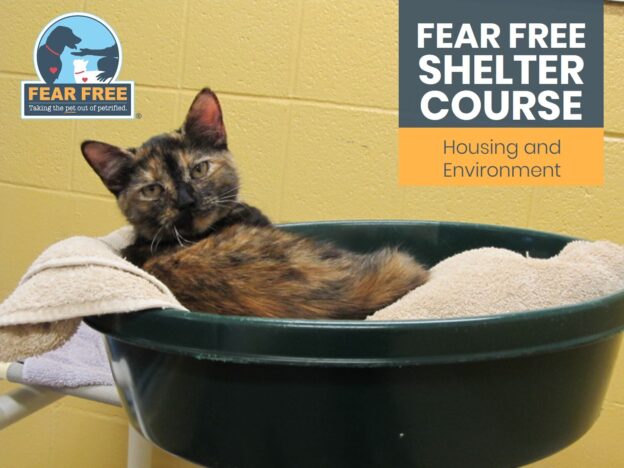
    Exciting news! Fear Free has just launched a brand-new bonus course: Fear Free Shelter Housing and Environment. (and it’s FREE)

    In this course, you will learn how to create a safe, comfortable, and Fear Free environment for shelter animals and understand how housing and environment impact the behavior, health, and wellbeing of shelter animals.

    This course contains three one-hour modules, which need to be taken in consecutive order.

    Part A: The Physical Environment

    • Learn essential shelter housing considerations, including maintaining a variety of housing styles
    • Understand why separating animals into a variety of different housing wards is beneficial
    • Learn how to prevent or reduce crowding and reduce average length of stay for animals

    Part B: Housing Facilities

    • Discover ways to reduce stress in shelter dogs and cats by adjusting their housing areas
    • Learn valuable tips for providing hiding spots and perches for cats and comfortable resting areas for dogs
    • Understand the benefits and challenges with each of the different styles of housing for dogs and cats

    Part C: The Emotional Environment

    • Describe the pros and cons of animals having roommates in their enclosures
    • Learn what an emotionally healthy routine looks like for shelter dogs and cats
    • Understand important considerations for group housing cats

    Fear Free Shelters Graduates can find this course by logging in at fearfreeshelters.com and navigating to Bonus Courses. Haven’t taken the Fear Free Shelter Program yet? Sign up for free today!

  • Take Your Learning to the Next Level!

    Take Your Learning to the Next Level!

    Considering expanding your knowledge of shelter medicine, infectious disease, forensics, shelter animal behavior and welfare?

    Seeking a more structured online learning experience and possibly even pursuing a certificate or degree?

    The University of Florida offers an online shelter medicine distance learning program. Sponsored by PetSmart you can learn how to recognize and manage infectious diseases in a shelter, collect forensic evidence in a current investigation, and prevent behavioral and welfare problems in large populations of animals.

    This program fills an existing curriculum gap in shelter medicine by providing quality online courses for veterinary professionals, animal welfare professionals, and students. Even career changers interested in getting a start in shelter medicine or assisting local shelters with non-profit leadership issues can transition into the program as a non-degree seeking student. Demand continues to grow for qualified professionals in this ever-expanding field.

    UF’s shelter medicine graduate program offers competitive in-state tuition for all students, regardless of location.

    Anyone who has an undergraduate degree (not just veterinarians), can take one course as a non-degree seeking student:  https://onlinesheltermedicine.vetmed.ufl.edu/programs/continuing-education/ to check things out.

  • Portalmania 2020 – Triple Your Impact!

    Portalmania 2020 – Triple Your Impact!

    Despite high adoption rates recently, many cats in the US are still stuck in shelters. In these unfamiliar and overwhelming environments, cats seldom have space to exhibit normal behavior like stretching and fully extending their body so are more prone to depression and illness.

    Fortunately, there’s a simple way to reduce all of these problems for cats in shelters—cat portals. Installing these clever closable windows in kennel walls allows cats to move from space to space, giving them more freedom. Research shows that this reduces stress and disease, and creates far better outcomes for cats in shelters awaiting their forever homes.

    Shelters that have already installed the portals share nothing but excitement for the improvement they see in the cats in their care. Staff at the Calgary Humane Society say, “Once the portals were done, we were quite amazed at how quickly we saw improvement in the cats’ overall well-being. Stress-related illnesses such as URI dropped, staff indicated they (the cats) seemed livelier with less scratching and biting.

    Because of all this, GreaterGood.org’s Jackson Galaxy Project is partnering with Team Shelter USA and the Million Cat Challenge to retrofit shelters across America with cat portals and improve cats’ lives and outcomes. Thanks to a generous gift from Shor-Line, a portal can be purchased, delivered and installed for just $40. And now, you can TRIPLE your impact! For a limited time, Royal Canin is matching all donations dollar for dollar, up to $15,000. By donating today, YOU can provide a shelter with a cat portal for just $20!

    Please help us get portals to every single shelter that wants them. We’ve never had a better opportunity to upgrade the housing and welfare for cats in shelters. #Portalmania2020

    You can help. Give today to provide shelter cats with more freedom and better health, so they’ll find happy forever homes.

    For More Information Visit:

    https://give.greatergood.org/campaign/portalmania-help-install-cat-portals-in-shelters-across-america/c288622