Feeding a dog in the presence of an eliciting stimulus is often masked as counter conditioning him. When it doesn´t work we label the process as ineffective or assume it’s not the best choice for that particular dog or situation. But the only times counter conditioning doesn’t work is if it’s not counter conditioning, if it’s not performed correctly, or if there is some physiological or neurological process inhibiting learning.
There are pillars that support a counter conditioning procedure. Novelty, salience, contingency, contiguity and timing are the main ones. Similarly, there are factors – mainly human error – that hinder the process. In this webinar we will explore those pillars and discuss human errors that make counter conditioning “ineffective”.
– Understand the importance and impact of novelty.
– What is more important? Contiguity, contingency, or both?
– Learn how pre-exposure to the US can make it less effective.
– Increase US salience while decreasing trigger salience.
– Learn about trace conditioning, simultaneous conditioning, short and long-delay conditioning and when to use them.
– The role of backward conditioning.
– Avoid common errors during a counter conditioning procedure.
– Some practical examples.
“Dogs with Big Feelings” will take place on July 16th from 9am PT – 5pm PT, and you can join us from the comfort of your living room!
* as per usual if you cannot attend live the conference content will be available in your student library
Instructors/Panelists: Sharon Carroll, Dr. Amy Cook, Julie Daniels, Karen Deeds, Denise Fenzi, Sophie Liu DVM
Guest Panelists: Leslie McDevitt, Michael Shikashio
Society’s relationship to pets continues to evolve. The majority of people consider their pets to be beloved family members and expect their local animal shelter to work diligently to save the lives of the dogs and cats that enter the facility. This program will provide the knowledge you need to assume a management or leadership role at an open-admission animal shelter. You’ll learn how to maximize a shelter’s lifesaving potential through program management, community engagement, and shelter operations while at the same time preparing yourself for an exciting career.
The five courses are:
Leadership covering strategic planning, analyzing operations, decision-making, managing people and processes to achieve results, organizational responsibilities, and working with a board of directors.
Shelter Operations covering adoptions, animal care and sheltering fundamentals, animal behavior and enrichment, and customer service.
Community Program Development covering volunteers, foster care, spay/neuter, pet retention, events, and community relations.
Animal Health and Clinic Operations covering understanding shelter medicine, basic animal health considerations and care, euthanasia decisions, and clinic operations.
Marketing and Development covering development fundamentals, fundraising strategies, marketing fundamentals, adoption promotion, social media and websites, and media relations.
Each of these courses include live video conference sessions with top experts in the field providing students valuable contacts within the field. Additionally, alumni have access to exclusive networking opportunities and receive notification of employment opportunities.
You can sign up for individual courses or all five for a discount. All five must be completed to get a certificate.
Who will benefit from the program?
Professionals seeking a career change to something more personally fulfilling.
New shelter directors.
Shelter directors or managers wishing to improve their organization’s live release rate and sustainability.
People working in the animal welfare field who wish to advance into management roles.
Board members of animal shelters.
Credit for program/courses
Upon completion of all five courses, you will receive a Certificate in Animal Shelter Management from the University of the Pacific.
Each course earns:
Continuing Education Units (CEUs) from the University of the Pacific
Association of Animal Welfare Advancement CAWA Continuing Education (CE) credits
Schedule and Registration
Each of the five online courses are six weeks long and are offered sequentially. The entire program is about seven months long, and a new round starts again after a short break. More information on start dates of each course and the registration form can be found on the University of the Pacific website.
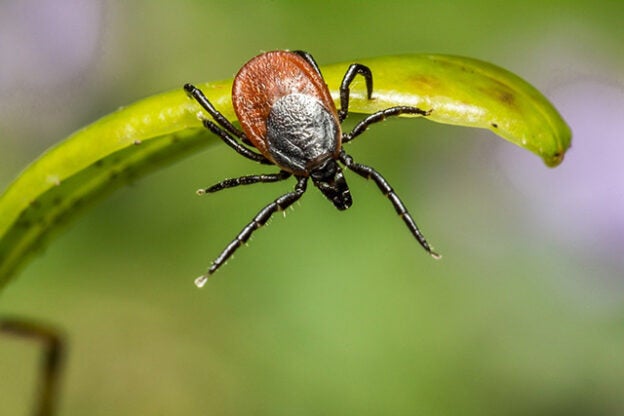
In this complimentary, 1-hour VETgirl–Zoetis webinar, Dr. Linda Kidd, DVM, PhD, DACVIM reviews the changing geographic distribution and prevalence of tick-borne diseases. Tune in to learn how to optimize diagnostic testing for these pathogens!
Thanks to sponsorship from Zoetis, this webinar is FREE to all!
Not a VETgirl ELITE member? Get your learning on with the #1 veterinary CE resource – clinically relevant, practical, and accessible 24/7 on your own time! Don’t miss out – click HERE to join now! All the webinars are recorded and can be viewed 24/7 after their release date for CE credit. If you’re watching the recording later on, don’t forget to take the CE quiz with it when you’re done to get your CE certificate!
*Note: Viewing this webinar is for individual use only; VETgirl webinars are not designed nor meant to be viewed in a group setting due to RACE-CE audit purposes. Inappropriate sharing or viewing of the webinar may result in revoking of membership.
Each of us has preferences about what we find appealing and when! Ice cream or steak? Chocolate or strawberry? Sweet or salty? Join Monique Feyrecilde, BA, LVT, VTS Behavior, who will explore preferences, options, feeding methods, and how best to use the Fear Free Treat Ladder during veterinary visits.
Attendees will learn to:
– Explore a variety of options for each patient interaction and observe patient preference.
– Construct a ranking system for a hierarchy of available rewards based on the observed preference of the patient.
– Use at least three different types of food effectively depending on the procedure being performed.
Looking for practical ways to improve happiness and productivity while decreasing burnout and dysfunction in your practice?
Join Natalie Gruchow, CVPM, SHRM-CP, Elite FFCP (Veterinary) who will explore ways to overcome leadership obstacles and strengthen a Fear Free culture.
Attendees will learn to:
– Identify dysfunction in your practice
– Embrace vulnerability to repair trust with your employees
– Apply advanced Fear Free concepts<
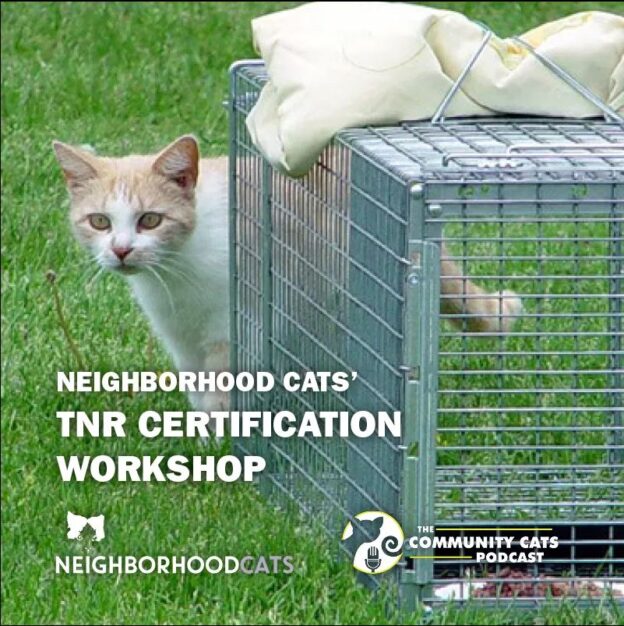
Are you ready to be part of the solution for feral and stray cats in your neighborhood? Our expert instructors will teach you best practices for Trap-Neuter-Return (TNR) and colony management. Learn what TNR is and why it works. We’ll cover getting along with neighbors, preparations for trapping, trapping itself (including entire colonies at once), feeding, providing winter shelter, and more. Take advantage of the interactive format, extensive handouts, and video footage of actual projects. Attendees will receive a certificate of attendance and gain access to an ongoing Facebook group for networking with other TNR activists. Instructed by Susan Richmond, executive director, and Bryan Kortis, national programs director.
Animal control officers are playing a much larger role today in the reduction of shelter intake by choosing to identify and return stray dogs to their families without bringing them into the shelter, but all too often officers stop looking for an owner was they find that the animal has no ID tags or microchip. This workshop highlights successful efforts from agencies across the country that have shown to significantly increase the field RTO rate for those animals without obvious identification.
Nick Walton is the National Shelter Support Manager for Best Friends Animal Society, providing leadership and training for strategic shelter partners across the country. Through Best Friends’ national shelter support program, Nick conducts professional shelter operations and field assessments, and leads progressive, humane trainings for animal control agencies and officers.
Prior to joining Best Friends and serving as the behavior and training coordinator for the Best Friends Lifesaving Center in Atlanta, Nick spent several years working as an animal control officer for Fulton County Animal Services through LifeLine Animal Project. Through this work, he served as Fulton County’s primary field training officer, providing professional training and development to new officers and cultivating a community-oriented approach to animal services in order to help Atlanta become a no-kill city.
Nick’s many years of experience as a dog trainer and behavior specialist combined with his commitment to keeping pets safe at home through proactive neighborhood engagement have resulted in a deep expertise in and love for community-based lifesaving. Once known around town as “the Dog Food Man,” he has a reputation for building trust and key relationships with lasting positive effects for both pets and people.
Today, 2+ million puppies are bred in puppy mills/year. This has caused a fierce battle, including among veterinary professionals. It is the practices who see firsthand both inhumane and humane mill operations. This conversation is about finding true solutions for puppy mills.
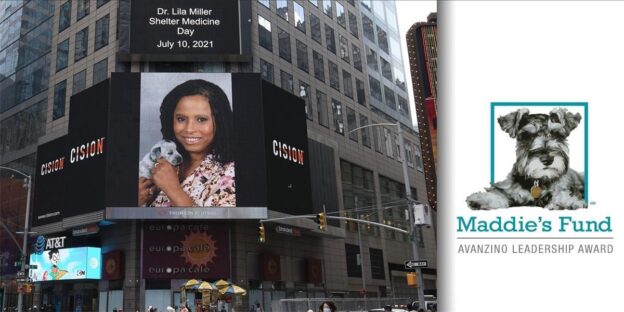
On July 10, 2021 Maddie’s Fund® presented the 2021 Avanzino Leadership Award to Lila Miller, Doctor of Veterinary Medicine (DVM) for her trailblazing leadership and purposeful dedication to the field of veterinary shelter medicine.
A proclamation of Dr. Lila Miller Shelter Medicine Day has been declared for July 10. Recognition of Dr. Miller, this day and the Avanzino Leadership Award was received from U.S. Senator Charles E. Schumer, U.S. Representative Tom Reed, New York Governor Andrew M. Cuomo, New York State Assemblywoman Deborah Glick, New York City Mayor’s office, City of Ithaca Mayor Svante Myrick, and Manhattan Borough President Gale Brewer.
Dr. Miller has long been a pioneer and leading voice in veterinary shelter medicine. She transformed the lives of countless pets, developing the first veterinarian-written guidelines for shelter animal care, which are now used in shelters across the country to ensure the humane treatment of shelter pets. An unassuming trailblazer, she’s educated a generation of students about issues shelters face and has paved the way for women of color in veterinary medicine. In 1977, Dr. Miller was one of the first two African American women to ever graduate from Cornell University’s College of Veterinary Medicine.
“Dr. Miller is the mother of shelter medicine,” said Dr. Laurie Peek, Maddie’s Fund Executive Leadership Team. “She has forged a path to achieve not only her childhood dreams of becoming a veterinarian, but also inspires generations of veterinarians along the way. Shelter medicine changes everything because of her. We owe Dr. Miller our deepest gratitude for her bold ideas and innovative work. We are so very fortunate to have a living legacy in the field of animal welfare and our world.”
The Avanzino Leadership Award is presented with a $25,000 grant which Dr. Miller has designated to Animal Care Centers of New York City.
In 1999, Dr. Miller taught the first shelter medicine class in the U.S. at Cornell, and in 2003 taught the first shelter medicine course on Veterinary Information Network (VIN). She co-founded the Association of Shelter Veterinarians (ASV) and has also co-edited four shelter medicine textbooks, served as adjunct professor at both Cornell University College of Veterinary Medicine and the University of Pennsylvania’s School of Veterinary Medicine, and has lectured extensively both nationally and internationally.
She spent her entire groundbreaking veterinary career with the ASPCA as the Director of the ASPCA’s Brooklyn Clinic, Veterinary Advisor, Vice President of Veterinary Outreach, and Vice President of Shelter Medicine, retiring in 2019. She currently serves as a member of the American Association of Veterinary State Boards advocating for animal shelters.
New York City Mayor Bill de Blasio’s office presented a letter of commendation to Dr. Miller at the virtual awards ceremony. “The NYC Mayor’s Office of Animal Welfare holds Dr. Miller in the highest regard,” said Christine Kim, Director of the NYC Mayor’s Office of Animal Welfare. “I congratulate Dr. Miller on the well-deserved recognition for her lifelong commitment to shelter medicine and for her trailblazing legacy that inspires people of color exploring pathways into an historically white profession.”
The Avanzino Leadership Award is named after Rich Avanzino who is considered the father of the no-kill movement and was Maddie’s Fund President from 1999 – 2015. This award recognizes significant achievement and courage to look beyond the status quo and make bold decisions to improve the lives of pets and their people.
Help us in celebrating Dr. Lila Miller’s impact on Shelter Medicine every July 10th!