Blog
-

How Our Community Saved 3.4 Million Cats
Think about the best stories you’ve read, or heard, or watched. The stories that have stuck with you. The stories you return to again and again because they have the power to move you, even if—or maybe especially if—you know them by heart. What ties them together? Maybe you’re into mysteries. Maybe you love love stories. Maybe you can’t resist an underdog overcoming huge challenges, especially when that win isn’t guaranteed, but necessitates an entire community rallying around a common goal. Grab a seat and a snack, because we’ve got a story that contains every single one of these elements. The best part? You’re the star! KSMP Director Dr. Kate Hurley was invited to the TEDxMileHigh stage to tell the fascinating, surprising, and victorious origin story of the Million Cat Challenge and how our community came together to save 3.4 million cats and counting. Whether you know this one by heart or you’ve never heard it before, it’s worth watching and sharing with anyone who needs to be reminded that sometimes what seems impossible is actually, when we all join in, possible. -

Online Course – Starts 2/21/22 – Compassion Fatigue Strategies – University of Florida – Maddie’s Shelter Medicine Program (fee applies)
Compassion Fatigue Strategies Plus is a unique online course designed to support people who work with animals. In this four module, self-paced class, you will establish a foundation of knowledge to help you better understand and transform your experience with compassion fatigue (aka empathy strain), burnout, and stress. Course begins 02/21/2022–04/18/2022; registration closes 2/18/21.
The course will help you recognize signs and symptoms of compassion fatigue, burnout, and vicarious trauma, learn how to reduce stress injury, increase your self-care and team-care practices, build compassion satisfaction, restore resiliency, and make successful changes in your life and in your organization.
In live calls and recorded modules, you will learn critical resilience skills, such as: self-awareness, self-regulation + grounding techniques, intentional perspective + cognitive reframing, self-care and setting limits, social support and debriefing, and how/when to seek mental health help.
This class is a personal exploration to help you build the self-awareness necessary to manage the impact of compassion fatigue and other workplace stressors. Please be aware that the class work can be emotionally challenging.
By the end of class you’ll have a variety of practical strategies to help you manage and transform your experience with compassion fatigue and reduce overall stress. You’ll have a better understanding of yourself and how to engage in self-care that works for you, as well as how to support your staff using vicarious-trauma informed approaches, so that you can be well, while you continue to do good work!
WEBSITE LINK: https://sheltermedicine.vetmed.ufl.edu/education/continuing-education/compassion-fatigue-strategies/
-

Online Event – 11/3/21 – ASPCA®-AAWA Research Forum – ASPCA and AAWA
About the Event
Animal welfare professionals, including shelter leadership and staff, veterinarians, and those interested in research and data analysis, are invited to explore the results of new research studies in community and shelter animal welfare. Attendees will leave with practical suggestions for applying what they’ve learned to benefit their communities and are eligible for CAWA credit.
Planned presentations include*:
- Geographic and Socioeconomic Predictors for Intakes and Outcomes of Domestic Cats through Animal Shelters (University of Maryland Center for Environmental Science / Humane Rescue Alliance / DC Cat Count)
- Measuring and Minimizing Sound in Shelters to Improve Cat Welfare (University of British Columbia)
- Veterinary and Pharmacy Students’ Expectations Before and Experiences After Participating in an Interdisciplinary Access to Care Veterinary Clinic (University of Wisconsin / WisCARES)
- Animal Shelter Services and Community Vulnerability: “Are We Taking from the Poor and Giving to the Rich?” (University of British Columbia)
*All presentations are subject to change.
WEBSITE LINK: https://www.aspcapro.org/splash/aspcar-aawa-research-forum
-
Online Event – 11/4/21 – Open Arms Huddle #9 – Embracing a Welcoming Culture – Maddie’s Fund
Please join us for 11 info-packed meetings with time for your questions. Each Open Arms Challenge Zoom Huddle will consist of two 10-minute presentations from peers who have implemented that topic at their animal shelter or rescue organization, respectively, followed by a 20-minute Q&A.
Speakers: Mandy Evans, Better Together Animal Alliance, and Andrew Dorman, Cat Town
About this huddle: When your entire organization is more open and inclusive, everybody wins.
WEBSITE LINK: https://maddiesfund-org.zoom.us/meeting/register/tZckduupqjsoGNGtPuk2fatmO_acogXGlPx7
-
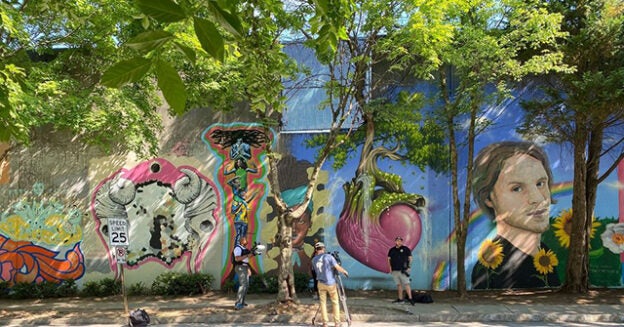
Online Event – 10/19/21 – CARE celebrates Hispanic Heritage Month – CARE
CARE is going LIVE with for part 2 of our celebration of National Hispanic Heritage Month.
We have three more amazing guests!
Alana Yanez – Executive Director for Animal Shelter Assistance Program (ASAP Cats)
José Ocaño – Senior Director, People and Culture, Best Friends Animal Society
Nicole Galvan – Southwest Regional Coordinator, Bailing Out BenjiWEBSITE LINK: https://fb.me/e/1e45RVNb0
-
Zoom Meeting – 12/2/21 – December Community Session for Members – BlackDVM Network
BlackDVM Network Community Sessions give our members the chance to meet each other and share experiences. Come hang with us! We want to get to know you. Community sessions are like Happy Hours just for our members. We’ll discuss any and everything and hopefully learn a ton about each other every time.
BlackDVM Network is inviting you to a scheduled Zoom meeting.
Topic: BlackDVM Network’s Personal Meeting Room
Join Zoom Meeting
https://us06web.zoom.us/j/9792776855?pwd=YkhkL2xHR2xVc3pwb0U5KzUyeUxPZz09
Meeting ID: 979 277 6855
Passcode: BDVMN
One tap mobile
+13126266799,,9792776855#,,,,*422042# US (Chicago)
+19292056099,,9792776855#,,,,*422042# US (New York)
Dial by your location
+1 312 626 6799 US (Chicago)
+1 929 205 6099 US (New York)
+1 301 715 8592 US (Washington DC)
+1 346 248 7799 US (Houston)
+1 669 900 6833 US (San Jose)
+1 253 215 8782 US (Tacoma)
Meeting ID: 979 277 6855
Passcode: 422042
Find your local number: https://us06web.zoom.us/u/kcLi4LRuhm
WEBSITE LINK: https://www.blackdvmnetwork.com/event-details/december-community-session
-
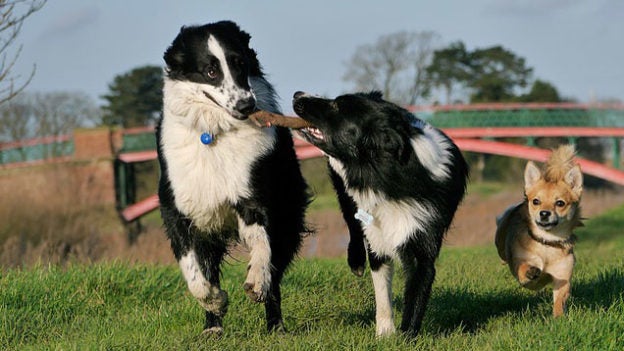
Online Course – Enrollment open 1/1/22 to 1/20/22 – Spring Cohort 2022 – Shelter Playgroup Alliance
Program overview: This series of educational modules will prepare participants to manage playgroups using the LIMA ethical standard and use conspecific interactions for behavior modification.
Cohort structure: Learners will be invited to join a cohort that will meet virtually for four months via the Litmos LMS platform. Each cohort will be invited to twice-monthly (bi-weekly) hour-long, live meetings via Zoom webinar so that questions can be answered live. The bi-weekly meetings will feature video analysis and discussion of relevant topics.
Registration process: Individuals interested in joining each cohort must submit an “e-mail of interest” to the executive director, Mara Velez requesting to be added to the upcoming cohort. Each person must login at least twice a month and complete modules in order to continue.
Completion timeframe: Learners will be expected to complete one module per week, which will require 60-90 minutes per week. The program consisting of Foundation and Intermediate modules will be expected to be completed within a four month time-frame. The total seat time per week is estimated to be two to two and a half hours, which is a combination of reviewing the modules and completing assessments and assignments.
Other requirements: In order to complete the assignments, learners must have access to at least two species of animals during the cohort period (e.g., dogs, cats, rabbits, birds, horses). Application of knowledge and demonstration of skill are key components of this educational program.
CPDT: 36 CEUs | IAABC: 36 CEUs
CLICK HERE TO DOWNLOAD MORE INFORMATION
WEBSITE LINK: https://www.shelterdogplay.org/workshops
-

Webinar – 11/3/21 – Shaping Up Shaping. Presented by Dr. Karolina Westlund – PPG (fee applies)
In this session, the presenter will go over some of the ways she sees good trainers tweak their shaping sessions using completely different strategies depending on context. She will discuss:
• Why the 80% rule is problematic.
• Bold shaping.
• Cautious shaping – pingponging.
• How the 10 Laws of Shaping evolved into the Modern Principles of Shaping.
• Some common shaping mistakes – and how to address them.
Shaping is the sharpest tool in the animal trainer’s box…theoretically. Practically, it can be hard to execute, and many trainers get stuck. Hopefully, this lecture will provide you with some ideas of how to get unstuck.
Level of difficulty: Intermediate
WEBSITE LINK: https://petprofessionalguild.com/event-4300677
-

Webinar – 10/28/21 – Sharon Carroll – Strategies for Training the Atypical Dog – Part 2: Specific Examples / Case Studies – FDSA (fee applies)
This is Part Two of a two-part webinar on working with “atypical” dogs. Both webinars are stand-alone webinars covering a different aspect of this topic, but they combine to cover the topic more broadly.
When we train our dogs, we are constantly asking them to solve puzzles. We are asking them to connect the dots between the cue (context cue or human initiated verbal / visual cue), their subsequent behavior (action), and the reinforcement. As our dog becomes more confident about the connection between these elements, they can respond more rapidly and with improved accuracy.
During the learning process there will be moments of frustration and confusion. Typical dogs deal with small amounts of frustration and confusion in a way that helps them find a solution to the puzzle. This leads to the dog attaining reinforcement, which results in them putting in the same or greater effort on future learning-oriented tasks.
Atypical dogs however do not respond in the same way. For a range of underlying reasons, the training puzzle itself may cause an excessive spike in arousal in these dogs. This is commonly referred to as the dog “stressing down” or “stressing up” depending on the observable behaviors. “Stressing down” behaviors may include shutting-down, stalling, looking away, appearing disinterested, freezing, moving slowly, or performing avoidance, escape, appeasement, or displacement behaviors. “Stressing up” behaviors may include barking at the human or at the task, whining, performing rapid sequences of random un-cued behaviors, anticipating cues, spinning, doing zoomies, lacking focus, and attempting to guess at the solution with little thought.
Beyond training pressures, these dogs may also struggle more than usual with environmental pressures. All dogs need a certain amount of desensitization and distraction training in order to successfully function in bigger environments, but the atypical dog may be extremely aware of stimuli in the environment. This requires additional training steps and more detailed monitoring.
In this “Part Two” webinar we look at a wide range of specific examples from a variety of different sports. Including:
- Object retrieve (moving slowly, displacement sniffing at the object before picking up or instead of picking up, dropping the object or stalling on the return)
- Retrieving incorrect articles in scent article exercises or in directed retrieves.
- False alerts and missed hides in nose work.
- Arcing in straight line exercises such as recalls or retrieves.
- Breaking start line stays in agility.
- Missing position change cues at a distance.
- Inconsistency, slowing, stalling, or avoidance in weave poles.
- Needing repeated cues or wandering off during rally, obedience, agility.
- Performing zoomies or “visiting” ring crew, judges, stewards, spectators, other dogs during training / competing.
- Hesitating on the approach to contacts or blowing through contacts in agility.
- And more!
For each example we discuss the varied reasons these behaviors may occur, along with solutions for resolving these issues.
WEBSITE LINK: https://www.fenzidogsportsacademy.com/index.php/self-study/webinars
-

Webinar – 10/28/21 – Sharon Carroll – Strategies for Training the Atypical Dog – Part 1: Concepts and Overview – FDSA (fee applies)
This is Part One of a two-part webinar on working with “atypical” dogs. Both webinars are stand-alone webinars covering a different aspect of this topic, but they combine to cover the topic more broadly.
When we train our dogs, we are constantly asking them to solve puzzles. We are asking them to connect the dots between the cue (context cue or human initiated verbal / visual cue), their subsequent behavior (action), and the reinforcement. As our dog becomes more confident about the connection between these elements, they can respond more rapidly and with improved accuracy.
During the learning process there will be moments of frustration and confusion. Typical dogs deal with small amounts of frustration and confusion in a way that helps them find a solution to the puzzle. This leads to the dog attaining reinforcement, which results in them putting in the same or greater effort on future learning-oriented tasks.
Atypical dogs however do not respond in the same way. For a range of underlying reasons, the training puzzle itself may cause an excessive spike in arousal in these dogs. This is commonly referred to as the dog “stressing down” or “stressing up” depending on the observable behaviors. “Stressing down” behaviors may include shutting-down, stalling, looking away, appearing disinterested, freezing, moving slowly, or performing avoidance, escape, appeasement, or displacement behaviors. “Stressing up” behaviors may include barking at the human or at the task, whining, performing rapid sequences of random un-cued behaviors, anticipating cues, spinning, doing zoomies, lacking focus, and attempting to guess at the solution with little thought.
Beyond training pressures, these dogs may also struggle more than usual with environmental pressures. All dogs need a certain amount of desensitization and distraction training in order to successfully function in bigger environments, but the atypical dog may be extremely aware of stimuli in the environment. This requires additional training steps and more detailed monitoring.
In this “Part One” webinar we discuss:
- The underlying factors that contribute to the development of an atypical dog, including genetic traits and the impact of prior learning.
- Ways to identify the difference between a simple training gap, and a more complex problem.
- When to use classical conditioning versus operant conditioning.
- Methods for measuring the proportional impact the environment is having on our dog’s behavior.
We also look at a range of solutions that can create a more focused, happier, and more consistently successful training partner.
WEBSITE LINK: https://www.fenzidogsportsacademy.com/index.php/self-study/webinars