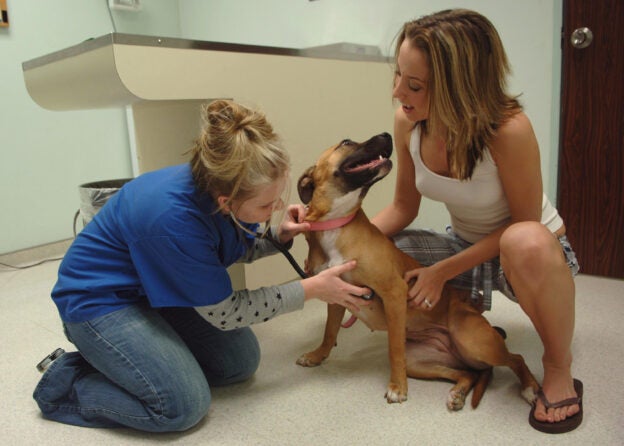
The symposium will look at emerging innovations in veterinary nurse/technician education, including specialization, and models of veterinary nurse/technician education from AAVMC member institutions. It will also consider diversity, equity and inclusion and the veterinary healthcare team; competency-based veterinary/nursing education; potential MS programs in veterinary clinical care; and practice act considerations.

Blog
-

Online Event – 7/21/21 to 7/22/21 – Leading Change in Team-Based Veterinary Medical Healthcare – AAVMC (fee applies)
“Leading Change: Emphasizing Team-based Veterinary Care” will examine opportunities for enhancing educational programs for DVM students and veterinary nurse/technicians in a way that can broaden, deepen and expand access to clinical care. The symposium is targeted at veterinary educators, veterinary nurse/technician educators and other thought leaders and will focus on a competency-based veterinary educational framework. Topical areas to be covered include an examination and assessment of the current operating environment for veterinary nurse/technicians, including work roles and responsibilities, retention and compensation, and existing models from industry. Toward enhancing teamwork, desired core competencies for all DVM graduates will be considered, along with effective models from veterinary teaching hospitals. -

Online Event – 7/17/21 – 2021 Feline Symposium: Caring for the Senior Cat – UC Davis School of Veterinary Medicine (fee applies)
The UCD SVM Center for Continuing Professional Education is excited to bring together some of the world’s experts in feline medicine to discuss disorders affecting senior cats. During this symposium we will discuss:
- Normal aging vs. disease
- Meeting the behavior, environmental, and nutritional needs of the senior cat
- Managing hyperthyroidism and CKD
- Addressing pain management for the osteoarthritic
This event will be LIVE and INTERACTIVE. We have scheduled several time slots specifically for you to ask questions and engage with our speakers.
CE Credit: Up to 8.5 hours (pending approval)
LIVE WEBINAR: The webinar will be live (Pacific Standard Time – PST) and interactive via the Zoom platform. The live sessions will not be available as a recording.
UC Davis SVM Employees and Students: Special pricing available. Select SVM Employee or SVM student when registering.
WEBSITE LINK: https://ce.vetmed.ucdavis.edu/symposia-article/2021-feline-symposium-optimizing-care-senior-cat
-

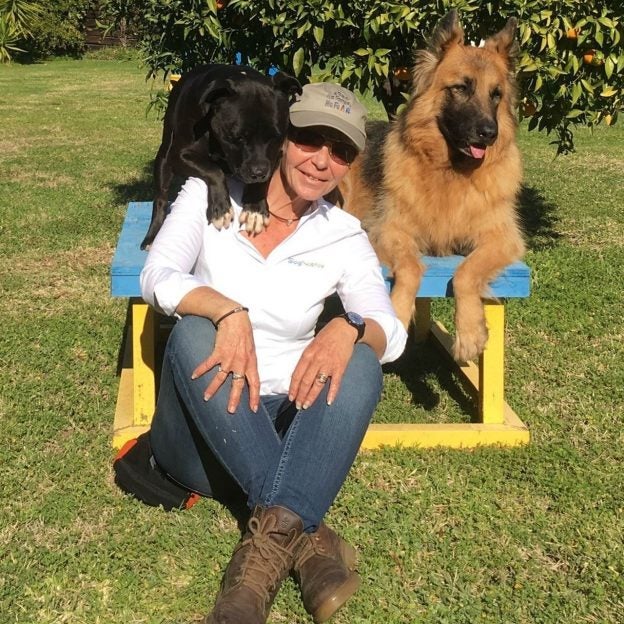
Webinar — Positive Puppy Socialization – in Times of Restricted Real World Interactions. Presented by Louise Stapleton-Frappell — Pet Professional Guild
Puppy Essentials – Your Virtual and In-Person Guide to Early Socialization and Development – is a fun, interactive, training resource from DogNostics Education that can be used virtually to guide puppy owners through the first essential lessons. The focus of Puppy Essentials is socialization to situations, people, objects and other puppies; developing bite inhibition; preventing resource guarding; preventing separation anxiety; learning about canine communication and working with collaborative care skills.
Learning Objectives:
- Help educate your clients about the importance of socialization.
- Help your clients prevent resource-guarding issues.
- Help take the fear out of being alone.
- Teach clients to ‘speak dog.’
- Provide a guideline and suggested curriculum for virtual and in-person puppy socialization classes.
-

Webinar — Fear Learning and How to Work with Fearful Dogs. Presented by Alexandra Santos — Pet Professional Guild
Fear is an emotion and, as such, subject to respondent conditioning. Therefore, trying to solve fear related problems by focusing solely on modifying the behavior may be pointless. Fear related problems need a respondent as well as an operant approach.
Fear learning is a type of emotional learning that is quite persistent for various reasons:
a) It is linked with survival.
b) The brain is prewired with a negativity bias.
c) Sensory information conveyed by the thalamus reaches the amygdala (the brain’s center for emotional processing) much faster than it reaches the neocortex (the brain’s center for cognitive processes and thought). This means an animal will more readily emit an emotional response than a thought-out one.
This presentation focuses not only on fear learning, but also on the mechanisms that make it so persistent and why a respondent approach to solving fear related problems is essential. Some guidelines for effectively working with fearful dogs will also be presented.
Learning Objectives:
- The function of emotions.
- How fear learning occurs.
- Systematic desensitization is much more than gradually reducing distance between the dog and the feared stimulus.
- How to effectively apply systematic desensitization when working with fearful dogs.
- Why respondent extinction may backfire in some cases.
- How differential reinforcement of incompatible behaviors may, in fact, be flooding.
- Some guidelines for working with fearful dogs.
-

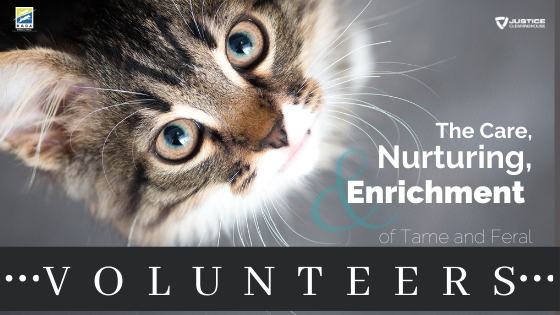
Webinar – 7/22/21 – The Care, Nurturing and Enrichment of Tame and Feral Volunteers – NACA/Justice Clearinghouse
Volunteers are the life-blood of many organizations. But how do you find these important members of your team? During this webinar, we’ll discuss:
- Simple recruiting ideas that won’t break the budget
- Why mentoring is important to your cause
- How to get better performance without giving yourself a nervous breakdown.
- What does it take to retain and maintain long term volunteers?
WEBSITE LINK: https://www.justiceclearinghouse.com/webinar/the-care-nurturing-and-enrichment-of-tame-feral-volunteers/
-

Webinar — Preparing for Trial: What Witnesses and Experts Need to Know — NACA/Justice Clearinghouse
In prosecuting animal cruelty offenses, success largely depends on the prosecutor’s witnesses testifying confidently and competently. (After all, our victims cannot take the stand for themselves!) Unfortunately, testifying in trial is not a natural-born skill, and individuals involved in the animal welfare community—animal service, veterinarians, and animal shelter staff—do not have nearly enough opportunities to practice it.
In this webinar, Oregon Animal Cruelty Deputy District Attorney Jake Kamins will give you the tips you need to present your testimony effectively and efficiently, always keeping in mind his “golden rule” (TELL THE TRUTH!) You will learn how to prepare for the big day, what questions to ask in advance, and how to keep yourself calm and composed even under the harshest cross-examination.
-

Webinar — Solving Conflicts with Prairie Dogs — HSUS
Are prairie dog colonies causing conflicts in your community? Or are you looking for the best way to preserve populations of this keystone species? Either way, join us for a free webinar, in which we will share the best methods (shaped from our years of experience in the field!) for coexisting with prairie dogs and solving conflicts.
Topics covered will include:
• Basic prairie dog biology/ecology
• Role of prairie dogs as keystone species
• Basic prairie dog management plans (links to online template management plans)
• Conflict prevention mechanisms
• Coexistence tactics including barriers & buffer zones
• Passive and wild to wild translocation
• Further training opportunities & resources
• Q&A
-

Webinar – 7/1/21 – Return to Home – Celebrating success with getting more pets back home! – CalAnimals
Join Gina Knepp, a leading expert in lost animal reunification, as she leads a panel discussion with shelter directors across the country, showcasing the tremendous strides that have been made getting lost pets back home where they belong. Formerly Return to Owner, but recently rebranded as Return to Home, shelters have discovered that pet loss prevention and proactive efforts at reunification are paying off!
- Gina Knepp, Michelson Found Animals
- Julie Banks, Riverside County Animal Services
- Rebecca Guinn, Lifeline (Atlanta)
- Shelly Simmons, Greenville Animal Care (South Carolina)
WEBSITE LINK: https://www.calanimals.org/on
-

Online Course – 7/9/21 to 7/11/21 – Feline techniques: How I manage common problems. Live from San Diego – IVS (fee applies)
Drs. Michael Lappin and Susan Little are two of the well-known feline interested veterinarians in North America. Dr. Little is board certified in feline medicine by the ABVP and owns two feline only practices in Ottawa, Canada. Dr. Lappin is an internal medicine specialist who has been involved with feline clinical research ever since reporting the Toxoplasma gondii IgM and IgG tests in 1989. His research group at Colorado State University completes approximately 15 feline clinical research projects per year. Drs. Little and Lappin have lectured together multiple times and most recently spoke to packed houses at both NAVC and WVC.
Seminar Topics:
Dr. Little:
– Successful management of urethral obstruction in cats
– Understanding Feline Idiopathic Cystitis
– How to Use Feeding Tubes in Cats
– Diagnosis and management of weight loss in senior cats
– Finding the inner cat – feline obesity
– Finicky felines: managing anorexia in cats
– Let’s get moving – the constipated cat
– Update on managing CKD
– Management of diabetes mellitus in cats
Dr. Lappin:
– Fever of unknown origin in cats.
– Logical antibiotic therapy in cats.
– Management of upper respiratory infections in cats.
– Management of the coughing cat.
– Feline GI diseases: is it infectious, inflammatory, or neoplastic?
WEBSITE LINK: https://www.ivseminars.com/seminars/feline-techniques-how-i-manage-common-problems-live-from-san-diego/