Shelter Learniverse and Industry-Wide Calendar

Blog

  • Webinar – 2/18/21 – Huddle 6: Working with the Community – Maddie’s Fund

    Webinar – 2/18/21 – Huddle 6: Working with the Community – Maddie’s Fund

    Join us for the sixth huddle of the No Place Like Home Challenge on Thursday, February 18 (1pm PST)! This interactive huddle will include a total of 20 minutes of presentation time and 20 minutes for Q&A.

    Hosted by: Bethany Colonnese (San Antonio Animal Care) and Ann Dunn (Oakland Animal Services)

    Topic: Organization works with community to help facilitate Return to Homes
    – Partnerships exist with local businesses (veterinarians, pet supply stores), community centers and churches
    – Volunteers in high stray intake areas foster lost animals and help look for owners
    – Utilities companies help find contact information for owners

    WEBSITE LINK:  https://us02web.zoom.us/meeting/register/tZYqcuChqzorGdQp48KWjlACSfXJYvzO7yoz

  • When Cats Belong in Their Community

    When Cats Belong in Their Community

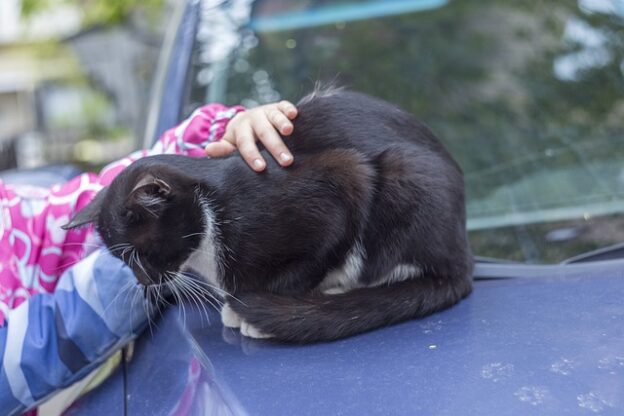
    A concerned or frustrated community member arrives at the shelter with a lost cat they found hanging around the neighborhood. Traditionally shelters have accepted that cat into their care and, when possible, put it on the path to adoption. That may well be the response the community expects. But what if that’s not actually in the best interest of the cat, lost or not?

    On a recent episode of the Humane Network’s Shelter Success Simplified podcast, KSMP director Dr. Kate Hurley explains why returning a cat to home often means returning a cat to its community.

    • Cats are 10 to 50 times more likely to be reunited with their families if they are in the area of their original home rather than at a shelter.

    • Many times some quick research reveals the cat is already being loved and cared for by someone in the community. Scan the cat for a microchip. Encourage the finder to talk with neighbors, post about the cat on Nextdoor or look for lost-pet posts on Facebook.

    • Recognize that cats are disproportionately brought to the shelter from underserved communities. Look for opportunities to build community trust and provide pet caregivers with support and resources, such as pet food, vaccinations or spay/neuter.

    For more tips on adapting your shelter’s approach to healthy, free-roaming cats, listen to the full conversation below and explore the library of other Shelter Success Simplified episodes at Humane Network.

  • Online Conference – 3/21/21 to 3/24/21 – WSAVA/FECAVA 2021: The Global Meeting for Veterinarians – WSAVA and FECAVA (fee applies)

    Online Conference – 3/21/21 to 3/24/21 – WSAVA/FECAVA 2021: The Global Meeting for Veterinarians – WSAVA and FECAVA (fee applies)

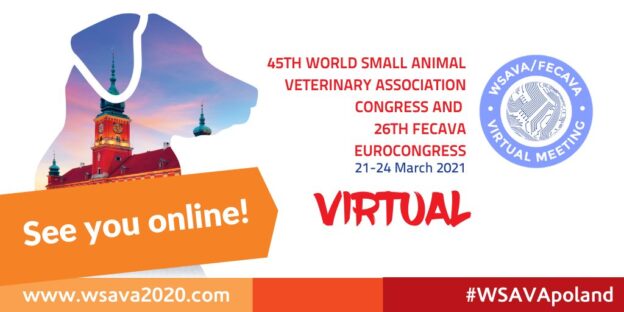
    A joint congress of the World Small Animal Veterinary Association (WSAVA) and the Federation of European Companion Animal Veterinary Associations (FECAVA), hosted by the Polish Small Animal Veterinary Association will take place as a virtual event. The preliminary program includes topics such as market transformation, standards in general practice, educational considerations such as current tendencies & needs, and proposals for specialization and CPD in the region. We are excited to be hosting the most important small animal medicine event in this new promising format enabling you to join entirely online. The 45th WSAVA Congress & the 26th FECAVA EuroCongress will take place from 21 – 24 March 2021 virtually. The WSAVA Congress is the one truly international Congress in the field of Veterinary Medicine. Join a global community of vets, nurses and technicians at an event like no other.

    WEBSITE LINK:  https://wsava2020.com/

  • Online Conference – 3/5/21 to 3/7/21 – North American Veterinary Anesthesia Society Virtual Spring Symposium – NAVAS

    Online Conference – 3/5/21 to 3/7/21 – North American Veterinary Anesthesia Society Virtual Spring Symposium – NAVAS

    This is a worldwide virtual conference on clinical veterinary anesthesia practice featuring an outstanding lineup of speakers and topics on veterinary anesthesia continuing education that will be of interest to practitioners, technicians, students, researchers and medical professionals with an interest in advancing veterinary anesthesia and analgesia.

    Friday, March 5th – AVA Abstracts Presentations

    A Track: Each presentations followed by 3 minute Q&A via chat
    Block 1: Small Animals
    Moderator: Liz Leece

    Determining an optimum propofol infusion rate for induction of anaesthesia in healthy dogs: A randomised clinical trial
    Walters, Lehnus, Liu, Bigby

    Effect of anaesthetic maintenance with propofol or isoflurane on ease of endoscopic duodenal intubation in dogs – preliminary results
    Tonge, Bautista Diaz-Delgado, Hughes, Maddox, Alderson

    Effects of ketamine or dexmedetomidine continuous rate infusions on propofol total intravenous anaesthesia requirements in healthy dogs undergoing orthopaedic procedures receiving epidural anaesthesia: a randomized clinical trial
    Bustamante, Canfrán, Gómez de Segura, Aguado

    Attitudes of Spanish-speaking veterinary anaesthesiologists towards the use of total intravenous anaesthesia (TIVA) in dogs: a survey study
    Bustamante, Canfrán, Gómez de Segura, Ortiz-Díez, Aguado

    Block 2: Small Animals
    Moderator: Liz Leece

    Development of the Canine Post-Amputation Pain (CAMPPAIN) Scale
    Boesch, Roinestad, Lopez, Newman, Campoy, Gleed, Hayes

    COVID-19: Its impact on pain management in rehabilitation dogs
    Munoz, Duncan, Manfredi

    Prescribing practices and opinions of Spanish spoken veterinary-practitioners in the treatment of chronic musculoskeletal pain in dogs
    Benito, Gomez de Segura, Leriquiuer, Lascelles, Freire

    The effect of anesthetic induction with propofol, alfaxalone or ketamine on intraocular pressure in cats
    Shilo-Benjamini, Peer, Abu Ahmad, Ofri

    Block 3: Equine
    Moderator: Paul McFarlane

    Electrical Impedance Tomography (EIT) to estimate tidal volume in anaesthetized horses undergoing elective surgery
    Crivellari, Raisis, Hosgood, Waldmann, Murphy, Mosing

    Nasal and tracheobronchial nitric oxide production and its influence on oxygenation in horses undergoing total intravenous anaesthesia
    Neudeck, Wilkens, Kästner

    Effects of inspired oxygen fraction on intra-pulmonary shunt fraction, as measured by F-shunt and alveolar-arterial oxygen gradient, in anesthetized mechanically ventilated Shetland ponies
    Calero Rodriguez, van Loon, de Grauw

    Block 4: Equine-Kangaroo
    Moderator: Paul McFarlane

    Retrospective investigation of recovery quality following medetomidine vs. xylazine balanced isoflurane anaesthesia in horses
    Kälin, Henze, Ringer, Torgerson, Bettschart-Wolfensberger

    Butorphanol, azaperone, and medetomidine (BAM™) immobilization in feral horses (Equus ferus caballus) undergoing field castration
    Balko, Fogle, Stuska, Fogle, Posner

    Immobilization of captive red kangaroo (Macropus rufus) with medetomidine-ketamine-midazolam or medetomidine-ketamine-butorphanol
    Shilo-Benjamini, Makrin-Dray, Kafri, Lapid

    B Track: Each presentation followed by 3 minute Q&A via chat

    Block 1: Local
    Moderator: Ioannis Savvas

    Transversus abdominis plane injection: anatomical study and pilot description of an ultrasound-guided combined caudal retrocostal and lateral approach in pig cadavers
    Calice, Kau, Knecht, Otero, Larenza Menzies

    Ultrasound-guided rectus sheath injection in pig cadavers – a pilot study
    Calice, Kau, Trujanovic, Knecht, Auer

    Landmark-guided thoracolumbar retrolaminar block in canine cadavers: an anatomical and radiological study of injectate distribution
    Pentsou, Vagias, Davies, Hoey, Huuskonen

    Evaluation of conus medullaris and dural sac termination in adult sheep
    Gutiérrez Bautista, Redondo García, García Roselló, Esteve Bernet, Viscasillas Monteagudo, Hernández Magallana, Martínez Albiñana, García Vitoria

    Block 2: Local
    Moderator: Ioannis Savvas

    Sub-Tenon’s anaesthesia in canine eyes: CT analysis of contrast distribution in cadavers
    Gaztelu, Fortuny, Forteza, Aprea

    Success rate and perioperative complications of lumbo-sacral extradural anaesthesia in dogs undergoing total hip replacement: a double centre retrospective study
    Viilmann, Kloeppel, Wringe, Vettorato

    Effects of Caudal Maxillary Nerve Block or Topical Intra-nasal Lidocaine on Responsiveness and Recovery in Rhinoscopy in Dogs
    Woodhouse

    Comparison of blind versus ultrasound-guided intercostal nerve block: a canine cadaveric study
    Thomson, Portela, Romano, Otero

    Block 3: Farm Animals
    Moderator: Sabine Kästner

    Comparison of the effects of two alveolar recruitment manoeuvres (sustained inflation and stepwise) followed by positive end-expiratory pressure on arterial oxygen tension and lithium dilution cardiac output in isoflurane-anaesthetised goats
    Gómez Fernández, Potter, Brama, Hughes, Niimura del Barrio

    The relationship between food deprivation and blood glucose at induction of anaesthesia in juvenile pigs
    Gregson, Greenhalgh, Clutton

    Comparison of time until hemoglobin desaturation between preoxygenated and non-preoxygenated hens (Gallus gallus domesticus) following isoflurane mask induction of anesthesia and rocuronium-induced apnea
    Legg-St.Pierre, Desprez, Chang, Machin, Ambros

    Block 4: Other
    Moderator: Sabine Kästner

    Reporting of randomization, blinding, data exclusion and sample size estimation in papers published over a 10-year period in Veterinary Anaesthesia and Analgesia
    Munro, Bergen, Pang

    Accuracy of drug dispensing by veterinary anaesthetists
    Cambruzzi

    Pedi-lite flow sensor vs. calibration syringe
    Raillard, Levionnois, Auckburally, Borland, Garcia de Carellan Mateo, Macfarlane, Merlin, Steblaj, Mosing

    Saturday, March 6th – Advanced Approaches to Anesthesia and Analgesia of the Companion Animal Patient

    All times Pacific

    • 7:00a – 10:00a – Dr. Bill Muir – Cardiovascular Function and Anesthesia

    • 10:10a – 11:40a – Dr. Duncan Lascelles – Anti-Nerve Growth Factor strategies: A New Era in Pain Management

    •  11:50a – 1:20p – Heidi Reuss-Lamky, AVTAA – Incorporating Fear-free Principles and Techniques into Companion Animal Anesthetic Practice

    Sunday, March 7th – Anesthesia and Analgesia for Companion Animal Veterinarians and Veterinary Technicians

    All times Pacific

    • 7:00a – 8:00a – Jennifer Sager, VTS Anesthesia – The Basics of Anesthetic Monitoring in the Companion Animal

    • 8:10a – 9:10a – Dr. Heidi Shafford – Advanced Anesthetic Monitoring for the Compromised Companion Animal Patient

    • 9:20a – 10:20a – Dr. Heidi ShaffordJennifer SagerAndrew Schultz – Roundtable Discussion – The Future of Monitoring: Guidelines for Monitoring in Companion Animal Practice

    • 10:30a – 11:30a – Dr. Yael Shilo-Benjamini, DVM, DACVAA – Open Your Eyes: Advances in Local and Regional Anesthesia for Ocular Procedures

    • 11:40a – 12:40p – Dr. Molly Allen – Practical Loco-Regional Anesthesia

    • 12:50p – 1:50p – Dr. Katie Bennett – Pain Management in the Peri-operative Period

    • 2:00p – 3:00p – Drs. Yael Shilo-BenjaminiMolly AllenKatie Bennett – Roundtable Discussion – Options for Optimizing Comfort in Companion Animal Patients: Overcoming the Barriers to Change

    A note about CE credits:

    While the registration to the symposium is free, the CE credits are only available to paid members of NAVAS. Please consider becoming a member to receive CE credits and support anesthesia and analgesia education.
    WEBSITE LINK:  https://www.mynavas.org/2021-spring-symposium

  • Webinar – 2/25/21 – Introduction to RAT (Relationship Assessment Tool) – Suzanne Clothier (fee applies)

    Webinar – 2/25/21 – Introduction to RAT (Relationship Assessment Tool) – Suzanne Clothier (fee applies)

    Take one person, add one dog, and you get a third entity: the relationship between the person and the dog. Successful and humane training needs to include the relationship as the dynamic ground on which skills, behavior changes and improvements can take root. Join live or watch the recording at your convenience for an introduction to RAT™: Relationship Assessment Tool. Developed by Suzanne Clothier, RAT™ provides a new perspective on understanding of the dog/human relationship.

    RAT™ can be used to:

    • Assess what is contributing to behavior, training and/or performance challenges
    • Identifying the strengths & weaknesses of the relationship
    • Assess suitability for a purpose, such as therapy dog team, AAI/AAT
    • Assess for best match adoptions or placements o Identify handler skills (ideal for training staff & volunteers)
    • Track changes and improvements over time

    In each relationship, the handler brings his/her habits, personalities, needs and style to interact with the dog, who also brings his/her own personality, patterns of response, needs and style. With an emphasis on patterns of behaviors found on both ends of the leash, RAT is a powerful tool for assessing the dynamics of the dog/human relationship.

    For those who work with training issues and behavior problems, RAT™ clearly identifies the strengths and weaknesses of any dog/handler team. Practical and effective, RAT™leads to Training Triage & Plan for a customized approach that addresses & supports the specific needs of that dog/handler relationship.

    PLEASE NOTE: – All webinars will be recorded and a link will be sent to you 48 hours after the completion of the webinar for you to access the recording. – If you need CEUs for IAABC or PPAB, instructions on how to get them will be given during the webinar. – If this is your first time using GoToWebinar, they offer a test webinar so you can trouble shoot ahead of time. You can find some tips and tricks at the link below provided by GoToWebinar: https://support.goto.com/webinar?c_prod=g2w&c_name=plogin

    WEBSITE LINK:  https://register.gotowebinar.com/register/8935800680495108365

  • Online Course – 5/20/21 – Feline Behavior Pre-Conference Workshop – Shelter Playgroup Alliance (fee applies)

    Online Course – 5/20/21 – Feline Behavior Pre-Conference Workshop – Shelter Playgroup Alliance (fee applies)

    Learn about feline behavior! Join us a day before the SPA 2021 Shelter Behavior and Enrichment Conference for a special option on Thursday, May 20, 2021.

    Immerse yourself in feline behavior during a full day deep dive with Mikel Delgado, PhD.  Mikel is a cat behavior consultant and co-founder of Feline Minds. Mikel’s deep knowledge and expertise in feline behavior will include the following topics:

    • Reducing stress for shelter cats

    • Problem behaviors​

      • Litter box blues

      • Multi cat households

      • Case studies

    ​Not to be missed!

    Cost: $50.00

    Approved CEUs: CCPDT CEUs TBA | IAABC CEUs TBA

    WEBSITE LINK:  https://www.shelterdogplay.org/2021-sbec-pre-conference-workshop

  • Online Conference – 5/21/21 to 5/23/21 – 2021 Shelter Behavior and Enrichment Conference – Shelter Playgroup Alliance (fee applies)

    Online Conference – 5/21/21 to 5/23/21 – 2021 Shelter Behavior and Enrichment Conference – Shelter Playgroup Alliance (fee applies)

    Learn about shelter animal welfare, enrichment, and playgroups at our annual Shelter Behavior and Enrichment Conference on May 21, 22 & 23, 2021 with a Pre-Conference workshop on May 20th

    Location: Virtual

    Times: 9am – 5pm Pacific each day

    Register now: https://www.shelterdogplay.org/register

    Who should attend? Shelter staff, shelter volunteers, and shelter leadership. Animal daycare staff, dog walkers, and animal trainers would also benefit from the topics presented.

    What will be presented? Leaders in behavioral science, animal welfare, enrichment, and inter-animal interactions will present research and strategies for enhancing animal welfare and animal  interactions, including play.

    Speakers:

    ·       Ken Ramirez, Executive Vice-President and Chief Training Officer of Karen Pryor Clicker Training

    ·       Erika Feuerbacher, PhD, BCBA-D, CAAB, CPDT-KA

    ·       Kelley Bollen, MS, CABC

    ·       Mara Velez, MA, CPDT-KA

     Pre-Conference workshop on Thursday, May 20, 2021. Learn about feline behavior!

    ​Join us a day before the SPA 2021 Shelter Behavior and Enrichment Conference for a special option on Thursday, May 20, 2021.Immerse yourself in feline behavior during a full day deep dive with Mikel Delgado, PhD.  Mikel is a cat behavior consultant and co-founder of Feline Minds. Mikel’s deep knowledge and expertise in feline behavior will include the following topics:

    o   Reducing stress for shelter cats

    o   Problem behaviors

    o   Litter box blues

    o   Multi cat households

    o   Case studies

    o   Play behavior in cats

    Cost: $150 for 3-day conference ticket; $50 for pre-conference workshop

    Save $25 by registering for all four days!

    WEBSITE LINK:  https://www.shelterdogplay.org/register

  • Online Event – 2/22/21 – All Black Lives: The Intersection Between Being Black and LGBTQ+ – BlackDVM Network

    Online Event – 2/22/21 – All Black Lives: The Intersection Between Being Black and LGBTQ+ – BlackDVM Network

    During this panel discussion we will explore the intersectionality between identifying as Black and as part of the LGBTQ+ community. Our panelists will share their perspectives on experiences that have shaped their views and how we can support them as their entire selves.

    Join Us on Zoom: https://us02web.zoom.us/meeting/register/tZEsce6uqD4uGtIq2AYJURRhsKk6HjMKsgCD

    About our panelists:

    Marquis Harper is a 1st-year veterinary student at Virginia-Maryland College of Veterinary medicine from Henderson, NC. He found his passion for animal wellbeing while volunteering at his local animal shelter, which eventually led him to working at the local animal hospital while in high school. After high school, he studied at the illustrious North Carolina Agricultural and Technical State University, where he acquired both his Bachelor’s and Master’s degrees in Animal Science. After vet school, his goal is to become a Large Animal Veterinarian and eventually settling down back in his hometown to open up a low-cost veterinary clinic.

    Dr. Dane Whitaker has been practicing veterinary medicine in the San Francisco area for over 25 years. He completed his Masters in Preventive Veterinary Medicine at UC Davis in 2017 and is currently providing small animal clinical relief services across central California. He is also a relief veterinarian at the Marine Mammal Center in Sausalito CA, and in non-pandemic times he has provided clinical as well as field support for marine mammal research projects. Although a Bay Area native, he grew up in Florida and graduated from the University of Florida College of Veterinary Medicine in 1994. After graduation, he completed a small animal medicine and surgery internship at the Santa Cruz Veterinary Hospital. His veterinary interests include small animal medicine, clinical pathology, marine mammal medicine and One Health. Dr. Whitaker is the president of the Pride Veterinary Medical Community and takes an active role in promoting the ideas of inclusion and acceptance for all members of the community in the veterinary profession.

    Kenneth Burris is a 3rd year veterinary medical student at The Ohio State University College of Veterinary Medicine. Born in the District of Columbia and raised in Silver Spring, Maryland. He earned his Bachelor’s degree from Tufts University in Biomedical Engineering and Sociology (w/ a Minor in Africana Studies) and earned a Master of Medical Science degree from Hampton University (HBCU). Kenneth completed a Graduate Business Minor in Health Sciences at The OSU Fisher College of Business and is currently on student government at The OSU College of Veterinary Medicine as a Class of 2022 Diversity Committee Representative.

    My name is Donja Pettiford. I received my BS in Animal Science and MS in Food Science from NCA&TSU.I am currently working full-time with the USDA-FSIS in NC as a technical trainer.  As a technical trainer I train new and established employees on food safety in the meat and poultry division.

    WEBSITE LINK:  https://www.blackdvmnetwork.com/event-details/all-black-lives-the-intersection-between-being-black-and-lgbtq

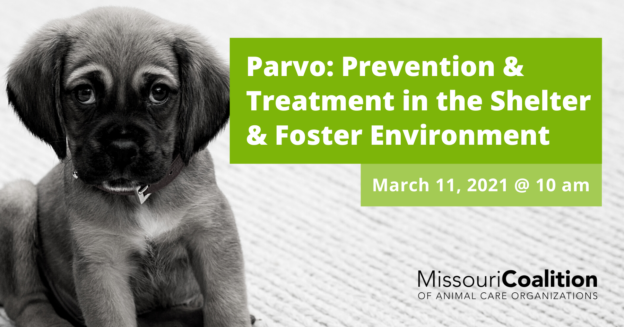
  • Webinar – 3/11/21 – Preventing and Treating Parvo – Missouri Coalition of Animal Care Organizations

    Webinar – 3/11/21 – Preventing and Treating Parvo – Missouri Coalition of Animal Care Organizations

    Parvo is a dreaded illness and can be fatal for puppies, heartbreaking for staff and volunteers, and costly for your organization. How do you prevent it on transports, in the shelter, and foster environment? When a puppy does break, where can you isolate positive and exposed cases? What supportive care can staff or fosters provide? Ask a shelter veterinarian any other burning questions you have.

    WEBSITE LINK:  https://fb.me/e/5OCn5jmfq