Shelter Learniverse and Industry-Wide Calendar

Blog

  • Communication Through Transition

    Communication Through Transition

    When we are going through a big change, especially change that was unplanned, it can be difficult to stop and communicate the process with our stakeholders. Not only are we consumed with managing our evolving processes, but it’s hard to speak with certainty when things are fluid. When you think about speeding down an unfamiliar hill on your bike, it’s probably not your first instinct to narrate your every move.

    Still, change management experts tell us that now is not the time to keep quiet. Even when our process is in flux, it is to our advantage to communicate early and often with stakeholders to ensure we are telling our own story and not leaving space for blanks to be filled in by those that are not fully informed. Does the idea sound daunting? Not sure where to start? 

    The role of strategic communication during change management cycles is a popular topic any day, but the shift of our world on its axis has propelled this discussion to the front of the interwebs. There’s a plethora of sound guidance to be had and, for once, an almost unanimous agreement: A good change management strategy requires a detailed plan that considers each of your stakeholder groups and addresses the fears associated with their particular investment.

    In this downloadable eBook, Change Management: The Role of Strategic Communication, offered by Brighter Strategies, you’ll be walked through the Change Cycle and the corresponding exercises of developing your communication strategy. You’ll also learn why Stage 2 is the most dangerous stage, making Stage 1, straight out of the gates, the most important time to start communicating and telling your story. 

    Example: Here’s a great little video created by VIN for the veterinary community to communicate with their clients why it’s been difficult to schedule an appointment.

    Why has my veterinarian been SO busy? from VIN Practice Communications on Vimeo.

    If you were a frustrated client, would you still be upset after watching this? Or does the vulnerability, clarity, transparency,  and your-safety-first messaging have you making a note to send a thank you message (with a hug inside) to your own veterinarian right now? 

    If we want our community to have our back during times of transition, we have to remember to take them along for the ride from the beginning. Tell your story before someone tells it for you. Show your stakeholders how you are not only adapting but thriving (or at least trying to) in the face of crisis. Talk to them even when you are just trying something out. 

    Have you created a video similar to the one VIN created? We’ll be talking about communication during transition for the next few weeks and we’d love to hear from you. Email us at sheltermedicine@ucdavis.edu and tell us about your communication strategy with your stakeholders. How are you training staff to communicate with clients? What you’re noticing is really resonating with your community members? Would you try anything differently next time? 

  • Webinar – 10/15/20 – Rock Solid Fundraising: strengthening your financial foothold – Best Friends

    Webinar – 10/15/20 – Rock Solid Fundraising: strengthening your financial foothold – Best Friends

    Join Best Friends’ own Trish Tolbert for a discussion about how our brand new FREE Fundraising Fundamentals course might benefit you. Our panelists are three early adopters who will share what they learned through the course and how they’re applying it in their own organizations.

    You will be sent a link to the course in your registration confirmation. The course is absolutely free to use (no sign-in required) and available now! Get ahead of the game and take a test drive before the Town Hall and be ready for the audience Q&A at the end.

    Moderator and Course Creator:
    Trish Tolbert, development strategist for Best Friends National Embed/Mentoring team

    Panelists:
    Sarah Cano, community engagement coordinator, Humane Society of Harlingen
    Michelle Dosson, bureau manager, Norfolk Animal Care and Adoption Center
    Nick Walton, manager, national municipal and shelter support, Best Friends

    WEBSITE LINK: https://bit.ly/3lx4k8j

  • Online Event – 10/10/20 – Puppy Mill Action Boot Camp 2020 – HSUS

    Online Event – 10/10/20 – Puppy Mill Action Boot Camp 2020 – HSUS

    SAVE THE DATE: Puppy Mill Action Boot Camp is coming to your home! The boot camp will be a free virtual event this year.

    Speakers will include writer/ journalist Rory Kress, the author of The Doggie in the Window, an expose of puppy mills and the pet store connection, as well as expert animal advocates from the Humane Society of the United States and Bailing out Benji. Speakers and workshops will help you hone your animal advocacy skills. Topics will include building coalitions, passing new laws, working with media, effective outreach, and the role of law enforcement in stopping puppy mills. There will be opportunities to network with like-minded puppy mill advocates from all over the world. RSVP today!

    Schedule · Saturday, October 10, 2020 (in EDT) 

    10:00 AM – 11:00 AM
    Inside the world of puppy mills: The pet store/puppy mill connection
    11:00 AM – 12:00 PM
    Exhibit hall open hours
    12:00 PM – 12:40 PM
    Passing a law: What works and what doesn’t
    12:45 PM – 1:15 PM
    Lobbying demos
    1:30 PM – 2:15 PM
    Law enforcement and puppy mills
    2:15 PM – 2:45 PM
    Exhibit hall open hours
    2:45 PM – 3:30 PM
    Engaging with the opposition: Responding to our critics with poise
    3:40 PM – 4:25 PM
    Dogs, not drama! Cultivating allies and growing our support
    4:35 PM – 5:15 PM
    Media training 101: How to be the most effective speaker for dogs
    5:20 PM – 5:50 PM
    Media training demonstrations
    6:00 PM – 7:00 PM
    Yappy hour and networking: Meet our dogs!
  • ASPCA has grant funds of $2,000,000 for COVID-19 Relief for Shelters – deadline to apply 10/12/20!

    ASPCA has grant funds of $2,000,000 for COVID-19 Relief for Shelters – deadline to apply 10/12/20!

    ASPCA® COVID-19 Emergency Relief Request for Proposals

    Timeframe: October 5th, 9:00 a.m. ET – October 12th, 2:00 p.m. ET

    The ASPCA is reopening its Request for Proposals under the COVID-19 Relief Initiative and is inviting grant applications from animal welfare organizations negatively impacted by the COVID-19 pandemic. We awarded $2,000,000 for this purpose in the spring and recognize that this national emergency continues to affect programs, operations, and fundraising. To provide support to counter these challenges, the ASPCA is accepting applications for general operating or program expenses to help meet budget shortfalls and support essential lifesaving services for animals such as safety net, adoptions and foster programs, and veterinary services, which are proving to be crucial in this crisis. The ASPCA is making an additional $2,000,000 available to fund grants made under this initiative.

    Grant Amount

    Grants will range generally from $25,000 – $50,000 and should not exceed 5% of an organization’s annual budget. 

    Eligibility

    Applicants must meet the following criteria:

    • Must be an established 501(c)(3) or governmental entity located within the United States and territories
    • If a past ASPCA grant recipient, must be current on all reporting requirements
    • If a 501(c)(3) organization:
      • Must be an incorporated or organized legal entity in good standing with the Secretary of State in the state where the organization is incorporated or organized
      • Must have a board of at least 4 members with a majority of independent members with neither board chair nor treasurer receiving compensation from the organization

    This grant opportunity is available to all organizations meeting the above criteria, including organizations that applied to and/or were funded by the ASPCA’s COVID-19 Emergency Relief grant initiative in the spring of 2020.

    Qualifying Fund Uses

    Funding may be requested for general operating expenses to mitigate crisis-related reductions in revenue (from programs, fundraising, or other sources) or for program expenses or capacity support such as the following:

    • Food distribution
    • Access to veterinary care
    • Eviction support
    • Adoption and foster capacity
    • Capacity-building for fundraising, board development, etc.

    Applicants will be evaluated on our assessment of the need for the services being provided by the organization, the effectiveness of the organization’s plans to respond to the crisis, and its ability to deliver quality animal welfare services.

    Complete Timeline

    • The application opens Monday, October 5th at 9:00 a.m. ET and closes Monday, October 12th at 2:00 p.m. ET
    • Candidates will be notified via email no later than Monday, November 9th if their organizations have been selected to complete formal applications in our grant management system

    How to Apply

    1. Review the complete requirements (pdf) and gather your documentation
    2. Launch the application form

    Organizations that applied to the ASPCA’s COVID-19 Emergency Relief grant initiative in the spring, including those that were funded, will be routed to a shorter, supplemental application.

    We recommend you prepare the required information in advance to allow you to complete the form in one session. Please be sure that all requested information is included in your responses. Applications cannot be revised after submission.

    Please direct all questions to grants@aspca.org

  • Webinar – 10/12/20 – The Role of Habit in Behavior – Dr. Kristina Spaulding, PhD, CCAB – PPG (fee may apply)

    Webinar – 10/12/20 – The Role of Habit in Behavior – Dr. Kristina Spaulding, PhD, CCAB – PPG (fee may apply)

    Free Webinar for PPG Members

    CEUs: PPAB 1, CCPDT (pending), KPA (pending), IAABC (pending)

    What is habit, really? How does it impact behavior and how can we use it to improve outcomes? This webinar will cover the basics of habit and how it influences the behavior of the animals we work with (including people). We’ll also discuss how you can use it to train more effectively and to help you communicate important concepts to pet parents.

    Learning Objectives:

    • Define habit
    • Explain how habits influence behavior
    • Explain how habits are formed and changed
    • Describe how habits are influenced by stress

    About The Presenter

    Dr. Kristina Spaulding

    Dr. Spaulding has a PhD in biopsychology – the study of the biological basis of behavior – and is a Certified Applied Animal Behaviorist through the Animal Behavior Society. She specializes in stress and behavior, social cognition and emotion, positive welfare and the prevention and treatment of behavior problems in dogs. In addition to her academic background, she has been in the dog training and behavior profession for 19 years. She currently splits her time between private behavior work and teaching other dog trainers and behavior consultants online and through seminars and conferences.

    In addition, Dr. Spaulding is a long-standing member of the APDT Education Committee. She is also a member of the Fear Free Advisory Group and an authorized Speaker for Fear Free. She also chairs a task force for Meeting of the Minds, a coalition of top dog professionals across the country charged with improving the quality of life for our dogs and is a member of the IAABC Foundation Board. You can find out more about her on her website. (http://smartdogtrainingandbehavior.com/online-services/)

    WEBSITE LINK:  https://petprofessionalguild.com/event-3846686

  • Webinar – 10/8/20 – How to Crush Your #GivingTuesday and Year-End Campaign – Network for Good

    Webinar – 10/8/20 – How to Crush Your #GivingTuesday and Year-End Campaign – Network for Good

    How to Crush Your #GivingTuesday and Year-End Campaign

    Thursday, October 8th at 1pm ET
    Did you know that 1/3 of all charitable giving occurs in December? And with the rise of donations these past few months, we don’t expect it to be any different this year.  

    Make sure you’re prepared to maximize your donations and end this year strong

    Join us as we walk you through strategies to achieve the best #GivingTuesday and year-end results. We’ll cover: 

    • How integrated campaigns can double your year-end donations 
    • Year-end templates that you can access right in your fundraising software 
    • How to incorporate #GivingTuesday into your efforts  
    • And more! 

    Giving season will be here before you know it! Make sure your nonprofit is prepared and ready to crush your goals.  

    Janet Cobb
    Personal Fundraising Coach
    Network for Good
    As a practical visionary, Janet Cobb integrates her skills in education, non-profit management, and fundraising, to offer innovative solutions to align money and mission. Janet has worked in and with nonprofits her entire career with a focus on fundraising and executive leadership since 2004. Janet began coaching small and early-stage nonprofits in 2014, and since then as supported over 300 organizations in the area of strategy, fundraising and communications.
    Liz Ragland
    Customer Marketing Manager
    Network for Good
    Liz Ragland is the Customer Marketing Manager at Network for Good. Prior to joining Network for Good, Liz worked in communications, marketing, and development serving nonprofits in the arts, advocacy, and association spaces in Seattle, Oklahoma City, and Washington, DC.

    WEBSITE LINK:  https://learn.networkforgood.com/20201008-webinar-how-to-crush-your-giving-tuesday.html

  • Webinar – 10/7/20 – YouTube LIVE: Lend me your ears: Tips from a dermatologist to help manage otitis – VetGirl and Merck

    Webinar – 10/7/20 – YouTube LIVE: Lend me your ears: Tips from a dermatologist to help manage otitis – VetGirl and Merck

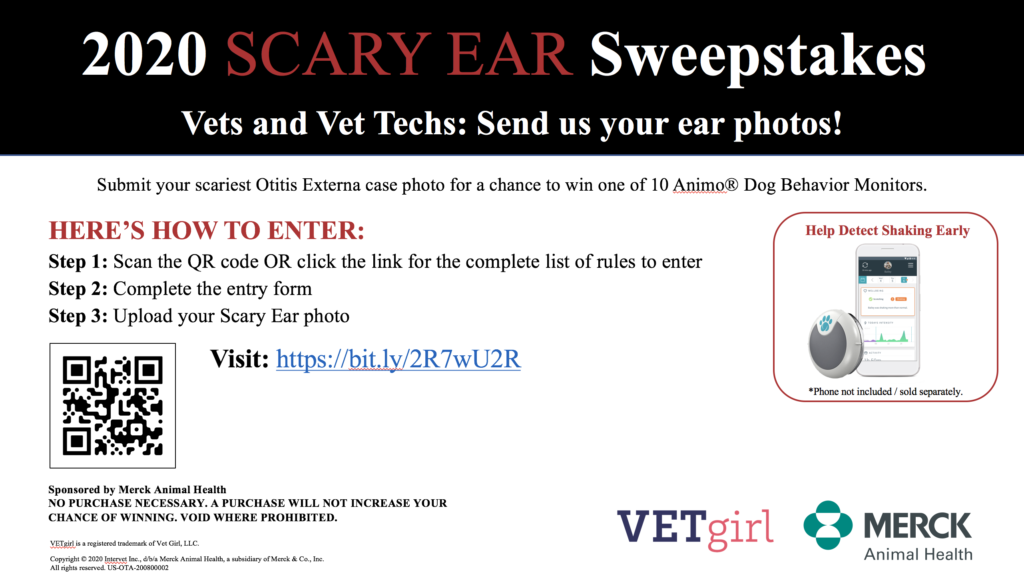
    Join us for a complimentary, 30-minute VETgirl – Merck Animal Health YouTube LIVE event, where Dr. Kacie Blessing, DACVD reviews canine otitis. Get some tips on how to manage and effectively treat otitis in dogs! Plus, enter the Scary Ear sweepstakes HERE!

    Thanks to sponsorship from Merck Animal Health, this YouTube LIVE event is free to all! Get free RACE-approved CE when you watch it LIVE!

    NOTE: To attend this YouTube LIVE session, there is no “registration.” To attend, simply go to our YouTube Page at the time of the event where the webinar will be hosted, LIVE! Clicking on the link above will allow you to also set a reminder! Subscribe to our channel here also so you never miss another video! The link provided is for the general VETgirl YouTube page. 1 week before the session we will update this link with the SPECIFIC LIVE video URL.

    Not a VETgirl ELITE member? VETgirl ELITE members receive 100+ hours of RACE-approved, online veterinary CE/year ($249). That way, you know that you have flexibility to view any of our webinars (including small animallarge animalveterinary technicianleadership, and listen to our podcasts when you have time.

    *Note: Viewing this webinar is for individual use only; VETgirl webinars are not designed nor meant to be viewed in a group setting due to RACE-CE audit purposes. Inappropriate sharing or viewing of the webinar may result in revoking of membership.

    RACE-CE provider name: VETgirl, LLC
    RACE Program number: 785-43591/43890

    This program has been approved for continuing education credit in jurisdictions which recognize AAVSB RACE approval; however participants should be aware that some boards have limitations on the number of hours accepted in certain categories and/or restrictions on certain methods of delivery of continuing education. Call VETgirl (858.859.1838) for further questions.

    WEBSITE LINK:  https://vetgirlontherun.com/webinars/october-7-2020-youtube-live-lend-me-your-ears-tips-from-a-dermatologist-to-help-manage-otitis/

  • Online Event – 10/8/20 – Ken Ramirez and Terry Ryan – The Often Overlooked Part of the Dog Training Equation – Coaching People – Karen Pryor Academy

    Online Event – 10/8/20 – Ken Ramirez and Terry Ryan – The Often Overlooked Part of the Dog Training Equation – Coaching People – Karen Pryor Academy

    LIVE FROM THE RANCH

    Join Ken Ramirez, KPCT’s Chief Training Officer, for a free hour-long virtual event live from The Ranch on Thursday, October 8 at 12:00 pm (PT). Ken will be joined by Terry Ryan to talk about an often overlooked part of the dog training equation – coaching people!


    Ken is the EVP and Chief Training Officer at Karen Pryor Clicker Training, co-leading the company with Aaron Clayton. Ken oversees the vision for, and development of, training education programs. You will usually find Ken teaching at a ClickerExpo conference, leading a course at the Karen Pryor National Training Center (The Ranch), or teaching one of the Karen Pryor Academy courses.A 40+ year veteran of animal care and training, Ken is a biologist and behaviorist who has supervised the development care and training of more than 40,000 species. He has worked with organizations across the globe to improve animal training, program effectiveness, and animal health and welfare. Ken’s diverse body of contributions includes designing and implementing conservation projects for elephant protection and spearheading projects to train everything from komodo dragons to butterflies. Ken’s extensive canine work includes working with trainers, organizations, and federal and state agencies on training procedures for topics including aggression, search-and-rescue, and scent detection.

    Ken has written/edited two successful books, taught at a major university, hosted two successful seasons of the television series Talk to the Animals, and was EVP of animal care and training at Chicago’s Shedd Aquarium. When he’s not doing cool stuff with animals and people, you might find Ken at a NY theater or at any movie screening.

    Check out the courses Ken is teaching at ClickerExpo LIVE here.


    Terry Ryan has been training dogs and teaching others to train dogs for more than 50 years. Early on, she founded Legacy Canine Behavior & Training, Inc., an organization promoting humane and effective dog training techniques for a variety of pet, working dog, and competitive applications. For many years Terry operated a large training complex in the Pacific Northwest offering a variety of training specialties, including one of her passions, Chicken Camp.

    Terry competed in and coached various performance events and was an AKC obedience trial judge for many years. She has taught in several countries, creating and implementing national dog training and instructor education programs.

    Terry has authored numerous books; the most popular is entitled Coaching People to Train Their Dogs. Her most recent book is called Gamify Your Dog Training. Terry has been on the faculty of Karen Pryor Academy since 2008, teaching courses numerous times a year both domestically and abroad.

    Check out the courses Terry is teaching at ClickerExpo LIVE here.

    Join the Free Virtual Social Event!

    Thursday, October 8 • 12:00 pm (PT)

    Join on ZoomPassword: 951652
    Prefer to save the link for later? https://us02web.zoom.us/j/82951852349?| Password: 951652
    If you can’t tune in live or if the participant limit is reached, don’t worry! The episode will be available here after the broadcast concludes.

    WEBSITE LINK:  https://theranch.clickertraining.com/live/#next

  • Online Course – Starts 10/18/20 – Feline Behavior Solutions: Teaching Foundation Behaviors for Modifying Behavior – IAABC (fee applies)

    Online Course – Starts 10/18/20 – Feline Behavior Solutions: Teaching Foundation Behaviors for Modifying Behavior – IAABC (fee applies)

    Feline Behavior Solutions: Teaching Foundation Behaviors for Modifying Behavior

    Date Register
    Course Begins: October 18th, 2020
    Duration: 5 weeks
    Instructor: Katenna Jones, ACAAB, CCBC
    Register Now

    About the Course

    Modification of any problematic or unwanted behavior requires mechanical skill, knowledge of species-specific behavior, and experience with a variety of strategies and techniques. This course will provide opportunities for anyone who works with cats to gain all of that, and more. Each of the five weeks is packed with information that can be directly and immediately applied to a variety of cat behavior cases, from aggression to anxiety and from fighting to fear. This course was created for cat behavior consultants who are looking to take on more advanced cases, or cat lovers simply looking to teach cats specific skills. Content is relevant to anyone who works with cats in a professional, volunteer, or personal capacity.

    Required Course Materials

    • Access to at least one cat throughout the duration of the course that
        • is social and friendly
        • has not been previously, formally trained
        • is food, touch, praise, or toy motivated

      **

        Access to multiple cats is recommended as a “backup” in case your primary isn’t feeling well or isn’t in the mood to train
    • Ability to record, trim, and upload videos with audio of cat training sessions
    • Clicker (iClick recommended)
    • Target stick (to be discussed in week 1, can be made or purchased – check out example here)
    • Cat rewards (to be discussed in week 1)

    Weekly Content

    Week 1 – Tools, Techniques, and Targets

    We begin this course with a review of various tools, techniques, and tips that can be useful when addressing feline behavior problems. Students will establish a baseline understanding of what could be in their toolbox, ideas for determining reinforcers, determining rate of food delivery, and more. This knowledge will be applied as students learn how to target train a cat using clicker training, discuss applications, and practice target training with their cats.

    Homework:

    – Identify which rewards your cat prefers, the marker your cat is comfortable with, and define that marker for your cat (pair with reward).

    – Post a video of one of your training sessions and discuss what you did well and what could use improvement.

    – Post a positive comment on at least one fellow student’s training video.

    Week #2 – Improving Mechanical Skill

    This week students will learn about setting criteria, adjusting rates of reinforcement, assessing progress, DRI/DRO/DRA, and more.

    Homework:

    – Post video of target training your cat, in which you repeatedly make the same mistake. Discuss the mistake, how you felt when you “caught” it, and how you plan to move forward.

    – Post a video of target training your cat, in which you are no longer making the mistake.

    – Post a positive comment on at least one fellow student’s training video.

    Week #3 – Building Toward Useful Behaviors

    This week, students will learn how to take target training to the next level and begin teaching cats skills that can be applied to the real world.

    Homework:

    – Post a video of you training the skill you selected. Discuss why you chose this behavior and what kinds of problem behaviors you think it might be useful for.

    – Review at least one fellow student’s training video and discuss what kinds of problem behaviors you think it might be useful for.

    Week #4 – Achieving Fluency

    This week, students will learn to assist their cats in becoming fluent in the behaviors they have been working on throughout this course. Focus should be on setting realistic criteria, determining what components of fluency are important, and tackling one component at a time. Components to be considered include the “3 D’s,” “PaLS,” and stimulus control.

    Homework:

    – Post a “before” video of your cat learning the skill you chose early on, as well as an “after” video of the same skill once you began addressing fluency.

    – Review at least one fellow student’s training videos and help come up with ideas for how they might help the cat to become more fluent or comment on a component of the training that impressed you.

    Week #5 – Critical Self-Assessment

    This week, students will critically self-assess their work throughout this course to identify where they excelled, where they succeeded, and where they could have been done better. It is important for consultants to constantly reassess their process throughout each case to ensure they are working at an appropriate pace for the client AND for the cat, have realistic expectations, are not setting criteria too high nor too low, are able to adjust and adapt as needed.

    Homework:

    Discuss (in a video or in writing) what you are most proud of having achieved in this course, what you need to work on the most, and what plans you have for being more successful in the future.

    Recommended Supplemental Materials

    • What is My Cat Saying? Feline Communication 101 (Munera) DVD
    • Understanding Cat Behavior (Roger Tabor)
    • Clicker Training for Cats (Karen Pryor)
    • Starting from Scratch: How to Correct Behavior Problems in Your Adult Cat (Pam Johnson-Bennett)
    • Twisted Whiskers: Solving Your Cat’s Behavior Problems (Pam Johnson-Bennett)

    Prerequisites

    • Understanding of and ability to effectively marker train (any species)
    • Understanding of and ability to effectively train “target” or “touch” (any species)

    * Experience with cats not required

    Class Schedule

    This five-week course will begin on the specified start date. Students will have access to the course material for 60 days after the course ends.

    Course Completion/CEU Requirements

    Auditors must review all course material. This will be verified in the Learning Management System.

    Full Students must complete the homework assignments and participate in forum discussions. Students should expect to spend an average of 4 hours per week on course material and viewing, depending on individual speed of learning and the week’s materials.

    Registration Information

    Auditor Full Student
    CEUs 5.5 (CCPDT, IAABC, KPA) 9.5 (CCPDT); 12.5 (IAABC, KPA)
    Member Cost $159* $249*
    Non-Member Cost $199 $324

    *IAABC Members – log into your member account for the discount code


    Online Course Cancellation Policy

    • Full refunds available more than 30 days before program start.
    • 50% refund available 16 – 30 days before program start.
    • No refunds available 15 or fewer days before program start.

    About the Instructor

    Through her business Jones Animal Behavior, Katenna Jones provides private dog and cat behavior consulting services, group classes, and seminars at both local and national events. Katenna is the former Director of Educational Programs for the Association of Professional Dog Trainers, Animal Behaviorist for the American Humane Association, and Behaviorist and Investigator for the RISPCA.

    She has been involved in animal sheltering and rescue since 2000, is a disaster responder, is author of Fetching the Perfect Dog Trainer: Getting the Best for You and Your Dog and has contributed to numerous local and national publications.

    Katenna earned her Master’s from Brown University where she studied animal behavior, learning and cognition. She is an Associate Certified Applied Animal Behaviorist, Certified Cat and Dog Behavior Consultant, and Certified Pet Dog Trainer.

    She shares her RI home with her husband, two adopted cats, and adopted dog.

    If you have questions, email us at courses@iaabc.org.
    WEBSITE LINK:  https://m.iaabc.org/courses/feline-behavior-solutions/

  • VIN Rounds – 10/8/20 – Tiny but Challenging: Anaesthetic Considerations for the Neonate and Pediatric Small Animal Patient – VIN/NAVAS

    VIN Rounds – 10/8/20 – Tiny but Challenging: Anaesthetic Considerations for the Neonate and Pediatric Small Animal Patient – VIN/NAVAS

    In this rounds…

    In this lecture, we will review physiology of the neonate and juvenile dogs and cats relevant to the anaesthesiologist and strategies to improve the perioperative period.

    Note: This session starts earlier than usual.

    WEBSITE LINK:  https://www.vin.com/vinmembers/rounds?id=9735344