Shelter Learniverse and Industry-Wide Calendar

Blog

  • Webinar – 10/7/20 – YouTube LIVE: Lend me your ears: Tips from a dermatologist to help manage otitis – VetGirl and Merck

    Webinar – 10/7/20 – YouTube LIVE: Lend me your ears: Tips from a dermatologist to help manage otitis – VetGirl and Merck

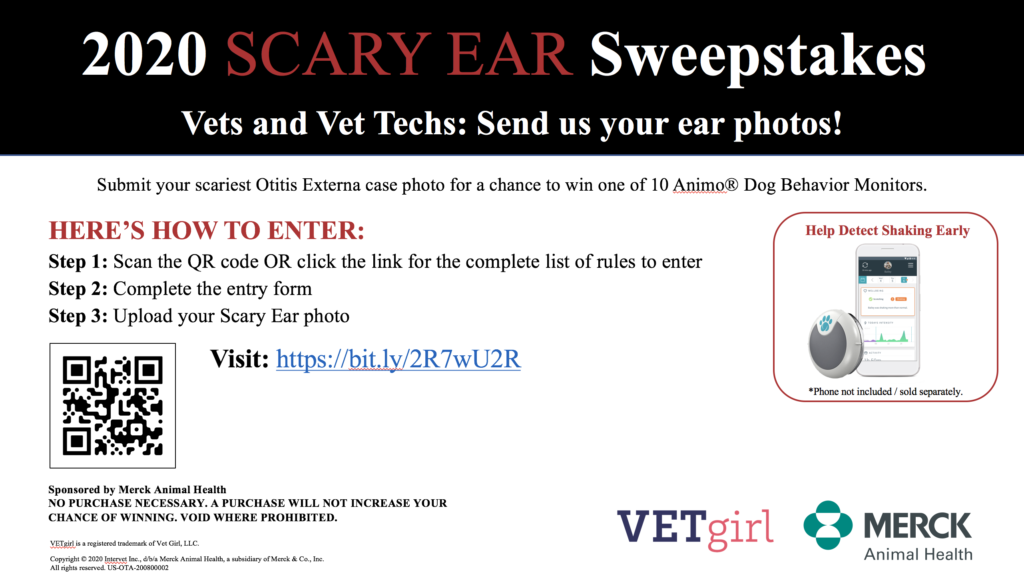
    Join us for a complimentary, 30-minute VETgirl – Merck Animal Health YouTube LIVE event, where Dr. Kacie Blessing, DACVD reviews canine otitis. Get some tips on how to manage and effectively treat otitis in dogs! Plus, enter the Scary Ear sweepstakes HERE!

    Thanks to sponsorship from Merck Animal Health, this YouTube LIVE event is free to all! Get free RACE-approved CE when you watch it LIVE!

    NOTE: To attend this YouTube LIVE session, there is no “registration.” To attend, simply go to our YouTube Page at the time of the event where the webinar will be hosted, LIVE! Clicking on the link above will allow you to also set a reminder! Subscribe to our channel here also so you never miss another video! The link provided is for the general VETgirl YouTube page. 1 week before the session we will update this link with the SPECIFIC LIVE video URL.

    Not a VETgirl ELITE member? VETgirl ELITE members receive 100+ hours of RACE-approved, online veterinary CE/year ($249). That way, you know that you have flexibility to view any of our webinars (including small animallarge animalveterinary technicianleadership, and listen to our podcasts when you have time.

    *Note: Viewing this webinar is for individual use only; VETgirl webinars are not designed nor meant to be viewed in a group setting due to RACE-CE audit purposes. Inappropriate sharing or viewing of the webinar may result in revoking of membership.

    RACE-CE provider name: VETgirl, LLC
    RACE Program number: 785-43591/43890

    This program has been approved for continuing education credit in jurisdictions which recognize AAVSB RACE approval; however participants should be aware that some boards have limitations on the number of hours accepted in certain categories and/or restrictions on certain methods of delivery of continuing education. Call VETgirl (858.859.1838) for further questions.

    WEBSITE LINK:  https://vetgirlontherun.com/webinars/october-7-2020-youtube-live-lend-me-your-ears-tips-from-a-dermatologist-to-help-manage-otitis/

  • Online Event – 10/8/20 – Ken Ramirez and Terry Ryan – The Often Overlooked Part of the Dog Training Equation – Coaching People – Karen Pryor Academy

    Online Event – 10/8/20 – Ken Ramirez and Terry Ryan – The Often Overlooked Part of the Dog Training Equation – Coaching People – Karen Pryor Academy

    LIVE FROM THE RANCH

    Join Ken Ramirez, KPCT’s Chief Training Officer, for a free hour-long virtual event live from The Ranch on Thursday, October 8 at 12:00 pm (PT). Ken will be joined by Terry Ryan to talk about an often overlooked part of the dog training equation – coaching people!


    Ken is the EVP and Chief Training Officer at Karen Pryor Clicker Training, co-leading the company with Aaron Clayton. Ken oversees the vision for, and development of, training education programs. You will usually find Ken teaching at a ClickerExpo conference, leading a course at the Karen Pryor National Training Center (The Ranch), or teaching one of the Karen Pryor Academy courses.A 40+ year veteran of animal care and training, Ken is a biologist and behaviorist who has supervised the development care and training of more than 40,000 species. He has worked with organizations across the globe to improve animal training, program effectiveness, and animal health and welfare. Ken’s diverse body of contributions includes designing and implementing conservation projects for elephant protection and spearheading projects to train everything from komodo dragons to butterflies. Ken’s extensive canine work includes working with trainers, organizations, and federal and state agencies on training procedures for topics including aggression, search-and-rescue, and scent detection.

    Ken has written/edited two successful books, taught at a major university, hosted two successful seasons of the television series Talk to the Animals, and was EVP of animal care and training at Chicago’s Shedd Aquarium. When he’s not doing cool stuff with animals and people, you might find Ken at a NY theater or at any movie screening.

    Check out the courses Ken is teaching at ClickerExpo LIVE here.


    Terry Ryan has been training dogs and teaching others to train dogs for more than 50 years. Early on, she founded Legacy Canine Behavior & Training, Inc., an organization promoting humane and effective dog training techniques for a variety of pet, working dog, and competitive applications. For many years Terry operated a large training complex in the Pacific Northwest offering a variety of training specialties, including one of her passions, Chicken Camp.

    Terry competed in and coached various performance events and was an AKC obedience trial judge for many years. She has taught in several countries, creating and implementing national dog training and instructor education programs.

    Terry has authored numerous books; the most popular is entitled Coaching People to Train Their Dogs. Her most recent book is called Gamify Your Dog Training. Terry has been on the faculty of Karen Pryor Academy since 2008, teaching courses numerous times a year both domestically and abroad.

    Check out the courses Terry is teaching at ClickerExpo LIVE here.

    Join the Free Virtual Social Event!

    Thursday, October 8 • 12:00 pm (PT)

    Join on ZoomPassword: 951652
    Prefer to save the link for later? https://us02web.zoom.us/j/82951852349?| Password: 951652
    If you can’t tune in live or if the participant limit is reached, don’t worry! The episode will be available here after the broadcast concludes.

    WEBSITE LINK:  https://theranch.clickertraining.com/live/#next

  • Online Course – Starts 10/18/20 – Feline Behavior Solutions: Teaching Foundation Behaviors for Modifying Behavior – IAABC (fee applies)

    Online Course – Starts 10/18/20 – Feline Behavior Solutions: Teaching Foundation Behaviors for Modifying Behavior – IAABC (fee applies)

    Feline Behavior Solutions: Teaching Foundation Behaviors for Modifying Behavior

    Date Register
    Course Begins: October 18th, 2020
    Duration: 5 weeks
    Instructor: Katenna Jones, ACAAB, CCBC
    Register Now

    About the Course

    Modification of any problematic or unwanted behavior requires mechanical skill, knowledge of species-specific behavior, and experience with a variety of strategies and techniques. This course will provide opportunities for anyone who works with cats to gain all of that, and more. Each of the five weeks is packed with information that can be directly and immediately applied to a variety of cat behavior cases, from aggression to anxiety and from fighting to fear. This course was created for cat behavior consultants who are looking to take on more advanced cases, or cat lovers simply looking to teach cats specific skills. Content is relevant to anyone who works with cats in a professional, volunteer, or personal capacity.

    Required Course Materials

    • Access to at least one cat throughout the duration of the course that
        • is social and friendly
        • has not been previously, formally trained
        • is food, touch, praise, or toy motivated

      **

        Access to multiple cats is recommended as a “backup” in case your primary isn’t feeling well or isn’t in the mood to train
    • Ability to record, trim, and upload videos with audio of cat training sessions
    • Clicker (iClick recommended)
    • Target stick (to be discussed in week 1, can be made or purchased – check out example here)
    • Cat rewards (to be discussed in week 1)

    Weekly Content

    Week 1 – Tools, Techniques, and Targets

    We begin this course with a review of various tools, techniques, and tips that can be useful when addressing feline behavior problems. Students will establish a baseline understanding of what could be in their toolbox, ideas for determining reinforcers, determining rate of food delivery, and more. This knowledge will be applied as students learn how to target train a cat using clicker training, discuss applications, and practice target training with their cats.

    Homework:

    – Identify which rewards your cat prefers, the marker your cat is comfortable with, and define that marker for your cat (pair with reward).

    – Post a video of one of your training sessions and discuss what you did well and what could use improvement.

    – Post a positive comment on at least one fellow student’s training video.

    Week #2 – Improving Mechanical Skill

    This week students will learn about setting criteria, adjusting rates of reinforcement, assessing progress, DRI/DRO/DRA, and more.

    Homework:

    – Post video of target training your cat, in which you repeatedly make the same mistake. Discuss the mistake, how you felt when you “caught” it, and how you plan to move forward.

    – Post a video of target training your cat, in which you are no longer making the mistake.

    – Post a positive comment on at least one fellow student’s training video.

    Week #3 – Building Toward Useful Behaviors

    This week, students will learn how to take target training to the next level and begin teaching cats skills that can be applied to the real world.

    Homework:

    – Post a video of you training the skill you selected. Discuss why you chose this behavior and what kinds of problem behaviors you think it might be useful for.

    – Review at least one fellow student’s training video and discuss what kinds of problem behaviors you think it might be useful for.

    Week #4 – Achieving Fluency

    This week, students will learn to assist their cats in becoming fluent in the behaviors they have been working on throughout this course. Focus should be on setting realistic criteria, determining what components of fluency are important, and tackling one component at a time. Components to be considered include the “3 D’s,” “PaLS,” and stimulus control.

    Homework:

    – Post a “before” video of your cat learning the skill you chose early on, as well as an “after” video of the same skill once you began addressing fluency.

    – Review at least one fellow student’s training videos and help come up with ideas for how they might help the cat to become more fluent or comment on a component of the training that impressed you.

    Week #5 – Critical Self-Assessment

    This week, students will critically self-assess their work throughout this course to identify where they excelled, where they succeeded, and where they could have been done better. It is important for consultants to constantly reassess their process throughout each case to ensure they are working at an appropriate pace for the client AND for the cat, have realistic expectations, are not setting criteria too high nor too low, are able to adjust and adapt as needed.

    Homework:

    Discuss (in a video or in writing) what you are most proud of having achieved in this course, what you need to work on the most, and what plans you have for being more successful in the future.

    Recommended Supplemental Materials

    • What is My Cat Saying? Feline Communication 101 (Munera) DVD
    • Understanding Cat Behavior (Roger Tabor)
    • Clicker Training for Cats (Karen Pryor)
    • Starting from Scratch: How to Correct Behavior Problems in Your Adult Cat (Pam Johnson-Bennett)
    • Twisted Whiskers: Solving Your Cat’s Behavior Problems (Pam Johnson-Bennett)

    Prerequisites

    • Understanding of and ability to effectively marker train (any species)
    • Understanding of and ability to effectively train “target” or “touch” (any species)

    * Experience with cats not required

    Class Schedule

    This five-week course will begin on the specified start date. Students will have access to the course material for 60 days after the course ends.

    Course Completion/CEU Requirements

    Auditors must review all course material. This will be verified in the Learning Management System.

    Full Students must complete the homework assignments and participate in forum discussions. Students should expect to spend an average of 4 hours per week on course material and viewing, depending on individual speed of learning and the week’s materials.

    Registration Information

    Auditor Full Student
    CEUs 5.5 (CCPDT, IAABC, KPA) 9.5 (CCPDT); 12.5 (IAABC, KPA)
    Member Cost $159* $249*
    Non-Member Cost $199 $324

    *IAABC Members – log into your member account for the discount code


    Online Course Cancellation Policy

    • Full refunds available more than 30 days before program start.
    • 50% refund available 16 – 30 days before program start.
    • No refunds available 15 or fewer days before program start.

    About the Instructor

    Through her business Jones Animal Behavior, Katenna Jones provides private dog and cat behavior consulting services, group classes, and seminars at both local and national events. Katenna is the former Director of Educational Programs for the Association of Professional Dog Trainers, Animal Behaviorist for the American Humane Association, and Behaviorist and Investigator for the RISPCA.

    She has been involved in animal sheltering and rescue since 2000, is a disaster responder, is author of Fetching the Perfect Dog Trainer: Getting the Best for You and Your Dog and has contributed to numerous local and national publications.

    Katenna earned her Master’s from Brown University where she studied animal behavior, learning and cognition. She is an Associate Certified Applied Animal Behaviorist, Certified Cat and Dog Behavior Consultant, and Certified Pet Dog Trainer.

    She shares her RI home with her husband, two adopted cats, and adopted dog.

    If you have questions, email us at courses@iaabc.org.
    WEBSITE LINK:  https://m.iaabc.org/courses/feline-behavior-solutions/

  • VIN Rounds – 10/8/20 – Tiny but Challenging: Anaesthetic Considerations for the Neonate and Pediatric Small Animal Patient – VIN/NAVAS

    VIN Rounds – 10/8/20 – Tiny but Challenging: Anaesthetic Considerations for the Neonate and Pediatric Small Animal Patient – VIN/NAVAS

    In this rounds…

    In this lecture, we will review physiology of the neonate and juvenile dogs and cats relevant to the anaesthesiologist and strategies to improve the perioperative period.

    Note: This session starts earlier than usual.

    WEBSITE LINK:  https://www.vin.com/vinmembers/rounds?id=9735344

  • Online Course – 10/9/20 to 10/11/20 – Anesthesia and Pain Management in Practice Today – IVS (fee applies)

    Online Course – 10/9/20 to 10/11/20 – Anesthesia and Pain Management in Practice Today – IVS (fee applies)

    Tamara Grubb D.V.M., Ph.D.

    Diplomate, American College of Veterinary Anesthesia & Analgesia
    Assistant Professor of Anesthesia & Pain Management
    Washington State University

    Sheilah Robertson BVMS, (Hons), Ph.D.

    DACVAA, DECVAA, DACAW, DECAWBM (WSEL), MRCVS.
    Senior Medical Director, Lap of Love
    Gainseville, FL

    This all new seminar has been designed to provide you with practical information on the current thoughts on anesthesia along with acute and chronic pain management in your practice. The combination of two Anesthesiologist/pain management specialists will provide a unique approach to the patient management. Dr’s Grubb and Robertson will discuss their approach to management of patients requiring anesthesia along with their assessment and management of pain in practice today.

    Seminar Schedule:

    Single day registration available: Limited to 60 registrants each day to enhance the webinar question and answer experience

    All times are Pacific time. 

    Seminars start each day at 8.00am Pacific, 9.00am Mtn, 10.00am Central & 11.00am Eastern

    Friday October 9th (5.5 CE hrs) (Analgesia day)

    Dr. Grubb:

    8:05am-8:50am: Constant Rate Infusions: Just Give Me the Recipe!

    9:00am-9:50am:  Local Blocks that You Might Not be Using: Time to Expand

    10:00am-10:45am: What’s New in Pain and Analgesia?

    Dr. Robertson:

    11:00am-11:50 am: What is ketamine’s role in pain management protocols?

    12:00-12:50pm: Are they painful? Assessing acute pain in cats and dogs

    1:00pm-1:30pm: Are they painful? Assessing acute pain in cats and dogs (continued)


    Saturday October 10th (5.5 CE hrs) (Anesthesia day)

    Dr. Robertson

    8:05am-8:50am: Anesthesia for C-sections – re-thinking our protocols

    9:00am-9:50am:  A growing demographic – the obese surgical patient

    10:00am-10:45am: We like our patients chilled out, but not chilled: preventing hypothermia

    Dr. Grubb:

    11:00am-11:50am: What Goes Up, Might Come Down: Managing Hypotension

    12:00-12:50pm: Can’t Touch Me! Sedating/Anesthetizing Fractious/Aggressive Patients

    1:00pm-1:30pm: Can’t Touch Me! Sedating/Anesthetizing Fractious/Aggressive Patients (continued)


    Sunday October 11th (5CE hrs)

    Drs. Grubb and Robertson:

    8:05am-9:20am: Acute Pain Cases

    9:35am-10:50am: Chronic Pain Cases

    11:05am-12:20pm: ‘Prepare for the worst, expect the best’

    12:30-1:00: Tips from Anesthesia & Pain Management Experts


    Seminar Topics:

    • Sedation, anesthesia and analgesia for fractious/aggressive patients
    • What goes up might come down: Treating anesthesia-related hypotension
    • Constant rate infusions: CRI, don’t CRY
    • Beyond NSAIDs: Treating chronic pain in dogs UPDATES!
    • Local anesthesia: Get the Nerve! Which blocks aren’t you using?
    • Pain scoring in your practice: acute pain dogs and cats
    • The central role of ketamine in pain management
    • Assessing and managing chronic pain in cats
    • Anesthesia for the geriatric patient
    • The impact of obesity on anesthesia
    • Anesthesia for C-sections
    • Anesthesia and analgesia myths and misconceptions
    • Case discussions– cats and dogs, acute and chronic pain management

    Register Now


    WEBSITE LINK:  https://www.ivseminars.com/seminars/anesthesia-pain-management-in-practice-today-online-course/

  • Webinar – 10/2/20 – Stressed Out:  Dogs, Hormones and Stress – Dr. Jessica Hekman – PPG (fee applies)

    Webinar – 10/2/20 – Stressed Out: Dogs, Hormones and Stress – Dr. Jessica Hekman – PPG (fee applies)

    CEUs: PPAB 1, CCPDT 1, IAABC 1, KPA 1

    Anxiety is a major problem for many pet dogs. What happens in your dog’s brain and body when something scares her? How long can you expect her stress response to last?

    In this webinar, Jessica Hekman, DVM, PhD, will talk about the stress response in dogs. She will explain the original evolutionary purpose of the stress response; what the hormones involved in it (like cortisol) do in the body; the difference between acute and chronic stress and the different effects they have on dogs’ health; and what we know about how long it takes the body to clear those hormones. You will definitely learn some cool stuff about how the brain works and what that means for your stressed-out dog!

    Learning Objectives:

    • Describe how the stress response functions and what its purpose is.
    • Describe health effects (both positive and negative!) for acute versus chronic stress.
    • Explain how the stress response affects the dog’s brain and their ability to think clearly and behave normally.
    • Describe how long it takes the stress response to clear from the body, and list possible alternative explanations for dogs who display signs of stress longer than it takes for stress hormones to be cleared.

    About The Presenter

    Dr. Jessica Hekman, DVM, PhD

    Jessica is a veterinary researcher who is fascinated by dog behavior. After eleven years working as a computer programmer, she decided to go back to school to research the causes of behavior problems in dogs. She received her veterinary degree in 2012 from the Tufts Cummings School of Veterinary Medicine in Massachusetts, where she also received a Master’s degree for her work on stress behaviors in hospitalized dogs. After graduation, she completed a year-long internship specializing in shelter medicine at the University of Florida Maddie’s Shelter Medicine Program. She received her PhD in genetics at the University of Illinois Urbana-Champaign, studying a group of foxes (often known as the “Siberian silver foxes”) which have been bred over many generations to be friendly to humans. She is currently working at the Broad Institute of MIT and Harvard as a postdoctoral associate, studying the genetics of behavior in pet dogs through the Darwin’s Ark project and the Working Dogs Project. Her ultimate goal is to find genetic causes of fearfulness in dogs, to work with behaviorally challenged shelter dogs, and to help people better understand the science behind dog behavior. She also frequently teaches online classes and webinars about canine genetics and behavior. Jessica lives in Raymond, NH with her husband and three dogs. You can follow her on Twitter @dogzombieblog or on Facebook at facebook.com/dogzombieblog.

    WEBSITE LINK:  https://petprofessionalguild.com/event-3702930

  • Online Course – Enrollment Opens 10/8/20 – Controlling Controlled Drugs – VIN/VSPN (fee applies)

    Online Course – Enrollment Opens 10/8/20 – Controlling Controlled Drugs – VIN/VSPN (fee applies)

    VSPN

    TECH163-1020: Controlling Controlled Drugs

    The lectures for this course will be presented in an audio format using a webinar platform.

    Presenter: Philip Seibert, BS, CVT

    Course Open: October 8, 2020-November 8, 2020
    Real Time Sessions (RTS): Thursdays, October 15, 22, and 29, 2020; 9:00-10:30pm ET (USA)
    Course RTS Times in Your Area: World Clock ConverterThe price of this course includes a copy of “The Complete Veterinary Practice Controlling Controlled Drug Manual,” which we will mail to the participant approximately 10 days before the start of the course. In the comment section of the registration, please provide your mailing address for September. Once mailed, no refunds will be given on the manual portion of the course fee.Level and Prerequisites: This intermediate course is an essential part of practice management for all involved with controlled substance tracking and documentation. All veterinary staff members, office managers, practice managers, hospital administrators, supervisors, and veterinarians are welcome to join the course and its discussions.
    VSPN CE Course: Open to all members of the veterinary team
    “This program has been approved for 4.5 hours of continuing education credit in jurisdictions which recognize RACE approval. (22-39034).
    This course is approved by VHMA for CVPM credit. (VHMA program # 09-06)
    Veterinarians should check with their state/provincial boards regarding course approval for pharmacy or regulatory content requirements.

    Course Information:
    This course is designed to provide practical guidance on the administration of a controlled substance accountability program in the veterinary hospital. The course will present an overview of the DEA regulations including, registration, ordering, security, dispensing, accountability, inventories, and problem resolution scenarios that are likely to happen in a veterinary practice setting. **This course will discuss US federal (DEA) laws only. **

    Week 1 (Real Time Session October 15): Before the Drugs Arrive – Registration, Security and Ordering
    Objectives: Upon completion of this session, the participant should be able to

    • Distinguish when a DEA registration is required.
    • Prepare orders and submit them for controlled substances using the proper channel.
    • Prepare a suitable access control system for controlled drugs in the practice.

    Week 2 (Real Time Session October 22): Drugs on Site – Logs and Accountability
    Objectives: Upon completion of this session, the participant should be able to

    • Prepare and maintain suitable physical security for controlled drugs in the practice.
    • Design and maintain a practical accountability (log) system to account or controlled substance activities.
    • Identify “non-traditional” situations where controlled drugs are used and create an accountability system to track the drugs.
    • Conduct an “audit” or check to ensure records and stocks of controlled drugs are in agreement.

    Week 3# (Real Time Session October 29): Inventories & Disposing of Unwanted Drugs
    Objectives: Upon completion of this session, the participant should be able to

    • Design and complete required documentation for inventories of controlled substances.
    • Properly correct balances to reflect operational shortages or overages.
    • Properly document and report significant shortages or theft of controlled substances.
    • Demonstrate proper disposal of unwanted or outdated controlled substances.

    Successful completion (scoring 80% or better) on the end-of-course test is required to earn a certificate of completion for the course. To learn more about the requirements for earning a CE certificate, please refer to Receiving Your CE Credit and Course Completion Certificate.

    Course Materials: Course materials will be available in the course library prior to each Real Time Session.
    Required Textbook: The Complete Veterinary Practice Controlling Controlled Drug Manual, Philip Seibert

    About the Presenter:
    Philip Seibert, BS, CVT has decades of experience in regulatory, hospital safety, and practice management matters. He has taught numerous courses online with VIN and VSPN and is a world-renowned speaker for all areas of practice management in veterinary medicine.

    Total CE Credit: 4.5
    Tuition: $150 ($141 early bird special if enrolled by September 24, 2020)
    * Students currently enrolled in and taking at least 2 classes or 5 units at an AVMA accredited or CVMA approved Veterinary Technician Program may be eligible to receive a 50% discount off the regular rate for this course (upon verification of student status).
    Prices are listed in US dollars.

    *To ensure participants are ready and prepared for classes, enrollment will close on October 15, 2020 at 5 pm ET (USA) or when the maximum number of participants is reached.

    *For more information on how online CE works, see the Participant Resource Center.

    To Enroll:

    1. Enrollment qualifications: VIN CE courses are open to VIN member and non-member veterinarians. Veterinarians enrolling in a VSPN CE course must be a VIN member. Veterinary support staff must be a VSPN member to enroll in a VSPN CE or a VIN CE course open to VSPN member enrollment.
    2. Each enrollee must be able to receive emails from @vspn.org and @vin.com addresses. Email is our major form of communication with participants; personal emails are highly recommended rather than clinic/hospital email addresses.
    3. Each person is individually responsible for his/her own registration. To ensure that all information received is secure and correct, please do not enroll for a course on behalf of another individual.
    4. For further assistance call 800-846-0028 ext. 797 or email . Please include the course title, your full name, and contact information in your correspondence.

    Enroll Now

    “This program has been approved for 4.5 hours of continuing education credit in jurisdictions which recognize RACE approval. (22-39034).
    This course is approved by VHMA for CVPM credit. (VHMA program # 09-06)
    Veterinarians should check with their state/provincial boards regarding course approval for pharmacy or regulatory content requirements.

    Course withdrawal and refund policy: A complete refund of the paid course price will be issued when your withdrawal request is received prior to the listed start date of the course. If you wish to withdraw after the start date please contact the VIN office 800-846-0028 ext. 797 to discuss eligibility for a pro-rated refund.

    *For more information on VSPN’s upcoming CE courses, check the VSPN Course Catalog.

    Lisa Kernaghan, LVT, RVT, CVT, VTS (ECC)
    VSPN CE Coordinator

    VSPN CE Services: 
    800-846-0028 or 530-756-4881; ext. 797
    or direct line to VIN/VSPN from the United Kingdom: 01 45 222 6154
    or direct line to VIN/VSPN from Australia: 02 6145 2357

    WEBSITE LINK:  https://www.vin.com/ce/TECH163-1020.htm

  • Webinar – 10/4/20 – Allergic Dermatitis:  5 Keys to Treatment Success – VetGirl and Zoetis

    Webinar – 10/4/20 – Allergic Dermatitis: 5 Keys to Treatment Success – VetGirl and Zoetis

    In this complimentary VETgirlZoetis online webinar, Dr. Fiona Bateman, DACVD will focus on 5 keys steps for finding immediate and long-term solutions for allergic dogs. These include:

    • Having a practice plan for allergic patients
    • Treating itch as an urgent condition
    • Being committed to the diagnostic workup
    • Finding an anchor treatment as the foundation for long term control and
    • Communicating correctly to partner with owners and set realistic expectations.

    Thanks to sponsorship from Zoetis Petcare, this webinar is free to all!

    Not a VETgirl ELITE member? VETgirl ELITE members receive 100+ hours of RACE-approved, online veterinary CE/year ($249). That way, you know that you have flexibility to view any of our webinars (including small animallarge animalveterinary technicianleadershippractice management) and listen to our podcasts when you have time.

    All the webinars are recorded and can be viewed 24/7 after their release date for CE credit. If you’re watching the recording later on, don’t forget to take the CE quiz with it when you’re done to get your CE certificate!

    *Note: Viewing this webinar is for individual use only; VETgirl webinars are not designed nor meant to be viewed in a group setting due to RACE-CE audit purposes. Inappropriate sharing or viewing of the webinar may result in revoking of membership.

    RACE-CE provider name: VETgirl, LLC
    RACE Provider number: 785
    RACE Program number: 41647/41648

    This program has been approved for continuing education credit in jurisdictions which recognize AAVSB RACE approval; however participants should be aware that some boards have limitations on the number of hours accepted in certain categories and/or restrictions on certain methods of delivery of continuing education. Call VETgirl (858.859.1838) for further questions.


  • Webinar – 10/13/20 – How to Free Companion Animals and Wildlife Wrongly Caught in Traps – NACA/Justice Clearinghouse

    Webinar – 10/13/20 – How to Free Companion Animals and Wildlife Wrongly Caught in Traps – NACA/Justice Clearinghouse

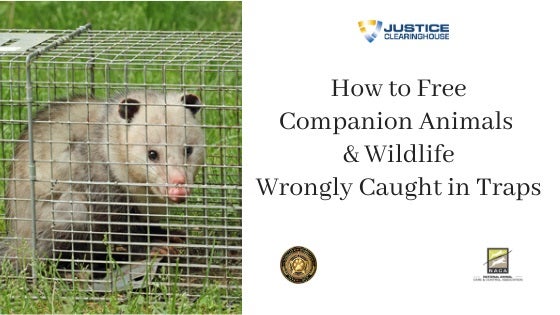
    Whether responding in the field to release an animal wrongly caught, guiding someone through it over the phone, or setting an animal free after translocation, this webinar will equip you with the basic steps to follow to not only successfully release, but to reduce stress and injury to the animal as well. How you approach and release an entrapped animal can greatly impact the level of stress and potential injury they experience.  This webinar will provide instruction for how to release wrongly trapped animals (both domestic and wild) from trap types that include foothold, snares, body-gripping, and box or cage style in a variety of situations and in the most humane and least stressful manner possible. This webinar will also discuss developing an awareness of how these traps work and what tools and personal protection and precautions might be necessary.


    The National Animal Care & Control Association (NACA) was formed in 1978 for the express purpose of assisting its members to perform their duties in a professional manner. We believe only carefully selected and properly trained animal control personnel can correct community problems resulting from irresponsible animal ownership. NACA’s purpose is to preserve the Human/Animal Bond by insisting on responsible animal ownership.


    The National Law Enforcement Center on Animal Abuse was established by the National Sheriffs’ Association to provide law enforcement officers information on the realities of animal abuse and to promote their proactive involvement in the enforcement of animal abuse laws in their communities. Through our partners, the Center will serve as an information clearinghouse and forum for law enforcement on the growing problem of animal abuse and its link to other types of crimes, including violence against humans. The Center also promotes officer safety in officer-dog encounters through continuing education and training.


    Founded in 1954, the Humane Society of the United States and its affiliates around the globe fight the big fights to end suffering for all animals. Together with millions of supporters, the HSUS takes on puppy mills, factory farms, trophy hunts, animal testing and other cruel industries, and together with its affiliates, rescues and provides direct care for over 100,000 animals every year. The HSUS works on reforming corporate policy, improving and enforcing laws and elevating public awareness on animal issues.


    ** This webinar has been certified by the National Sheriffs’ Association and may be eligible for Continuing Education Units through your POST. Please consult your local certification processes for additional details. Paid subscribers that attend will be able to download a jointly issued attendance certificate that includes the National Sheriffs’ Association logo.
  • Online Event – 10/1/20 – Keeping Families Together: Navigating the Blurry Lines Between Neglect, Cruelty and Lack of Access to Care – Best Friends Town Hall

    Online Event – 10/1/20 – Keeping Families Together: Navigating the Blurry Lines Between Neglect, Cruelty and Lack of Access to Care – Best Friends Town Hall

    Best Friends Town Halls

    The Best Friends Town Hall series brings together thought leaders from Best Friends and across the industry to provide insight, analysis, and solutions to the unprecedented challenges to lifesaving that we’re all facing right now.

    The topic of each town hall reflects the most earnest conversations happening that week in animal welfare. We treat the event as an interactive forum where live questions from attendees are answered with a crowd-sourced solution that benefits all.

    Every live town hall is recorded and posted down below. Keep an eye on this page for updates each week.

    Join us for our next Town Hall:

    Keeping Families Together: Navigating the Blurry Lines Between Neglect, Cruelty and Lack of Access to Care– As we navigate the change to impounding only high-priority intakes, Animal Control Officers come across field cases where impounding an animal is necessary. But, there are also cases where providing the owner with resources keeps the pet at home and out of the shelter. Join us for this town hall where Best Friends Director of National Municipal and Shelter Support (and NACA president) Scott Giacoppo, helps you define cruelty vs. resource deprivation to establish your own organizational guidelines for when to provide resources vs. impound an animal.

    Panelists:
    Audra Michael CPM, Director, Pinal County Animal Care and Control
    Nick Walton, Manager of National Municipal and Shelter Support, Best Friends
    April Moore, Chief Officer of Animal Services, Kansas City Pet Project

    • Register: Thursday, October 1, 2020 at 6:00 PM Eastern time.

    WEBSITE LINK:  https://network.bestfriends.org/tools-and-information/best-friends-town-halls