Shelter Learniverse and Industry-Wide Calendar

Blog

  • Online Conference – FREE – 7/11/20 to 7/12/20 – ASPCA Cornell Maddie’s Shelter Medicine Conference

    Online Conference – FREE – 7/11/20 to 7/12/20 – ASPCA Cornell Maddie’s Shelter Medicine Conference

    July 11-12, 2020 | All Online | Tuition Waived – 9 AM to 5 PM (ET), 6 AM to 2 PM (PT)

    To bring you the critical, timely information you need in a safe way, this year’s conference will take place virtually from July 11-12, 2020, and registration fees will be waived. Featuring twelve free workshops in two tracks—medical and operations—the 2020 ASPCA® Cornell Maddie’s® Shelter Medicine Conference is a unique educational opportunity for veterinarians and other animal welfare professionals to learn from our field of highly regarded speakers.

    Register now

    Highlights of this year’s conference include:

    • A high-quality, high-volume spay/neuter (HQHVSN) panel discussion featuring Drs Phil Bushby, Emily McCobb, Leslie Appel, and Karla Brestle
    • Epidemiological modeling of COVID-19 from Dr. Rachel Kreisler
    • Access to basic veterinary care and the impacts of COVID-19 from Dr. Brittany Watson
    • A panel discussion on COVID-19 response and what tactics to keep

    Download agenda

    And there are more benefits to attending, too:

    • Quick, easy, and free registration
    • An entirely virtual format, allowing more team members to attend from the comfort of their own homes—no stressful, long travel required!
    • The opportunity to learn from experts in their fields
    • Critical workshops geared towards COVID-19 response
    • Continuing education credits*
  • National Shelter Medicine Rounds – 6/11/20 – Supporting Communities and Dismantling Structural Inequities  – UW and UCD Shelter Medicine Programs

    National Shelter Medicine Rounds – 6/11/20 – Supporting Communities and Dismantling Structural Inequities – UW and UCD Shelter Medicine Programs

    From: National Shelter Medicine Rounds
    Sent: Tuesday, June 9, 2020 4:51:09 PM (UTC-08:00) Pacific Time (US & Canada)
    To: National Shelter Medicine Rounds
    Subject: National Shelter Medicine Rounds Thursday and recording

    Hi all,

    This Thursday 6/11 2-3pm CST, Amanda Arrington and Ashley Anderson-Mutch from Pets for Life will be joining us for a discussion about building foundational values as animal welfare organizations that positively support our communities and dismantle structural inequities and punishment based responses that many pet owners experience. We’ll also be looking at the parallels between policing and animal welfare organizations and how recognizing those connections can help us find new pathways to support people and their pets. Amanda is the director of Pets for Life and Ashley is the policy and enforcement reform manager for Pets for Life and a former humane law enforcement officer in PA.

    If you have the time we’d encourage you to listen to this podcast on the history of American policing. If you don’t have the time to listen before rounds don’t worry one bit, there will still be plenty of value to these discussions without having heard this podcast.

    https://www.npr.org/2020/06/06/871447408/bonus-american-police

    Here is the recording from today’s rounds: Anti-racism in your organization discussion

    Discussion to share your ideas, commitments, and programs you have or are putting in place to work towards anti-racism in your organization. UW/UCD Shelter Medicine Programs just shared our commitments and you can find them here.

    There were also a lot of great resources shared in the chat. At all times at the box link below my signature you can access recordings, various resources shared and a document where I save the links shared in the chat from each rounds. I’ve attached the document of the links shared in the chat here for easy access today.

    Thank you for so many of you joining us for these engaging discussions!

    Stephanie Koester, CVT

    Assistant Director, Shelter Medicine Program

    University of Wisconsin-Madison School of Veterinary Medicine

    nationalsheltermedicinerounds@vetmed.wisc.edu

    Rounds related documents, recordings, and details can be accessed here at any time.


    COVID-19 Rounds info:

    We will be more regularly offering National Shelter Medicine Rounds short term to discuss COVID-19 impacts on shelter medicine on Tuesdays from 3-4pm CT (1pmPT/2pmMT/4pmET)  and Thursdays from 2-3pm CT (12pmPT/1pmMT/3pmET). You are welcome to email questions or topics you hope to be discussed during rounds in advance to nationalsheltermedicinerounds@vetmed.wisc.edu and you are always encouraged to come prepared to unmute to ask questions and participate in discussion at any point. I will be sending email reminders of upcoming rounds in advance. Note: Rounds is typically held the 2nd and 4th Tuesdays of the month and will return to that format once the need for regular COVID-19 discussion passes. Recordings will not be available during COVID-19 discussions but can be accessed from previous regular rounds and will again be available once we return to the usual format.


    This group is made up of shelter veterinarians, shelter vet trainees, and upper level shelter leadership. If you know anyone that would like to be added to the national shelter medicine rounds email list to regularly receive scheduling updates moving forward, please have them email a request to be added to the email group to nationalsheltermedicinerounds@vetmed.wisc.edu.


    National Shelter Medicine Rounds is held on the same Zoom link for every session:

    https://zoom.us/j/520278731

    Meeting ID: 520 278 731


    One tap mobile

    +19292056099,,520278731# US (New York)

    +16699006833,,520278731# US (San Jose)

  • Webinar – 6/11/20 –  The Increased Value of Employee Engagement in our Covid-19 World – Virox and Oculus

    Webinar – 6/11/20 – The Increased Value of Employee Engagement in our Covid-19 World – Virox and Oculus

    As businesses struggle to find a path to business growth and profitability from the effects of Covid-19 we need to focus even more in developing employee engagement. Disengaged employees are a cause of decreased morale, productivity, profitability and increased employee turnover, burnout and client complaints. Use of a standardized employee engagement survey can give a business key insight into employee engagement that can be the basis for management changes that can lead to increased practice productivity, profitability and client loyalty with happier and more motivated employees.

    Dr. Mike Pownall

    Webinar Host

    REGISTRATION LINK:  https://event.webinarjam.com/live/103/9v4xrt2rt9rtrouyrpo

  • Webinar – 6/11/20 – Chameleon Shelter Software 10 Minute Topics About Chameleon Basics – Chameleon

    Webinar – 6/11/20 – Chameleon Shelter Software 10 Minute Topics About Chameleon Basics – Chameleon

    This week we’re going to cover some of the topics suggested by attendees of our previous webinars that fall into more of the “basics” category.

    What is visual kennel?
    How do I store documents with ChamCam?
    What is QuickKennel?
    What are Debt Scripts?
    How do I use the Behavior window?

    Plus lots of time for audience suggested topics!
    TAKE ME TO THE BEACH TO REGISTER NOW

  • The AAWA’s Spring Conference – Special Discount

    The AAWA’s Spring Conference – Special Discount

    If you haven’t already registered for AAWA’s Spring Conference, Resilience, use the discount code Spring25 and save yourself $25! The panel has some real heavy hitters (Dr. Julie Levy, Dr. Sandra Newbury, Dr. Scott Wees, Dr. Michael Lappin), and we’re really looking forward to attending and “seeing” all of you.

    WEBSITE LINK: https://theaawa.org/event/2020Spring

  • Our Commitment to Fighting Against Systemic Oppression

    Our Commitment to Fighting Against Systemic Oppression

    In the wake of George Floyd’s murder, the Koret Shelter Medicine Program and UW Shelter Medicine Program have been working on ways our programs will support the Black Lives Matter movement to dismantle racism. We have made a list of our commitments to each other, and to you, that we’d like to share. If you have been doing similar soul-searching work in your organizations, we invite you to share (publicly or privately) if you are so moved. We know we can do better together, and we are ready to work alongside, learn, share, and grow with our animal sheltering community.

    The University of Wisconsin-Madison Shelter Medicine Program and the University of California-Davis Koret Shelter Medicine Program stand in solidarity in the fight against systemic oppression in our country. We share the heartbreak and anger sparked by the murder of George Floyd. We abhor the violence directed against Black, Indigenous, and other people of color that happens every single day, and the other forms of oppression that seep into everyday interactions in universities and animal shelters as they do anywhere else.

    We also honor the deep commitment to caring and compassion expressed by so many in the animal welfare and veterinary professions. To be part of the solution to the violence and racism that threaten our society is a natural expression of that caring. At the same time, we recognize that inequality is embedded in our field as it is throughout our society. People of color disproportionately perform the hardest and lowest paid work in many shelters, and marginalized communities bear the brunt of animal management practices that perpetuate systemic inequalities. 

    As individuals, many of us have protested policies and practices we don’t agree with and advocated for a more just and kind society. The size and passion of the protests that have erupted in the wake of George Floyd’s murder may be a once-in-a-generation moment to affect change collectively. 

    We have work to do, and we are committed to doing that work.

    1. Our programs commit to err on the side of speaking out and taking action in support of justice and equity and in opposition to racism and violence against people of color in our society. We will risk being awkward and opening ourselves to criticism; knowing that others are facing far greater risks in this cause; and that only by speaking and acting and making mistakes will we have an opportunity to learn and do better. 
    2. We commit to receiving feedback and criticism with openness and appreciation. 
    3. We will not assume we have answers, or that it’s our role to provide them. Instead, we commit to engaging in anti-racist learning and providing resources to our teams that have been recommended by Black leaders.
    4. We will continue to promote equal access to veterinary care and work to remove the barriers that invite discrimination and oppression into our field. 
    5. We commit to seeking, learning from, and elevating the voices of people of color within our industry, so that everyone can benefit from the wisdom that comes from examining diverse perspectives.
    6. We are auditing our teaching materials to search out opportunities to start genuine conversations about our biases and to include anti-racism resources in our offerings. Equally as important, we are searching for places that we may be perpetuating racism.
    7. We won’t forget. We will continue to critically examine and then improve our policies. We welcome any feedback that would allow us to become stronger allies.
  • Online Course – Begins 6/16/20 – 4 Week Online Course – Fundamentals of Animal Behavior and Learning – IAABC

    Online Course – Begins 6/16/20 – 4 Week Online Course – Fundamentals of Animal Behavior and Learning – IAABC

    Fundamentals of Animal Behavior and Learning

    “That there could be a science of behavior, of what we do, of who we are?
    How could you resist that?”

    – Donald M. Baer

    Date Register
    Course begins: June 16, 2020
    Instructors: Dr. Erica Feuerbacher & JoAnna Platzer, B.Sc.
    Register Now

    About the Course

    This course will help you:

    • Think scientifically about animal training and behavior consulting for all species.
    • Understand and break training into component principles.
    • Understand environmental events that maintain behavior.
    • Increase your ability to be humane and effective.
    • Understand how labels such as “aggressive” or “submissive” cloud our thinking and our work.
    • Consider what we are describing when we say an animal is “confident,” “creative,” “a problem solver,” and how we should approach those learners.
    • See the common principles at play in different animals & species.
    • Become a more effective and humane trainer by cutting through the jargon and directly assessing behavior.

    Course Activities, Objectives, & Assessment

    Online Lectures: Each week there will be several short videos (10-20 minutes each; typically 60-90 minutes total per week) that will discuss the topics for that week.

    Online Readings with Reading Guides: Each week you will have a scientific reading with a guide to help you navigate the reading. The paper will exemplify the principles being discussed that week.

    Online Assignments: During Weeks 1-3, you will have 1-2 short online assignments each week. Some of these will entail you giving an example and then giving feedback on examples provided by a few of your fellow students.

    Online posts: During Weeks 2-4 you will post two questions, comments or reflections relevant to the material from the previous week to the discussion forum. You will also respond to at least two of your fellow students’ posts from that week (= total of four posts per week). Your questions and responses will be graded based on their thoughtfulness and completeness.

    Final Project: During Week 4, you will complete a final project/paper in which you will synthesize the topics covered to cohesively analyze and scientifically critique publicly available training videos and handouts.

    The class operates on a one-week cycle. The typical week with deadlines is provided below.

    Day Assignment
    Sunday Start of week. Post two questions/comments to discussion forum based on prior week’s material by 11:55 pm.
    Wednesday Post responses to two questions/comments on discussion board by 11:55 pm.
    Saturday Complete assignments for current week.

    Class Schedule

    This four-week course will begin on the specified start date. The first three weeks will explore the scope of the course. There will be no new content in the fourth week which is reserved for completing final projects, discussion and synthesizing the course content. Students will have access to the course material for 60 days after the course ends.

    Course Completion/CEU Requirements

    Auditors must review all course material. This will be verified in the Learning Management System.

    Full Students must carry out the reading assignments listed in the syllabus before class (first class not included)complete all assignments, check email and visit the learning site regularly (at least once a day) to check in on the discussion group. Students should expect to spend an average of 4-5 hours per week on course material and viewing, depending on individual speed of learning and the week’s materials.

    Registration Information

    Auditor Full Student
    CEUs 6 (CCPDT, IAABC, KPA) 8 (CCPDT, IAABC, KPA)
    IAABC & KPA Member Cost $129* $199*
    Non-Member Cost $159 $259

    *IAABC Members – log into your member account for the discount code
    *KPA Members – contact KPA for the discount code

    Online Course Cancellation Policy

    • Full refunds available more than 30 days before program start.
    • 50% refund available 16 – 30 days before program start.
    • No refunds available 15 or fewer days before program start.

    About the Instructors

    Erica Feuerbacher, Ph.D., BCBA-D, CPDT-KA

    Erica Feuerbacher, Ph.D., BCBA-D, CPDT-KA is an Assistant Professor of Anthrozoology at Carroll College in Helena, MT, where she leads the canine program in which students train foster dogs during the academic year. She is a Board Certified Behavior Analyst and a Certified Professional Dog Trainer. She earned her Ph.D. in Psychology at the University of Florida under the advisorship of Dr. Clive Wynne in the UF Canine Cognition and Behavior Lab (now part of the Canine Science Collaboratory) and her Masters in Behavior Analysis in the Organization for Reinforcement Contingencies under the advisorship of Dr. Jesus Rosales-Ruiz.

    She has published a variety of scientific articles of her research on learning theory and the dog-human relationship. She has taught Principles of Behavior Analysis, Behaviorism in Contemporary Society, Learning and Cognition, Basic and Advanced Canine Training, Research Methods, and General Psychology at the college level. She has earned several awards for her behavior analytic research and her dedication to the theoretical foundations of behavior analysis. Her research interests center on dog-human social interactions, canine welfare, and enhancing humane, effective training techniques.


    JoAnna Platzer, B.Sc., CPDT-KA

    JoAnna Platzer, B.Sc., CPDT-KA, is a Doctoral Candidate in the Applied Animal Behavior and Welfare lab at Virginia Tech under Dr. Erica Feuerbacher. She attended the University of Florida where she majored in Zoology with an emphasis on animal behavior. After graduation, she participated in research on site fidelity of Mockingbirds with the University of Florida, social behavior of Fairy-wrens with Cornell University, and comparative cognition of canines with Yale University. She has worked as a professional dog trainer and has experience in zoos and conservancies, where she was involved in training exotic animal species for enrichment and low-stress husbandry. Her current research focuses on the impact of fostering programs on shelter dog welfare, reinforcer efficacy of different types of grain for horses, and behavioral synchronization between dogs and their owners.

    If you have questions, email us at courses@iaabc.org.
  • Online Course – Begins 6/9/20 First Meeting 6/16/20 – 4 Week Online Course – Stress and the Animal in Front of You:  The Impact of Stress on Behavior – IAABC

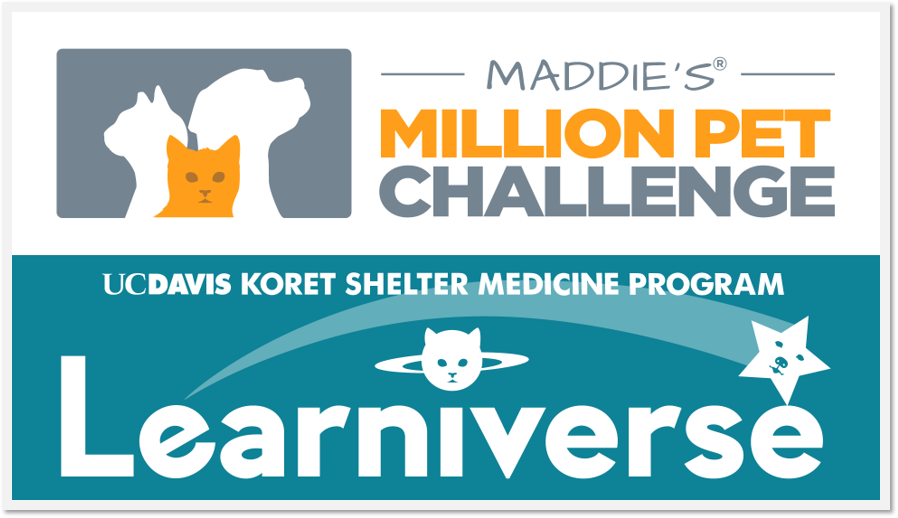
    Online Course – Begins 6/9/20 First Meeting 6/16/20 – 4 Week Online Course – Stress and the Animal in Front of You: The Impact of Stress on Behavior – IAABC

    Stress and the Animal in Front of You: The Impact of Stress on Behavior

    Date Register
    Course Begins: June 9th, 2020
    Weekly online meetings begin: June 16th at 7pm Eastern
    Instructor: Kristina Spaulding, PhD, CAAB
    Register Now
    Auditors may learn from other students but will not receive instructor feedback. Auditors do not attend online meetings and meetings are not recorded.

    About the Course

    This course will help animal behavior consultants understand the impact of stress on animal behavior at each life stage and apply this information to working directly with those animals.

    This course will help you:

    • Define and recognize indicators of stress
    • Identify and distinguish between the different types of stress
    • Appreciate the impact of stress on the brain and behavior over the course of an animal’s life
    • Describe the basic physiology of stress
    • Apply what you learn to your own training and behavior cases

    Class Schedule

    This is a 4-week instructor-led course. Each week includes a recorded lecture, a scheduled live discussion, recommended readings, and guiding questions. Knowledge of the lecture material will be assessed through participation in course discussions. Students will have access to the course material for 60 days after the course ends.

    Course Completion/CEU Requirements

    To successfully complete this course:

    Auditors must review all course material. This will be verified in the Learning Management System.

    Full Students must review all course materials, visit the learning site/discussion forum regularly (at least three days per week), attend the four weekly class meetings, and prepare responses to a set of guiding questions for each weekly class meeting discussion. Students who miss more than one meeting will not receive credit for the course.

    Students should expect to spend an average of 2 hours per week on course material and viewing, depending on individual speed of learning and the week’s materials.

    Registration Information

    Auditor Full Student
    CEUs 4 (CCPDT, IAABC, KPA) 8 (CCPDT, IAABC, KPA)
    IAABC & KPA Member Cost $139* $219*
    Non-Member Cost $169 $269

    *IAABC Members – log into your member account for the discount code
    *KPA Members – contact KPA for the discount code

    Online Course Cancellation Policy

    • Full refunds available more than 30 days before program start.
    • 50% refund available 16 – 30 days before program start.
    • No refunds available 15 or fewer days before program start.

    About the Instructor

    Kristina Spaulding, PhD, CAAB has a PhD in biopsychology – the study of the biological basis of behavior – and is a Certified Applied Animal Behaviorist through the Animal Behavior Society. She specializes in stress and behavior, social cognition and emotion, positive welfare and the prevention and treatment of behavior problems in dogs. In addition to her academic background, she has been in the dog training and behavior profession since 2000. She currently splits her time between private behavior work and teaching other dog trainers and behavior consultants online and through seminars and conferences.

    In addition, Dr. Spaulding is a member of the IAABC Foundation Board. She is also a member of the Fear Free Advisory Group and an authorized Speaker for Fear Free, an organization that advocates for minimizing fear, anxiety and stress for pets at vet clinics, groomers and training facilities. She also chairs two task forces for Meeting of the Minds, a coalition of top dog professionals across the country charged with improving the quality of life for our dogs.

    Before opening Smart Dog, Dr. Spaulding earned her B.S. in Wildlife Ecology at the University of Wisconsin – Madison. In college, she volunteered for a year at the local humane society. She was then hired by the same shelter. During her time at the animal shelter, she and a coworker established a training program for shelter dogs and their volunteer walkers to help make the dogs more adoptable. She also served as an assistant trainer at Dog’s Best Friend which was owned at that time by Certified Applied Animal Behaviorist Dr. Patricia McConnell.

    If you have questions, email us at courses@iaabc.org.
  • Online Course – Begins 10/7/20 First Meeting 10/14/20 – 4 Week Online Course – Stress and the Animal in Front of You:  The Impact of Stress on Behavior – IAABC

    Online Course – Begins 10/7/20 First Meeting 10/14/20 – 4 Week Online Course – Stress and the Animal in Front of You: The Impact of Stress on Behavior – IAABC

    Stress and the Animal in Front of You: The Impact of Stress on Behavior

    Date Register
    Course Begins: October 7th, 2020
    Weekly online meetings begin: October 14th at 1pm Eastern
    Instructor: Kristina Spaulding, PhD, CAAB
    Register Now
    Auditors may learn from other students but will not receive instructor feedback. Auditors do not attend online meetings and meetings are not recorded.

    About the Course

    This course will help animal behavior consultants understand the impact of stress on animal behavior at each life stage and apply this information to working directly with those animals.

    This course will help you:

    • Define and recognize indicators of stress
    • Identify and distinguish between the different types of stress
    • Appreciate the impact of stress on the brain and behavior over the course of an animal’s life
    • Describe the basic physiology of stress
    • Apply what you learn to your own training and behavior cases

    Class Schedule

    This is a 4-week instructor-led course. Each week includes a recorded lecture, a scheduled live discussion, recommended readings, and guiding questions. Knowledge of the lecture material will be assessed through participation in course discussions. Students will have access to the course material for 60 days after the course ends.

    Course Completion/CEU Requirements

    To successfully complete this course:

    Auditors must review all course material. This will be verified in the Learning Management System.

    Full Students must review all course materials, visit the learning site/discussion forum regularly (at least three days per week), attend the four weekly class meetings, and prepare responses to a set of guiding questions for each weekly class meeting discussion. Students who miss more than one meeting will not receive credit for the course.

    Students should expect to spend an average of 2 hours per week on course material and viewing, depending on individual speed of learning and the week’s materials.

    Registration Information

    Auditor Full Student
    CEUs 4 (CCPDT, IAABC, KPA) 8 (CCPDT, IAABC, KPA)
    IAABC & KPA Member Cost $139* $219*
    Non-Member Cost $169 $269

    *IAABC Members – log into your member account for the discount code
    *KPA Members – contact KPA for the discount code

    Online Course Cancellation Policy

    • Full refunds available more than 30 days before program start.
    • 50% refund available 16 – 30 days before program start.
    • No refunds available 15 or fewer days before program start.

    About the Instructor

    Kristina Spaulding, PhD, CAAB has a PhD in biopsychology – the study of the biological basis of behavior – and is a Certified Applied Animal Behaviorist through the Animal Behavior Society. She specializes in stress and behavior, social cognition and emotion, positive welfare and the prevention and treatment of behavior problems in dogs. In addition to her academic background, she has been in the dog training and behavior profession since 2000. She currently splits her time between private behavior work and teaching other dog trainers and behavior consultants online and through seminars and conferences.

    In addition, Dr. Spaulding is a member of the IAABC Foundation Board. She is also a member of the Fear Free Advisory Group and an authorized Speaker for Fear Free, an organization that advocates for minimizing fear, anxiety and stress for pets at vet clinics, groomers and training facilities. She also chairs two task forces for Meeting of the Minds, a coalition of top dog professionals across the country charged with improving the quality of life for our dogs.

    Before opening Smart Dog, Dr. Spaulding earned her B.S. in Wildlife Ecology at the University of Wisconsin – Madison. In college, she volunteered for a year at the local humane society. She was then hired by the same shelter. During her time at the animal shelter, she and a coworker established a training program for shelter dogs and their volunteer walkers to help make the dogs more adoptable. She also served as an assistant trainer at Dog’s Best Friend which was owned at that time by Certified Applied Animal Behaviorist Dr. Patricia McConnell.

    If you have questions, email us at courses@iaabc.org.



    WEBSITE LINK:  https://m.iaabc.org/courses/impact-stress-behavior/

  • Webinar – 6/15/20 – ICAM webinar: Dog and Cat Population Management During the COVID-19 Pandemic – ICAM

    Webinar – 6/15/20 – ICAM webinar: Dog and Cat Population Management During the COVID-19 Pandemic – ICAM

    ICAM members share their thoughts on how population management is impacted by the coronavirus pandemic, dog and cat susceptibility and how we can keep safe whilst continuing our essential services to manage dogs and cats humanely and protect their welfare.

    1. Sterilised dog and cat populations are more robust to population rebound during COVID-19 restrictions. Elly Hiby, ICAM
    2. Risk of companion animals becoming infected, and being infectious, and the case for not testing companion animals. Nat Lee, WSAVA
    3. How to conduct spay/neuter and CNVR/TNR safely (where government restrictions allow you to do so). Katherine Polak, Four Paws
    4. How to feed stray and owned animals safely. Keren Nazareth, HSI
    5. Rehoming centre protocols – intake, rehabiliation, foster and rehome safely. Coralie Farren, RSPCA
    6. Advocacy for dog population management in a post-corona world. Pankaj KC, World Animal Protection

    Host – ICAM Chair, Pankaj KC, World Animal Protection

    If you miss the live webinar for any reason – a recording will be available on this page within 24 hours after the event.

    Contact ICAM

    If you need any more information please email info@icam-coalition.org or use our online form.

    WEBINAR LINK:  https://www.icam-coalition.org/webinar-covid/