
Shelter Learniverse and Industry-Wide Calendar

Blog

  • Online Event – 7/9/20 – Ken Ramirez with Allie Bender and Emily Strong – Canine Enrichment for the Real World – Karen Pryor Academy

    Online Event – 7/9/20 – Ken Ramirez with Allie Bender and Emily Strong – Canine Enrichment for the Real World – Karen Pryor Academy

    LIVE FROM THE RANCH

    Join Ken Ramirez, KPCT’s Chief Training Officer, for a free hour-long virtual event live from The Ranch on Thursday, July 9 at 12:00 pm (PT). Ken will be joined by Allie Bender and Emily Strong, authors of Canine Enrichment for the Real World, to talk about meeting our dog’s needs, enrichment, and more.

    Ken Ramirez

    Ken is the EVP and Chief Training Officer at Karen Pryor Clicker Training, co-leading the company with Aaron Clayton. Ken oversees the vision for, and development of, training education programs. You will usually find Ken teaching at a ClickerExpo conference, leading a course at the Karen Pryor National Training Center (The Ranch), or teaching one of the Karen Pryor Academy courses.

    A 40+ year veteran of animal care and training, Ken is a biologist and behaviorist who has supervised the development care and training of more than 40,000 species. He has worked with organizations across the globe to improve animal training, program effectiveness, and animal health and welfare. Ken’s diverse body of contributions includes designing and implementing conservation projects for elephant protection and spearheading projects to train everything from komodo dragons to butterflies. Ken’s extensive canine work includes working with trainers, organizations, and federal and state agencies on training procedures for topics including aggression, search-and-rescue, and scent detection.

    Ken has written/edited two successful books, taught at a major university, hosted two successful seasons of the television series Talk to the Animals, and was EVP of animal care and training at Chicago’s Shedd Aquarium. When he’s not doing cool stuff with animals and people, you might find Ken at a NY theater or at any movie screening.

    Allie Bender

    Allie Bender, CDBC, CPBT-KA, SBA is the founder and co-owner of Pet Harmony Animal Behavior & Training, co-founder of First Train Home Program, and co-author of Canine Enrichment for the Real World. Allie is a national speaker, published author, and an animal welfare advocate. She has been working with rescue groups and shelters since 2006 in various capacities, including founding a student-run animal welfare organization. Allie started dog training professionally in 2012 and by 2015 became the lead dog behavior consultant of a LIMA-friendly training team at Best Friends Animal Society, the largest no-kill animal sanctuary in the nation. Here she had the opportunity to work with dogs and cats with serious behavior challenges as well as speak at national conferences, write for the Best Friends magazine, and make TV and commercial appearances.

    Allie has a BS in Animal Science from Iowa State University and is certified through the International Association of Animal Behavior Consultants and Council for Certification of Professional Dog Trainers.

    Emily Strong

    Emily Strong, CDBC, CPBT-KA, SBA is co-owner of Pet Harmony Animal Behavior & Training, co-founder of the First Train Home program, and co-author of Canine Enrichment for the Real World. She also runs Pet Harmony’s Mentorship Program, co-pilots Pet Harmony’s Pro Campus membership site, and is a national speaker and freelance writer. She has been working and volunteering in various animal welfare related fields since 1990, training hundreds of different species of animals along the way, and has been a behavior consultant since 2008.

    WEBSITE LINK:  https://theranch.clickertraining.com/live/#next

     

  • Webinar – 7/9/20 – Leveling the Field: How to Remove Barriers for Underrepresented Communities and their Pets – Best Friends

    Webinar – 7/9/20 – Leveling the Field: How to Remove Barriers for Underrepresented Communities and their Pets – Best Friends

    Join Best Friends Senior Director of National Mission Advancement, Marc Peralta, as he leads the discussion on animal policies and laws which inadvertently create barriers for BIPOC and lower income communities to adopt, reclaim, and remain in compliance to keep their pets.

    This discussion will address specific ordinances, how laws and policies create barriers and how to work with your community to have them removed.

    WEBSITE LINK:  https://bestfriends-org.zoom.us/webinar/register/3915935313235/WN_SOFl4E-uRYSrpDn4uwKqig

  • Webinar – 7/15/20 – Veterinary Dentistry – Dental Radiography and Interpretation – VDOS (fee applies)

    Webinar – 7/15/20 – Veterinary Dentistry – Dental Radiography and Interpretation – VDOS (fee applies)

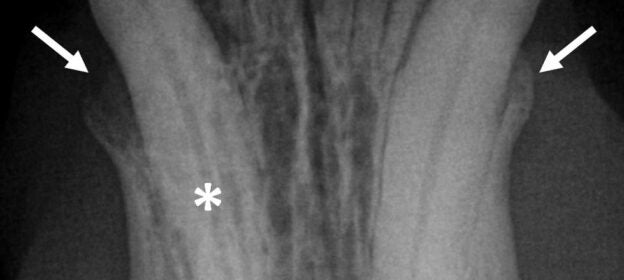
    This webinar will review equipment/material needs to perform dental radiography in dogs and cats. Benefits and disadvantages of digital and non-digital options are outlined. Parallel and bisecting angle techniques and the most common positioning mistakes are discussed. Anatomy and pathology on numerous dental radiographs obtained from the upper and lower jaws with various lesions are explained in a systematic fashion. The didactic lecture will last 1.5 hours, but the webinar is designed so that there is extra time for interactive participation and answering your questions.

    WEBSITE LINK:  https://www.vdos.org/event-details/dental-radiography-and-interpretation-2

  • Webinar – 8/28/20 – Veterinary Dentistry – Dental Radiography and Interpretation – VDOS (fee applies)

    Webinar – 8/28/20 – Veterinary Dentistry – Dental Radiography and Interpretation – VDOS (fee applies)

    This webinar will review equipment/material needs to perform dental radiography in dogs and cats. Benefits and disadvantages of digital and non-digital options are outlined. Parallel and bisecting angle techniques and the most common positioning mistakes are discussed. Anatomy and pathology on numerous dental radiographs obtained from the upper and lower jaws with various lesions are explained in a systematic fashion. The didactic lecture will last 1.5 hours, but the webinar is designed so that there is extra time for interactive participation and answering your questions.

    WEBSITE LINK:  https://www.vdos.org/event-details/dental-radiography-and-interpretation-2

  • Webinar – 7/13/20 – Veterinary Dentistry – Oral Examination and Charting – VDOS (fee applies)

    Webinar – 7/13/20 – Veterinary Dentistry – Oral Examination and Charting – VDOS (fee applies)

    This webinar will help you to understand oral and dental anatomy in dogs and cats using proper nomenclature. You will be able to do patient triage, obtain a history, assess clinical signs, perform a dental and oral examination (in the awake and anesthetized patient), and record your findings. The modified Triadan tooth numbering system will be introduced, and an example of a dental record will be shown for entry of your diagnostic findings and treatment performed. The didactic lecture will last 1 hour, but the webinar is designed so that there is extra time for interactive participation and answering your questions.

  • Webinar – 8/27/20 – Veterinary Dentistry – Oral Examination and Charting – VDOS (fee applies)

    Webinar – 8/27/20 – Veterinary Dentistry – Oral Examination and Charting – VDOS (fee applies)

    This webinar will help you to understand oral and dental anatomy in dogs and cats using proper nomenclature. You will be able to do patient triage, obtain a history, assess clinical signs, perform a dental and oral examination (in the awake and anesthetized patient), and record your findings. The modified Triadan tooth numbering system will be introduced, and an example of a dental record will be shown for entry of your diagnostic findings and treatment performed. The didactic lecture will last 1 hour, but the webinar is designed so that there is extra time for interactive participation and answering your questions.

  • Online Meeting – CASCAR – 7/7/20 – California Animal Shelters – UC Davis Koret Shelter Medicine Program

    Online Meeting – CASCAR – 7/7/20 – California Animal Shelters – UC Davis Koret Shelter Medicine Program

    Given the craziness that can afflict animal shelters around the July 4th weekend we were thinking of cancelling next Tuesday’s CASCAR call. However, there were lots of questions after the webinar we did for Cal Animals during the usual CASCAR slot this week and we didn’t get to all of them, so we figured we could use the time to answer those if there are any lingering. And we are working on a follow up, more tactical session on racial and social justice in California animal sheltering/community animal management, hopefully to really dig into policies and practices that will result in meaningful shifts. If you have questions and ideas to inform planning that would be welcome. Or just in general if you want to drop in and say hi – the truth is we just like to see you all!

    So, low key and don’t worry if you can’t make it this week, but we’ll be hanging out at the usual spot at 10 a.m. on Tuesday July 7th: https://zoom.us/meeting/register/tJQtdO-srDItyMz7xy-ZsncbcFa6s8kKZg.

    And as always, if you have questions or suggestions for future CASCAR call topics, email us at CASCAR@sheltermedicine.com.

    Hope your fourth of July weekend is not too hectic and all the pets and people stay safe!

    Kate

    Kate F. Hurley, DVM, MPVM, Dip. ABVP (Shelter Medicine)

    Koret Shelter Medicine Program

    UC Davis  Center for Companion Animal Health

    www.sheltermedicine.com

    www.millioncatchallenge.org

  • Online Meeting – CASCAR – 7/14/20 and 7/21/20 – California Animal Shelters – DEI – UC Davis Koret Shelter Medicine Program

    Online Meeting – CASCAR – 7/14/20 and 7/21/20 – California Animal Shelters – DEI – UC Davis Koret Shelter Medicine Program

    This Tuesday: Diving back into social and racial justice for California animal shelters
    You are invited to join our two-part discussion session happening this Tuesday, July 14th.
    The sheltermedicine.com newsletter: your portal to better sheltering.

    Save the Date: DEI and your shelter.

    Two-part DEI discussion sessions this Tuesday (7/14) and next Tuesday (7/21).
    Hi All,
    We just got off the phone from the group planning session for our upcoming CASCAR calls and we’re really looking forward to our time together on Tuesday! Jose Ocano and Jyothi Robertson will be joining us again for a two-parter this Tuesday, July 14th, and the following Tuesday, July 21st, to dive deeper into applying a racial and social justice lens both within our organizations and to the work that we do.
    We will move through definitions and establishing cultural foundations into practical tactics with plenty of room for discussion. As always, our hope is to create a respectful and friendly context for exploration and sharing of questions, ideas and experiences.
    Just shedding lots and lots of light on this discussion and refusing to let it fade into the background as other pressing issues emerge (and surge☹️), is really helpful. At least, that’s our sincere hope.

    Check the CA shelters page for links to this and previous CASCAR calls.

    We would love for this to be inclusive of interested staff at every level so please feel free to share with your team. Coming up, we can discuss changing the time of these calls to better accommodate schedules now that more people are back to work onsite, We realize 10am isn’t the easiest for kennel staff.
    As always, if you have questions or suggestions for this discussion or future CASCAR topics, email us at CASCAR@sheltermedicine.com <mailto:CASCAR@sheltermedicine.com>.
    Remember, if you volunteer to lead a section of a call, you get a CASCAR mug of your own!

    Dr. Kate Hurley and the KSMP Team

  • Online Course – Starts 7/8/20 – Introduction to Learning – in Animals – Smart Dog Training and Behavior (fee applies)

    Online Course – Starts 7/8/20 – Introduction to Learning – in Animals – Smart Dog Training and Behavior (fee applies)

    Course description

    Everything animals do is affected by learning.  This includes unhealthy or maladaptive behavior such as aggression and anxiety as well as simple, everyday behavior such as interactions with family members, strangers, and other dogs.  In addition, learning is affected by everything we do and experience.  Things like trauma and success, as well as feeling excited or scared after a particular experience, all affect how animals learn.

    As dog trainers, we need to have a very strong foundation in learning theory if we want to effectively establish new behaviors and modify old ones. This class is an excellent way to establish that knowledge.

    Introduction to Learning covers the biology of learning, instrumental conditioning, classical conditioning, the role of emotion in learning as well as the application and integration of these topics.  Throughout the class, students will have multiple opportunities to use in-class activities to further their understanding of the material and to receive feedback regarding their progress in the course. I also offer an advanced learning class for students that are already comfortable with the basics, or who are interested in going further after completing the introductory course. That course will be scheduled later in 2020 and will be announced via my mailing list.

    Course Objectives

    Upon completion of this course, students should be able to:

    • Define learning and explain how it influences behavior
    • Explain how learning is influenced by biological factors such as genetics and natural selection
    • Discuss the relationship between physiology and behavior
    • Define, recognize, and apply instrumental conditioning concepts including:
        • Instrumental conditioning
        • Antecedent, behavior, consequence
        • Negative and positive punishment and reinforcement
        • Factors that influence instrumental learning
    • Explain the different methods of producing behaviors in dogs (e.g. shaping, chaining, luring)
    • Define, recognize, and apply classical conditioning concepts including:
        • Classical conditioning
        • Conditioned and unconditioned stimuli and responses
    • Define emotion and discuss how it influences behavior
    • Assess different methods of addressing fear in dogs and the proper application of each
    • Make predictions about how an individual might learn under particular conditions and how that learning will affect behavior.
    • Apply knowledge of learning to working with dogs
    • Be able to analyze, integrate and apply new information to fit into current framework of knowledge. If it doesn’t fit into current framework, be able to pursue novel paths of thinking.

    Approach

    I believe that the most effective learning occurs when students are not only provided with the facts, but also provided ample opportunity to use that information in concrete ways, engage in challenging activities, interact with others and receive frequent feedback on their progress.

    Therefore, this course will be taught using an approach that encourages collaboration and active learning.  While there will be time spent lecturing, time in class will be also be spent working on interactive activities and completing brief assignments.

    I began my teaching career by teaching at a university and I hold students in my online courses to the same standards. I have high expectations for engagement and quality of work. However, I also strongly feel that if I am going to set a high bar, that I need to step up and make sure my students can reach it. This means that I hold myself to a very high standard as well and I love it when students reach out if they are struggling with the material in any way. I am happy to help. If you haven’t taken a college course before, but are willing to put in the work and reach out for help if needed, then you should do well in this course.

    Schedule

    The course starts on Wednesday, July 8th at 6 pm EST. It is a 6-week course. We will have class on the following days: July 8th, July 15th, July 22nd, July 29th, August 5th, and August 12th. Class runs for about an hour. Each lecture will be conducted live and will include interactive discussion. There will be at least one in-class assignment each week as well. In addition to the in-class assignments, there will be two quizzes that will need to be completed outside of class – one on Week 2 and one on week 4.

    If you are interested in this course, but cannot attend live at the currently scheduled time, please e-mail info@smartdogtrainingandbehavior.com with your preferred times. If I get enough requests for other time slots, I will open additional sections. 

    Class preview

    Not sure? Check out our class preview! The preview contains a sample lecture, a video message from Dr. Spaulding, the syllabus and a quiz to test your knowledge!

    Note: the system requires you to create an account to view the preview, but you will not need to enter your credit card information.

    CEUs

    CCPDT: 9 CEUs for behavior consultants

    IAABC: 8.25 CEUs

    CEUs will require completion of work in class as well as the completion of two quizzes. Quizzes must be passed with an 80% or higher and 80% or more of all in-class work must be submitted in order to earn CEUs. If you receive less than 80% on the quiz you may retake the quiz once, after contacting the instructor for clarification on the missed questions. Refunds will not be granted if you are unable to attend class and therefore unable to complete the required work. Excused absences will be granted in case of emergencies and illness (with proper documentation).

    Register

    The cost for the course is $240.

    Click here to register. Registration will close on Tuesday, July 7th at 12 pm EST.

    WEBSITE LINK:  http://smartdogtrainingandbehavior.com/introduction-to-learning/

  • Webinar – 7/8/20 – Common Dental and Oral Pathology – VDOS – fee applies

    Webinar – 7/8/20 – Common Dental and Oral Pathology – VDOS – fee applies

    You are not sure about how to call lesions in the mouth of dogs and cats? Looks like this, but could be that? Learn their names, causes, what else they could look like, and how to address them!

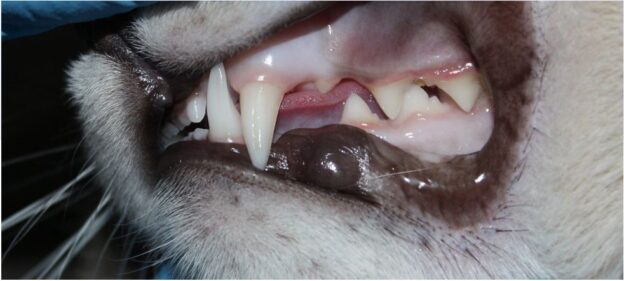
    This webinar will review the most common dental and oral pathologies in dogs and cats, including periodontal disease, gingival enlargement, oral ulcers, stomatitis, eosinophilic granuloma, pyogenic granuloma, tooth wear, tooth fracture, endodontic and periapical disease, tooth resorption, jaw fracture, temporomandibular joint disorders, palate defects, oral soft tissue trauma, and oral tumors. The focus is on recognizing potential causes and diagnostic features of these conditions. The didactic lecture will last 1.5 hours, but the webinar is designed so that there is extra time for interactive participation and answering your questions.

    WEBSITE LINK:  https://www.vdos.org/event-details/common-dental-and-oral-pathology-2