Shelter Learniverse and Industry-Wide Calendar

Blog

  • Podcast – 5/11/20 – Spay/Neuter in the Time of COVID-19 – Community Cats Podcast

    Podcast – 5/11/20 – Spay/Neuter in the Time of COVID-19 – Community Cats Podcast

    Spay/Neuter in the Time of COVID-19

    The Community Cats Podcast is hosting these two town hall style gatherings:


  • Webinar – 5/13/20 – The Origins of COVID-19:  Links to the Global Wildlife Trade – HSVMA

    Webinar – 5/13/20 – The Origins of COVID-19: Links to the Global Wildlife Trade – HSVMA

    HSVMA hosts Dr. Teresa Telecky, PhD, a zoologist and Vice President, Wildlife, for Humane Society International (HSI), who will explain the suspected origins of the SARS-CoV-2 virus and its relationship to the wildlife trade.  She will also outline HSI’s efforts to move governments around the world to ban wildlife trade, transport and consumption in order to reduce the risk of yet another pandemic of zoonotic origin. An overview of federal and state legislation aimed at ending the wildlife trade and shutting down live wildlife markets in the US will be given.  A Q&A session with Dr. Telecky will follow.

    This webinar is FREE for all attendees.

    PRESENTER: Teresa Telecky, PhD

    Teresa Telecky, PhD, is a zoologist and Vice President, Wildlife, for Humane Society International (HSI). She joined the Humane Society of the United States staff in 1990 and has, over the past 30 years, led the organization’s efforts to reduce the wildlife trade.

    Dr. Telecky is an expert on the United Nations Convention on International Trade in Endangered Species of Wild Fauna and Flora (CITES) and serves as the Executive Director and Vice President of the Species Survival Network, an international coalition of non-governmental environmental organizations committed to the promotion, enhancement and strict enforcement of CITES.

    Dr. Telecky has authored or co-authored six published scientific papers on animal behavior and endocrinology, as well as numerous technical reports of the HSI, including Big Game, Big Bucks: The Alarming Growth of the American Trophy Hunting IndustryCAMPFIRE: A Close Look at the Costs and Consequences; and Reptiles as Pets: An Examination of the Trade in Live Reptiles in the United States.

    Following a post-doctoral fellowship with the National Science Foundation and the Japan Society for the Promotion of Science at the National Institute for Basic Biology in Okazaki Japan, Dr. Telecky began work for HSI in 1990, specializing in the international wildlife trade.

    She earned her Bachelor of Science and Master of Science degrees in zoology from the University of Nevada, Reno, and her doctorate in zoology from the University of Hawaii, Manoa.

    Website Link to Register:  https://www.hsvma.org/covid19_globalwildlifetrade

  • BLOG: Pets, Mental Health & COVID-19

    BLOG: Pets, Mental Health & COVID-19

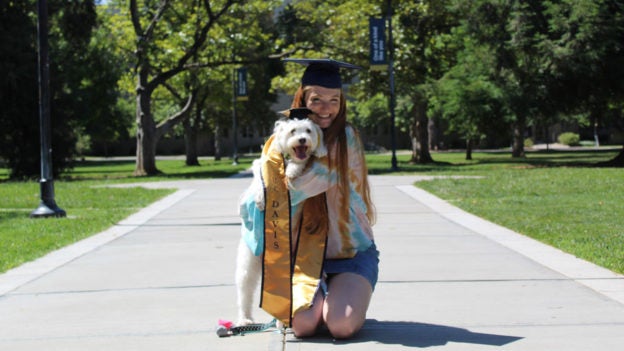
    Since I was a young child I have had a deep understanding of how animals can bring happiness into peoples’ lives. My first word as a 1 year old was “dog” and I grew up wanting to become a veterinarian due to my passion for animals and the love they give.  However, in my later years I began to recognize the impact pets can have on your mental health as well. 

    During my undergraduate education I started to struggle with depression and anxiety that affected my daily routine. Being a busy college student in a difficult major made it easy to slip into a rut where I was greatly lacking balance and calmness in my life. 

    Enter in Molly- my ten year old rescued supermutt who has been our family dog since 2011. I made the decision to bring her with me to college my junior year, and little did I know it would be one of the best choices I could have made for myself, and for her. Despite the challenges that come as a result of being a full time student and dog mom, I became stronger and more focused on incorporating stability and happiness into my life. Having her with me allowed me to be more intentional with how I spend my time, get outside to appreciate nature, and have an appreciation for all the little things in life-even if that means having to deal with lots of barking at squirrels….

    The role that animals play in the happiness and mental wellbeing of their owners is being further exhibited during social distancing as a result of the ongoing coronavirus pandemic (COVID-19). As of Early March 2020, California began a shelter in place protocol, as businesses began to close and people were ordered to stay home to prevent the spread of COVID-19. As the majority of the United States followed swiftly we have seen a tremendous increase in unemployment (Cox, 2020), as well as many Americans working from home as their jobs allow. This has resulted in millions of people-many of whom may live alone- being stuck inside with their pets.

    Pets are now stepping up to the plate as being the sole source of physical contact for many Americans who live alone or are socially isolated from others. Not only do pets get us to literally get up and move around more (ahem-potty breaks!), but they can have a significant physiological impact on human health. For example, studies have shown that people experience lower blood pressure and heart rates when they live with a pet (Vormbrock, 1988). But the powerful impact that pets have on people goes beyond just our physical health.

    It’s no coincidence that there are therapy animals in some of the most mentally stressful places in society as well: airports, prisons, hospitals, memory care facilities, universities, etc… Animals have been proven throughout the ages to be incredible sources of positive energy, emotional stability, and comfort. For instance, Johns Hopkins Hospital works with Pet Partners to bring in therapy dogs “to improve patients’ psychological status” (Hedin, 2018). It is abundantly evident that animals serve as a strong source of comfort to many people in vulnerable states. However, it’s not just healthy for a select group of individuals- we can all benefit from our pets during the time of COVID-19. 

    There have been studies illuminating how companion animals assist with coping during a crisis. Schools that have experienced on-campus shootings have started using therapy animals as a way to help students recover from these traumatic events. Research indicates that the use of animal assisted therapy can greatly reduce depression, symptoms of PTSD and anxiety (O’Haire et al., 2016). Being at home with our pets during this crisis may prove to have an immeasurable impact on the coping success and recovery from COVID-19. 

    Keeping one’s mental health afloat during a crisis is no simple task, especially when this crisis is impacting everyone across the globe. However, having a pet is certainly something to be taking advantage of during this time. Companionship and love is a priceless gift that our furry (or fur-less) friends bring to our lives. Now more than ever, let us be extra thankful for the snuggles, laughs and distractions from the stressful world around us. The bonds that we share with our animals could also help us all recover from this in the future. 

    With that all being said, I’m going to go hug my dog now! 

  • Webinar – 5/19/20 – How to Ask for $ in Tough Times:  12 Tactics in 24 Minutes – The AAWA

    Webinar – 5/19/20 – How to Ask for $ in Tough Times: 12 Tactics in 24 Minutes – The AAWA

    In the face of unprecedented disruption and uncertainty, how can nonprofits ask donors for support in ways that are highly compelling yet incredibly sensitive? This webinar (presented live, with additional time for Q&A) offers an espresso shot of actionable recommendations designed to help nonprofit leaders ask for – and get – the financial support upon which their organizations depend.

    Topics include:

    •  The timeless virtue of stewardship
    •  3 questions that engage your largest donors.
    •  How to reconnect with lapsed donors
    •  Email versus direct mail?
    •  Ask with emotional intentionality
    •  How to employ matching & challenge grants
    •  Avoid these 5 destructive pitfalls
    •  When to ask for more
    •  Does no response mean no?
    •  And much more!

    Speaker

    Matt Lehrman, Founder, Social Prosperity Partners

    From a 20+ year career in nonprofit management, Matt Lehrman founded Social Prosperity Partners, a practice devoted to uniting leaders in endeavors of great imagination and initiative. He has consulted and presented workshops on donor & stakeholder engagement, audience development, civic engagement, and loyalty & customer engagement throughout the US and UK.


    WEBSITE TO REGISTER:  https://events-na2.adobeconnect.com/content/connect/c1/1411885275/en/events/event/shared/default_template/event_landing.html?connect-session=na2breeztct4yv44fks6w59v&sco-id=1893130815&_charset_=utf-8

  • Online Course – 5/16/20 – Anesthesia and Analgesia for Veterinary Nurses/Technicians – IVSeminars

    Online Course – 5/16/20 – Anesthesia and Analgesia for Veterinary Nurses/Technicians – IVSeminars

    In a first-ever technician-focused IVS seminar, Dr. Grubb will cover anesthesia and analgesia information, tips and updates. Although directed to technicians/nurses, the seminar will also apply to anyone wanting an anesthesia/analgesia review, including veterinarians and veterinary students. There will be time for Q & A so you can learn almost anything you want to! Join Dr. Grubb for 5-hours of RACE-approved CE.

    Tamara Grubb D.V.M., Ph.D.

    Diplomate, American College of Veterinary Anesthesia & Analgesia
    Associate Professor of Anesthesia & Pain Management
    Washington State University

    Seminar Topics:

    Lecture 1 & 2:

    Anesthesia drugs from A (acepromazine) to Z (Zoletil)

    What is the truth and what is myth regarding the anesthesia/analgesia drugs that we commonly use in practice? We will briefly review the good and bad effects – and the proper dosages – of anesthetic/analgesic drugs so that they are used appropriately and safely. (PS – Zoletil is Telazol in UK/Europe).

    Lecture 3:

    Risky Business: Making Anesthesia Safer

    Anesthesia can be very dangerous for some patients, but we can improve anesthetic safety by knowing which patients are at greater risk – and what human factors put patients at risk.

    Lecture 4:

    The Importance of Pain Management and the Nurse’s Role

    Pain management is critical to anesthetic safety, and to patient health and quality of life. We will discuss pain, pain management and how the nurse/technician can play a very large role. YOU CAN DO IT!

    Lecture 5:

    Specific Analgesia Techniques and Pain Assessment for Veterinary Nurses/Technicians

    We will discuss easy to implement pain assessment tools and pain management techniques that the nurses/technicians can/should be doing. Videos included!

    More Info and Registration:  https://www.ivseminars.com/seminars/anesthesia-and-analgesia-for-veterinary-nurses-technicians/

  • Webinar – 6/3/20 – Decreasing Stress at the Veterinary Hospital Begins at Home – HSVMA

    Webinar – 6/3/20 – Decreasing Stress at the Veterinary Hospital Begins at Home – HSVMA

    In this era of low stress veterinary visits, what about the patient that is stressed long before they arrive at the hospital? Please join HSVMA as we welcome veterinary behaviorist Dr. Meredith Stepita to discuss working with pet owners to implement a behavior modification plan at home, before the visit, to support the patients with stressors such as car rides, carriers, etc.

    Dr. Stepita’s objectives for this webinar are to:

    • Identify sources of canine and feline stress that occur prior to the veterinary visit
    • Provide a step by step guide clinicians can use to teach pet owners how to lay a foundation for behavior modification at home before the veterinary visit
    • Understand the role select anti-anxiety medications and non-pharmaceutical treatments play in decreasing patient stress that occurs before the veterinary visit

    We hope you will join us as we explore this important topic.

    REGISTER – https://sheltermedicine.zoom.us/webinar/register/WN_Eha0XXTMTl6ueT9uvJk71g

    This webinar is RACE-approved for 1.5 hours of veterinary CE credit and is available at no cost as a benefit for HSVMA members.

    Not a member? We encourage you to join so you can take advantage of free access to our live and archived CE webinars and other member benefits.

    PRESENTER: MEREDITH STEPITA, DVM, DACVB

    Dr. Stepita received her DVM from the University of Tennessee in 2006. After completing an internship and working in general practice in Arizona she entered into the Clinical Veterinary Behavior Residency Program at the University of California-Davis, becoming a Board-Certified Veterinary Behaviorist in 2011. She spends most of her time in her San Francisco Bay Area-based practice, Veterinary Behavior Specialists, helping pet owners improve their pet’s behavior problems, and finds working with dedicated pet owners to be highly rewarding.
    Dr. Stepita’s research involves the frequency of parvovirus in puppies attending puppy socialization classes. Results of this study showed that vaccinated puppies attending these classes were no more likely to be diagnosed with parvovirus than those not attending these classes. She has authored chapters on canine aggression, feline anxiety, feline house soiling, and canine and feline mourning in veterinary texts. Dr. Stepita is also a local and national speaker. Her areas of interest include canine and feline anxiety and aggression, the human-animal bond, and animal welfare.
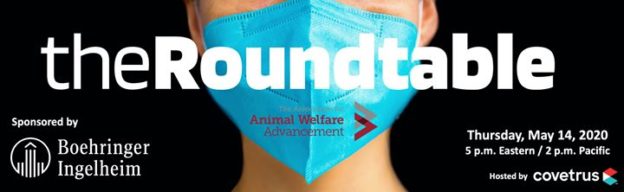
  • Roundtable – 5/14/20 – The Roundtable – The AAWA – Boerhinger Ingelheim – Covetrus

    Roundtable – 5/14/20 – The Roundtable – The AAWA – Boerhinger Ingelheim – Covetrus

    The AAWA CEO Jim Tedford sits down for an exclusive interview with animal welfare leaders in COVID-19 hotspots to find out what lessons they’ve learned and how they’re managing the crisis. #SaveTheDate #MarkYourCalendar #AskSiriToRemindYou Registration link coming soon!

    For the first time, hear from three leaders experiencing COVID-19 in major HOT SPOTS: Seattle, New York City, and Detroit. This exclusive roundtable conversation between animal sheltering leadership will offer valuable insights on battling COVID in communities that have suffered more than most. Let their HOT SPOT experience help you prepare to better support your community through COVID-19.

    Questions from the audience will follow the roundtable discussion.  Submit your HERE – https://www.surveymonkey.com/r/PBMTP5W

    Visit The AAWA Website for details as they become available.

    Website: https://learning.theaawa.org/

    No Registration Required – Click this Link to Join the Meeting

  • Webinar – 5/14/20 – COVID-19: Adapting to New Models & Protocols in the Veterinary Clinic – Clinician’s Brief & Zoetis

    Webinar – 5/14/20 – COVID-19: Adapting to New Models & Protocols in the Veterinary Clinic – Clinician’s Brief & Zoetis

    While predictions and restrictions continue to evolve, one thing seems certain: COVID‑19 will continue to play a role in how we practice veterinary medicine for some time to come.
    When it’s important to minimize interactions between pet owners and veterinary teams, best medicine might mean a more aggressive work-up and treatment plan than in more relaxed times. Learn how you can adapt your approach in this roundtable discussion—and see how it can translate into success for your practice, a better experience for your clients, and optimal care for your patients.
    WHAT YOU’LL LEARN
    • The objective of this webinar is to give veterinarians and their staff practical ways to provide comprehensive care and practice best medicine in the current constrained practice environment that limits the number of actual visits and rechecks.
    • Attendees will learn how to optimize important aspects of patient care which include the pre‑visit plan, pre‑visit communication, the visit itself, the discharge process, and the virtual recheck and follow up.
    Join us for a webinar discussion and explore new options to give clients what they need in these uncertain times.


    CLICK TO REGISTER Here

  • Webinar – 5/5/20 – Healthy Practice, Healthy People – Fear Free

    Webinar – 5/5/20 – Healthy Practice, Healthy People – Fear Free

    Studies show that workplaces with fully engaged employees are more productive, more profitable, can change and adapt more quickly, and have lower attrition rates. A healthy culture is good for business and enhances employee satisfaction and morale. Veterinary professionals play essential leadership roles in the intentional development of a culture that determines the success of the practice.

    Presented by Laurie Fonken, Ph.D., LPC, this webinar will help you:

    • Define the terms “culture” and “organizational culture”
    • Identify parts of your culture that are by default and by design
    • Know the difference between implicit and explicit elements of culture
    • Leave with one idea to take back to your practice

    Laurie Fonken, Ph.D., LPC

    Register here:  https://us02web.zoom.us/webinar/register/WN_nykH4YA4TZezvj6RtbOmYQ?utm_source=Fear+Free+Pets+Members&utm_campaign=5ea144f7b1-NEWSLETTER_AUG_PC_WEBINAR_CERT_COPY_01&utm_medium=email&utm_term=0_498a4945f3-5ea144f7b1-175820921