Shelter Learniverse and Industry-Wide Calendar

Category: Uncategorized

  • New Adoption Counseling Course for Shelter Staff, Volunteers, and Fosters

    New Adoption Counseling Course for Shelter Staff, Volunteers, and Fosters

    There’s a new, free self-paced course available at Maddie’s® University, and it’s all about facilitating successful adoptions!

    This course provides guidance for navigating the entire adoption process, with an emphasis on adoption counseling. The course demonstrates the general adoption counseling process and then dives into adoption counseling for pets with behavior or medical conditions. Text content is supported by videos, infographics and exercises. All videos are shareable and all infographics are available for download so you can use them in training. 

    “This course goes deep on adoption counseling for cats and dogs and spans a number of interconnected topics,” co-author Rachel Jones shares. Topics include:

    • Customizing meet and greets for individual animals and their behaviors and medical needs.
    • Order of operations when receiving inquiries through different channels
    • Using approachable language when discussing different types of behaviors and medical needs.
    • Prioritizing counseling topics.
    • Important paperwork to consider.
    • Helping potential adopters determine whether a pet is a match themselves.
    • Setting adopters up for success in the home.
    • Fostering a welcoming environment.
    • Ways to simplify your own placement processes without sacrificing quality.
    • Minor marketing tips.
    • And more.

    The Adoption Counseling course is eligible for 2.0 hours of credit from the Association for Animal Welfare Advancement (AAWA) and the National Animal Care & Control Association (NACA).

  • Legal Meets Best Practices 2 (12/13/23)

    Legal Meets Best Practices 2 (12/13/23)

    NOW AVAILABLE ON DEMAND AT MADDIE’S UNIVERSITY

    In Part 2 of this two-part series we continue a fun, interactive journey to demystify California’s legal landscape and discover how California laws and regulations can work in harmony with shelter policy to reduce unnecessary intakes and shorten shelter stays. 

    In this series, we will cut through the legalese, distill key takeaways, and provide you with practical, “what does this mean for me and my work?” guidance. If your shelter squad only ever attends one webinar series about how legal guidelines can be used to your advantage let this be the one!


    Click here

  • Legal Meets Best Practices 1 (12/6/23)

    Legal Meets Best Practices 1 (12/6/23)

    NOW AVAILABLE ON DEMAND MADDIE’S UNIVERSITY

    In Part 1 of this two-part series, we embark on a fun, interactive journey to demystify California’s legal landscape and discover how California laws and regulations can work in harmony with shelter policy to reduce unnecessary intakes and shorten shelter stays. 

    In this series, we will cut through the legalese, distill key takeaways, and provide you with practical, “what does this mean for me and my work?” guidance. If your shelter squad only ever attends one webinar series about how legal guidelines can be used to your advantage let this be the one!


    Learn more

  • Sign Up Now: Post-Summit Fast Tracks Begin Next Week

    Sign Up Now: Post-Summit Fast Tracks Begin Next Week

    Now that the Shelter Summit event is over, it’s time to join Fast Tracks and Track Packs! You can find schedules, registration links, and descriptions of each track below. Be sure to register for Fast Tracks (open to everyone, no application needed) before 3/28. Thinking about applying for one of our limited spots as a “Track Pack” member in one or more of the Fast Tracks? Apply to be considered by 3/31. We would love to have you join us!

    If you would like to watch all or part of the recorded Summit, each presentation and Q&A session is viewable on Maddie’s® University.

    If you have any questions, please contact us at learniverse@sheltermedportal.com. For more information, visit www.sheltersummit.com. We hope you enjoyed our event.

    Fast Tracks:

    If the topics intrigued you and/or you liked what you heard at the Summit and want to dive deeper, be sure to register for one or more of the 8-week-long Fast Tracks and start doing—with support! Sprint from idea to implementation and ongoing improvement by connecting with coaches and fellow participants along the way.

    Fast Tracks are open to everyone and there is no application process, just register to attend any or all of the meetings and office hours for the track you are interested in.

    You can join one of the Fast Tracks to get more information, support, and guidance from your coaches in 4 one hour live meetings over the weeks of 3/27, 4/17, 5/1, and 5/15.  You’ll also be invited to join the coaches’ optional office hours during off-weeks (weeks of 4/10, 4/24, 5/8, and 5/22).

    Read more below or click the track title below to register for the Track and get links to the meetings and office hours.

    Track Live Meetings Optional Office Hours
    Coordinated Care: The Secret Sauce to Ensuring Animals and People Get the Right Care in the Right Place 3/30, 4/20, 5/4, 5/18 11 am Pacific 4/12, 4/26, 5/10, 5/24 9am Pacific
    Are You Staying Within Your Capacity for Care? (you might be surprised) 3/30, 4/20, 5/4, 5/18 9 am Pacific 4/13, 4/27, 5/11, 5/25 9 am Pacific
    Hidden Gems: How to Make Your Shelter Software Help You Work Smarter, Not Harder 3/28, 4/18, 5/2, 5/16 9 am Pacific 4/11, 4/25, 5/9, 5/23 1 pm Pacific
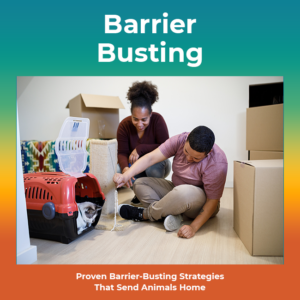
    Proven Barrier-Busting Strategies That Send Animals Home 3/29, 4/19, 5/3, 5/17 11 am Pacific 4/13, 4/27, 5/11, 5/25 9am Pacific
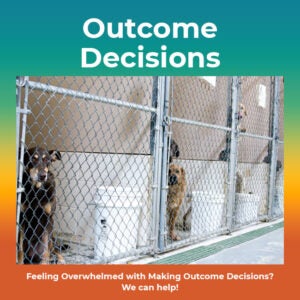
    Feeling Overwhelmed with Making Outcome Decisions? We can help! 3/29, 4/19, 5/3, 5/17 12 pm Pacific 4/11, 4/25, 5/9, 5/23 10 am Pacific


    Fast Track Options,  Information, and Registration:

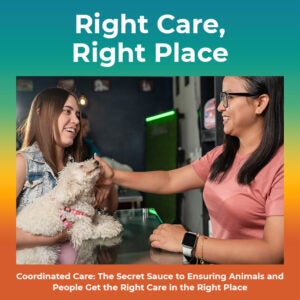
    Coordinated Care: The Secret Sauce to Ensuring Animals and People Get the Right Care in the Right Place

    Learn progressive and collaborative ways of respecting all of the members of your community, especially those who come to us for supportive services. We’ll focus on ways to help pets stay in their current homes when possible and how to effectively reserve shelter intake for animals who really need to be in our care. We’ll discuss not only how these techniques can reduce shelter intakes, but also how this approach will set everyone up for success, including families, animals, and shelter team members.

    Track Coaches:
    Lead Coach: Jennifer Toussaint, Chief Animal Control Officer at the Animal Welfare League of Arlington
    Co-Coach: Kelly Bremken, Veterinary Social Worker at Oregon Humane Society

    Registration Link: https://sheltermedicine.zoom.us/meeting/register/tZUvduurrT4iE9UKlsg4WkBeNNfaDMRAcWmz
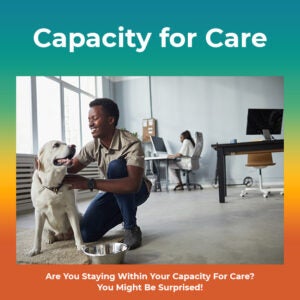
    Are You Staying Within Your Capacity for Care? (You Might Be Surprised!)

    Capacity for Care (C4C) – such a wonderful place to be and yet can feel so out of reach. What is your shelter’s capacity for care, what is it based on and are you staying within it? Even just understanding what C4C is for an organization can feel overwhelming, much less getting there. Need a refresher or don’t know where to start? Answer – right here! It all starts with knowing that it is possible to stay within your capacity for care at all organizations, regardless of how animals come to you. We’ll dive into what determines your capacity, how it impacts the work you do every day, and the decisions you make. Discover how you can provide the Right Care in the Right Place for people and animals AND stay within your C4C. This is your chance to learn some of the ways you can get out of crisis mode, decrease overwhelm, and make it possible for your team to maximize your limited resources all while ensuring your shelter is able to have the greatest impact on the people and pets in your community.

    This track is a wonderful partner to the tracks being offered at this summit – to take the groundwork into action! Not a shelter director or manager? No problem, we invite anyone in the animal shelter space to join us on this journey!

    Track Coaches:
    Lead Coach: Cindy Karsten, DVM, Director of Outreach at the UC Davis Koret Shelter Medicine Program
    Co-Coach: Ivy Ruiz, Outreach Specialist at the UC Davis Koret Shelter Medicine Program

    Registration Link: https://sheltermedicine.zoom.us/meeting/register/tZMtdumppzosHtV9whKkEVbdWk5QBA4WUM8Q
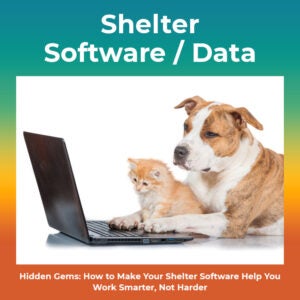
    Hidden Gems: How to Make Your Shelter Software Help You Work Smarter, Not Harder

    Is what your shelter software has to say being ignored? Start transforming numbers and patterns in your intake and outcome reports into concrete benefits for animals and staff! Discover how to increase live release and lower length of stay based on the information you already have at your fingertips.

    Track Coaches:
    Lead Coach: Becky Stuntebeck, DVM, Facility Design Veterinarian at the UC Davis Koret Shelter Medicine Program
    Co-Coach: Cindi Delany, DVM, Maddie’s Million Pet Challenge Director of Online Learning at UC Davis Koret Shelter Medicine Program

    Registration Link: https://sheltermedicine.zoom.us/meeting/register/tZIqcOqpqTkoHNbXcS9Bt9VZ1P5m3OA31Dnu
    Proven Barrier-Busting Strategies That Send Animals Home

    Uncover hidden and not-so-hidden roadblocks that are keeping animals in the shelter, contributing to shelter team overwhelm and fatigue, and tying up precious resources. Discover how to clear the way to ensure more pets are reunited with their families or placed in new homes. Tap into opportunities to increase live outcomes and build relationships with potential partners, volunteers, fosters, and adopters in your community.

    Track Coaches:
    Lead Coach: Nadia Oseguera, California Program Manager at the UC Davis Koret Shelter Medicine Program
    Co-Coach: Allison Cardona, California State Director at the UC Davis Koret Shelter Medicine Program

    Registration Link: https://sheltermedicine.zoom.us/meeting/register/tZAvfuuqrDsiEtJ509W7t5bd2rkyav3BWA6k
    Feeling Overwhelmed with Making Outcome Decisions? We can help!

    Shelter teams are faced daily with high-stakes outcome decisions made harder by an increasingly complex and strained system. We’ll discuss some of the issues at play and help you to develop tools to remove bottlenecks to outcomes and overcome the toughest decision-making dilemmas, from Adoption to Euthanasia, with transparency and compassion.

    Track Coaches:
    Lead Coach: Chumkee Aziz, DVM, Outreach Veterinarian, at the UC Davis Koret Shelter Medicine Program
    Co-Coach: Cindi Delany, DVM, Maddie’s Million Pet Challenge Director of Online Learning at the UC Davis Koret Shelter Medicine Program

    Registration Link: https://sheltermedicine.zoom.us/meeting/register/tZIkcOyrqD4qG9Qn8jMPEgrOT3mXIRZe1Rvc
    Track Pack Opportunity for Even More Coaching Help

    Apply for one of the limited spots in a Fast Track’s “Track Pack” to unlock dedicated coaching sessions and get the extra accountability, motivation, and inspiration you need to get the impact you want. Stay on track by advancing within a tight-knit group of shelters working side-by-side with your coaches to achieve your goals.

    As a Track Pack member, you could be spotlighted for other track participants to learn from your challenges and successes. You’ll cheer each other on, exchange experiences and ideas to turn setbacks into solutions, and measure progress together.

    Applications will be reviewed and applicants selected on a rolling basis.

    Track Pack spots are limited!

    Final deadline to apply is March 31, 2023. APPLY NOW HERE!
  • Veterinary Care in Shelters: Who Can Legally Do What?

    Veterinary Care in Shelters: Who Can Legally Do What?

    When it comes to veterinary care in animal shelters, it’s crucial to make sure the right person does the right job—and the right person doesn’t always have to be a DVM or RVT! Amid staff shortages and other challenges, it’s more important than ever to recognize the potential of every team member, including front office staff, field officers, kennel attendants, volunteers, and fosters.

    Is your shelter fully leveraging the veterinary care capabilities of your entire team? Take this quiz to find out:

    • Can vaccines be administered during hold periods?
    • Who can give a Rabies vaccine, and under what type of supervision?
    • If you don’t have a veterinarian on-site, can you use standing protocols?
    • Are microchipping and administering snap tests considered the practice of veterinary medicine, or can any team member do these tasks?
    • Can an RVT perform emergency procedures on an animal?
    • Can an RVT or unlicensed veterinary assistant prepare animals for spay and/or neuter surgeries on pets who are to be adopted out? Which, if any, tasks involved can only be done by an RVT or DVM?

    If you’re not sure of the answers, this one-hour webinar is for you!

    On February 7 at 10 a.m. PT, join Bruce Wagman, Lead Counsel for San Francisco SPCA’s Shelter Policy and Legal Services (Shelter PALS), to clear up confusion around what must be done by a DVM or RVT and what other team members and volunteers can—and can’t—do.

    You’ll leave with a clearer understanding of which shelter tasks which team members can perform, from intake-related care and running diagnostics to providing treatment, surgery, euthanasia, public veterinary services and emergency care.

    After this webinar, you’ll be ready to maximize your shelter’s options for providing veterinary care while adhering to law and practice act requirements.

    Register now and bring your questions for the Q&A!

  • Get Clear on the Ins and Outs of Intake and Holding Periods

    Get Clear on the Ins and Outs of Intake and Holding Periods

    Is the legal hold period for stray animals three days or six days?

    Can you count the day of impoundment?

    What if the shelter isn’t open that day?

    If you have questions like these, you’re not alone. Knowing which animals should enter the shelter and how long they must stay is crucial to prioritizing intake of the animals who truly need to be at your shelter; it’s just as crucial to minimizing length of stay and getting those animals to their right outcome as quickly as possible. For clarity around intake and holding periods, check out the newest Maddie’s® Million Pet Challenge Learniverse SPOT mod (self-paced online training module), Animal Intake Requirements and Holding Periods – Legal Considerations, developed in collaboration with San Francisco SPCA’s Shelter Policy and Legal Services (Shelter PALS).

    Shelter PALS Lead Counsel Bruce Wagman reviews the laws that shape intake and holding periods for animals in shelters in the state of California, but the basic concepts and discussion points will apply to all states. You’ll learn the California-specific state mandates and requirements surrounding intake, exceptions surrounding holding periods, and how to determine holding periods in various situations. And if you’re not in California, you can use this information to guide you in what to research in your own state.

    This course was adapted from a webinar by Bruce Wagman, Lead Counsel for the San Francisco SPCA’s Shelter Policy and Legal Services (Shelter PALS) program and hosted by the California Animal Welfare Association (CalAnimals). The country’s first and only legal aid organization dedicated exclusively to the needs of animal shelters, Shelter PALS leverages the expertise of the best minds in animal welfare and channels significant legal aid to animal shelters.

    The specific information in this course is applicable to and based on considerations of California state law, subject to modifications necessitated by state or local laws. Shelters in other states are encouraged to check their state, county, city, and local laws to determine intake and holding procedures.

    This short course has been approved for 1.0 Certified Animal Welfare Administrator (CAWA) continuing education credits by The Association for Animal Welfare Advancement (AAWA) and by National Animal Care and Control Association (NACA), as well as 1 hour of continuing education credit in jurisdictions that recognize RACE approval.

    Learn more about the Maddie’s®️ Million Pet Challenge Learniverse, an interactive, online learning community found at the intersection of Knowing and Doing. Hosted by a team of animal welfare’s leading experts, it is a space to question, test, and implement innovations in the pursuit of continuous discovery and improvement in animal sheltering. #ThankstoMaddie, Animal Intake Requirements and Holding Periods and other SPOT mods, along with cohort-style, coach-led Bootcamps, are available at no cost.

    Enroll now

  • Buying Group Offers Discounted Veterinary Supplies to Shelters and Rescues

    Buying Group Offers Discounted Veterinary Supplies to Shelters and Rescues

    A new program introduced by the San Francisco SPCA aims to lower the costs of veterinary supplies and other goods for participating animal welfare organizations. The Compassion Collective Purchasing Program is free to join and does not require administrative fees; in order to remain active members of the program, organizations would only need to make purchases at least once every 3 months.

    “By creating a buying group, we increase our purchasing power with the aim to qualify shelters and rescues for discounts that may otherwise be out of reach for a single entity,” says Jennifer Scarlett, DVM.

    Interested organizations across the country are invited to join the program, which partners with Covetrus to provide discounts on products like flea/tick preventatives, veterinary supplies, medical supplies, and equipment. 

    To join or learn more, visit https://www.sfspca.org/compassion-collective/ or contact SF SPCA Supply Chain Director Donna Shiono at dshiono@sfspca.org. Existing Covetrus customers will have the new discount added to their account.

  • On the Bright Side: What’s Working for Shelters Across the Country

    On the Bright Side: What’s Working for Shelters Across the Country

    It’s human nature to overanalyze a problem in an attempt to solve it, but the real key to finding breakthrough solutions and generating positive change is studying successes, not failures. The Bright Spots podcast series is all about celebrating shelter wins and encouraging other shelters to copy—or adapt—what works. In every episode, Dr. Sara Pizano of the Million Cat Challenge and Team Shelter USA speaks with some of the animal sheltering world’s brightest stars about their successes and what other organizations can take away from their experience. 

    Here are just three bright spots among many featured on the podcast:

    Are you ready to shift your mindset? Want to know how these shelters pulled off their transformations? There are eight short and sweet episodes waiting for you!

    Explore The Bright Spots podcast

  • Bright Spots Mini-Podcast Shares Success Stories

    Bright Spots Mini-Podcast Shares Success Stories

    Need a boost? Try the new mini-podcast series Bright Spots. In each brief episode, Team Shelter USA’s Dr. Sara Pizano talks to shelter leaders and other animal welfare heroes, shining a spotlight on a Million Cat Challenge success story.

    For those of you who enjoy binge-watching, we’ve got two under-15-minute episodes already queued up for you:

    How two savvy volunteers saved over 1,000 cats in one year

    Learn how Lucky Cat Adoptions reinvented their strategy and went from saving just under 300 cats a year to over 1,000.

    Once we stopped judging people and realized that the way we were working was not actually making a big impact, the magic happened. It’s now actually difficult to keep our stores filled because most cats and kittens are adopted within a day or two!

    Cameron Moore, Lucky Cat Adoptions Co-Founder

    Read more and listen to the episode

    New people, new policies bring new positivity to Kauai Humane

    Kauai Humane Society embraced change and innovation during the onset of the pandemic. Hear Dr. Pizano chat with Director Nicole Schafer and Director of Operations Erin Olsen about the journey and how their efforts have paid off.

    It’s a night and day transformation. […] A lot of people, not just in animal welfare but in life, are afraid to ask for help. Don’t be.

    Erin Olsen, Kauai Humane Director of Operations

    Read more and listen to the episode

    If you have a bright spot to share, leave a comment on the blog or email  #allthecats@millioncatchallenge.org.

  • Rehome Cats in the (Slow) Blink of an Eye

    Rehome Cats in the (Slow) Blink of an Eye

    When it comes to bonding with cats, it’s all about the eyes—and a technique called the slow blink. What the heck is a “slow blink”? Give it a try right now (after you read this next sentence). Slowly close your eyes and keep them closed for a couple of seconds, then slowly open them again. That’s all there is to it. Approach a cat slowly and quietly, do a slow blink yourself and the cat may respond in kind (if they’re feeling you).

    Research has already shown that initiating this behavior is a way to calm and connect with a cat. According to a new study focused on cats in shelters, cultivating slow-blink behavior may also help cats find homes faster.

    Animal behavior researchers at the Universities of Sussex and Portsmouth gathered data from interactions with 18 cats at the The National Cat Adoption Centre (NCAC), the UK’s largest cat rehoming center. The cats were divided into two groups: anxious cats that needed more time with employees and volunteers in order to increase their confidence around humans, and cats in a non-desensitization group.

    The study found:

    • Shelter cats participate in slow blinking interactions with humans, and cats that showed an increased number of and longer eye closures in response to human slow blinks were rehomed faster.
    • Nervous cats may spend more time slow blinking than relaxed cats, providing supporting evidence that this behavior may act as both a positive signal and a submissive display.

    “Since the slow blink is becoming increasingly recognised as a form of communication employed by cat owners and non-cat owners alike,” the researchers note, “these findings may have practical implications for shelters by introducing strategies to promote positive social interactions between potential adopters and shelter cats, particularly for cats that might be more likely to spend a longer time in care (e.g., inactive cats or black cats).”

    In other words, a few (slow) blinks could go a long way in reducing adoption length of stay. Check out the full study, “Slow Blink Eye Closure in Shelter Cats Is Related to Quicker Adoption,” and start purr-fecting your blink.