Each year, the worldwide CCP community joins together at this unique virtual event—no travel required! During three comprehensive days of cat-centric content, speakers from a wide variety of roles in animal welfare will give you their perspectives on the industry and valuable information that will help you or your organization create a more humane world for community cats.
Blog
-
Online Conference – 1/27/23 to 1/29/23 – 2023 Online Cat Conference – Community Cats Podcast (fee applies)
Each year, the worldwide CCP community joins together at this unique virtual event—no travel required! During three comprehensive days of cat-centric content, speakers from a wide variety of roles in animal welfare will give you their perspectives on the industry and valuable information that will help you or your organization create a more humane world for community cats.
WEBSITE LINK: https://www.communitycatspodcast.com/events/online-cat-conference-jan-2023/
-
Webinar – 12/8/22 – Shelter Behavior Roundtable: Post-Adoption Behavioral Support – ASPCAPro
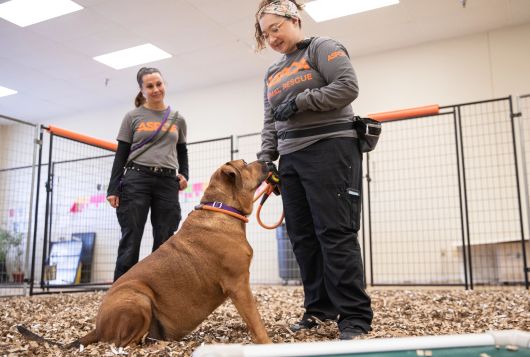
Are you finding that some behavioral issues persist (or new ones arise) after an adopted animal joins their new family? Learn from our panel of experts as they explore the ins and outs of effective and efficient post-adoption behavioral support during this 60 minute Shelter Behavior Roundtable.
We’ll discuss who should be involved in post-adoption behavioral support, why adopter compliance is challenging, what types of support earn the best return on investment, and how an integrated care model can affect success.
Takeaways
Suggestions for focusing your post-adoption behavioral support services
Perspective on adopters’ hurdles to enacting training recommendations
Ideas to meet adopters’ needs without over-taxing staff and volunteers
Suited For
Animal behavior and shelter professionals and volunteersCredits
This webinar is eligible for CCPDT credit. 0 CEUs for trainers and 1 CEUs for behavior consultantsPresenters
Miranda K. Workman, Ph.D., Shelter Behavior Apprenticeship Liaison, Behavioral Sciences Team, ASPCA
Kate McCarthy, Evaluations and Enrichment Specialist
Deirdre S. Franklin, MSPP, Senior Manager of Placement, Volunteers & Foster, Behavioral Rehabilitation Center
Adi Hovav, CPDT-KA, Senior Manager, Behavior – Adoption Center, ASPCA
Juliette Nash, M.S., CPAT-KA Community Animal Training Manager, Behavior & Training, San Diego Humane SocietyWEBSITE LINK: https://www.aspcapro.org/training/webinar/shelter-behavior-roundtable-post-adoption-behavioral-support
-

Get Clear on the Ins and Outs of Intake and Holding Periods
Is the legal hold period for stray animals three days or six days?
Can you count the day of impoundment?
What if the shelter isn’t open that day?
If you have questions like these, you’re not alone. Knowing which animals should enter the shelter and how long they must stay is crucial to prioritizing intake of the animals who truly need to be at your shelter; it’s just as crucial to minimizing length of stay and getting those animals to their right outcome as quickly as possible. For clarity around intake and holding periods, check out the newest Maddie’s® Million Pet Challenge Learniverse SPOT mod (self-paced online training module), Animal Intake Requirements and Holding Periods – Legal Considerations, developed in collaboration with San Francisco SPCA’s Shelter Policy and Legal Services (Shelter PALS).
Shelter PALS Lead Counsel Bruce Wagman reviews the laws that shape intake and holding periods for animals in shelters in the state of California, but the basic concepts and discussion points will apply to all states. You’ll learn the California-specific state mandates and requirements surrounding intake, exceptions surrounding holding periods, and how to determine holding periods in various situations. And if you’re not in California, you can use this information to guide you in what to research in your own state.
This course was adapted from a webinar by Bruce Wagman, Lead Counsel for the San Francisco SPCA’s Shelter Policy and Legal Services (Shelter PALS) program and hosted by the California Animal Welfare Association (CalAnimals). The country’s first and only legal aid organization dedicated exclusively to the needs of animal shelters, Shelter PALS leverages the expertise of the best minds in animal welfare and channels significant legal aid to animal shelters.
The specific information in this course is applicable to and based on considerations of California state law, subject to modifications necessitated by state or local laws. Shelters in other states are encouraged to check their state, county, city, and local laws to determine intake and holding procedures.
This short course has been approved for 1.0 Certified Animal Welfare Administrator (CAWA) continuing education credits by The Association for Animal Welfare Advancement (AAWA) and by National Animal Care and Control Association (NACA), as well as 1 hour of continuing education credit in jurisdictions that recognize RACE approval.
Learn more about the Maddie’s®️ Million Pet Challenge Learniverse, an interactive, online learning community found at the intersection of Knowing and Doing. Hosted by a team of animal welfare’s leading experts, it is a space to question, test, and implement innovations in the pursuit of continuous discovery and improvement in animal sheltering. #ThankstoMaddie, Animal Intake Requirements and Holding Periods and other SPOT mods, along with cohort-style, coach-led Bootcamps, are available at no cost.
Enroll now -
Webinar – 12/9/22 – Premedication, Setting the Scene for Smooth Anesthesia – Think Anesthesia
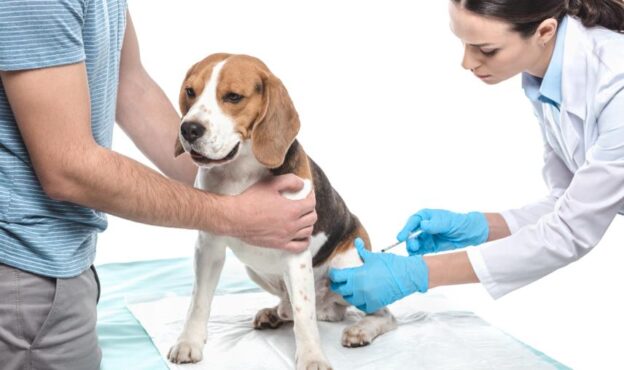
Register for this month’s live webinar Think Anesthesia: Premedication, Setting the Scene for Smooth Anesthesia presented by Karen Kerr, BA, BVSc (Hons), MANZCVS (Anesthesia & Analgesia). Medications administered prior to anesthetic induction influence the ensuing anesthetic event and affect the patient’s overall experience. Premedication offers veterinary professionals an opportunity to minimize patient stress, pre-emptively reduce pain, and improve the likelihood of a smooth anesthetic induction, maintenance, and recovery. Veterinary professionals may use different medications and strategies based on the individual needs of the patient to reduce the risk of complications and optimize their anesthetic procedure. This presentation provides a goal-directed approach to developing a framework for anesthetic premedication in dogs and cats, with case-based examples to reinforce appropriate variations. This presentation is worth 1 hour of RACE (pending) CE for veterinary technicians and veterinarians.
WEBSITE LINK: https://www.thinkanesthesia.education/live-webinar/2022/11/think-anesthesia-premedication-setting-the-scene-for-smooth-anesthesia
-

Webinar – 11/17/22 – No-Look Reinforcement: Keep your dog checking in, even when you’ve checked out – FDSA (fee applies)
Does this sound familiar to you? Your dog only has eyes for you while you’re paying attention to him. His focus is impressive! But if you turn your attention away from your dog for even a moment, the connection is broken and off he goes in another direction.
Join me to learn how to maintain your dog’s attention even while YOUR focus is elsewhere. That means your dog will stay close to you and focused on you…:
- When in class, and you’re busy watching and listening to the instructor.
- When at the ATM machine, and you’re busy doing important banking stuff.
- While you’ve stopped to chat with a friend on the street.
- While walking through a crowd or past other dogs.
Presenter:Nancy Tucker
Note: This webinar is back by popular demand. Please check your webinar library before purchasing to avoid duplicate purchases.
WEBSITE LINK: https://www.fenzidogsportsacademy.com/index.php/self-study/webinars
-
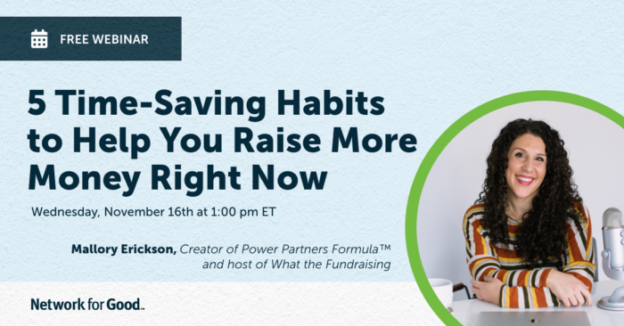
Webinar – 11/16/22 – 5 Time-Saving Habits to Help You Raise More Money Right Now – Network for Good
You hear it all the time: “I don’t have enough time to [insert x].” And there is no time that we hear this more than end-of-year. But what if there was a way to massively increase your capacity as a fundraiser without working more hours or needing more time? Well, there is, and it’s not a gimmick, it’s science.
In this session, Mallory Erickson – the creator of the Power Partners Formula™ and host of What the Fundraising – is going to break down how to infuse proven fundraising habits into our end-of-year fundraising that will allow us to elevate our leadership, fundraising, and ultimately raise more money to increase our impact. You’ll even learn how to design your own habits to make them stick – for both you AND your funders.
By the end of this webinar, you’ll:
-Understand the primary barriers that are holding you back from fundraising at your highest capacity
-Learn how to prioritize your fundraising to-do list so that you are focused on the right things (particularly during giving season!)
-Learn how to design habits that keep you motivated and in action (even with the scariest tasks!)
-Know how to find your fundraising flow by optimizing your time and raising your energy level
-Understand how to reinforce habits for both you and your donorsSpeaker: Mallory Erickson – the creator of the Power Partners Formula™ and host of What the Fundraising
WEBSITE LINK: https://www.networkforgood.com/resource/5-habits-to-help/
-

Webinar – 12/6/22 – Mitigating Fear, Anxiety & Stress for Dogs in Isolation or Quarantine – Fear Free
Whether you are managing animals in a shelter environment, veterinary clinic, or laboratory setting, the welfare of animals in isolation housing is of utmost importance. Join Meghan Herron, DVM, DACVB, as she reviews signs of animal stress, how to mitigate stress, and specific tips for promoting good welfare for dogs in quarantine or isolation.
Brought to you by our friends at Virox
WEBSITE LINK: https://us02web.zoom.us/webinar/register/WN_X6nhYnq1QV6HK6HeUTQCig
-
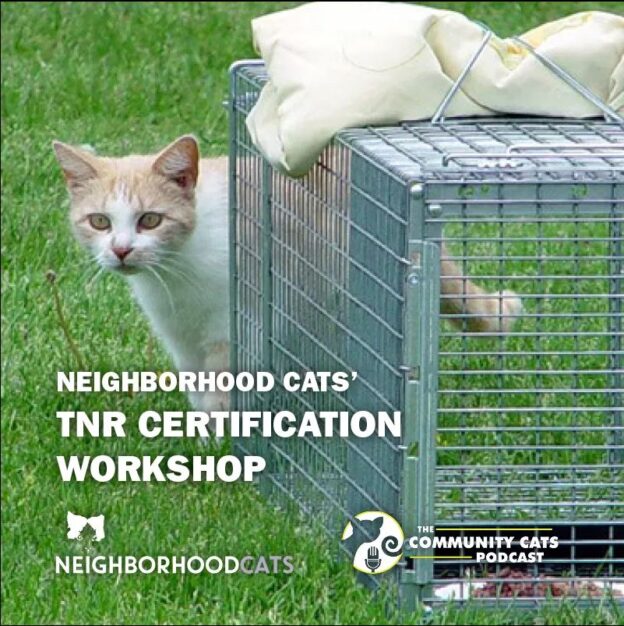
Online Course – 12/3/22 – Neighborhood Cats TNR Certification Workshop – Community Cats Podcast (small fee applies)
Are you ready to be part of the solution for feral and stray cats in your neighborhood? Our expert instructors will teach you best practices for Trap-Neuter-Return (TNR) and colony management. Learn what TNR is and why it works. We’ll cover getting along with neighbors, preparations for trapping, trapping itself (including entire colonies at once), feeding, providing winter shelter, and more. Take advantage of the interactive format, extensive handouts, and video footage of actual projects. Attendees will receive a certificate of attendance and gain access to an ongoing Facebook group for networking with other TNR activists. Instructed by Susan Richmond, executive director, and Bryan Kortis, national programs director.
Session duration is 2.5 hours, followed by an optional 15-minute Q&A session.
Proudly sponsored by Tomahawk Live Trap
WEBSITE LINK: https://www.communitycatspodcast.com/events/the-neighborhood-cats-tnr-certification-workshop-dec-2022/