Shelter Learniverse and Industry-Wide Calendar

Blog

  • Webinar – 5/12/21 – Handling “Nuisance” Wildlife Calls – HSUS

    Webinar – 5/12/21 – Handling “Nuisance” Wildlife Calls – HSUS

    Getting calls from the public about opossums stuck in garbage cans? Foxes denning under sheds or porches? Woodchucks nibbling in the garden?

    This webinar expands upon our “Top 10 Tips for Taking Wildlife Calls” training by providing natural history profiles on our most common Wild Neighbors, as well as species-specific advice for humanely solving conflicts with them. Learn how to give simple tips and instructions to the public over the phone (without your having to dispatch an officer!) so that they can solve conflicts with wildlife in an effective, humane, and long-term manner. (Photo: Frank Hildebrand/iStock.com)

    WEBSITE LINK:  https://humanepro.org/trainings/handling-nuisance-wildlife-calls

  • Online Event – 4/7/21 – A Preview: Veterinary Virtual Care in 2030 – The Bridge Club

    Online Event – 4/7/21 – A Preview: Veterinary Virtual Care in 2030 – The Bridge Club

    The VVCA joins us to share what the future truly looks like in virtual care. Join us for a conversation on the future of Veterinary Virtual Care with an overview from Mark Cushing and a panel discussion led by Audrey Wystrach.

    WEBSITE LINK:  https://www.thebridgeclub.com/events/a-preview-veterinary-virtual-care-in-2030

  • Online Conference – 6/23/21 to 6/24/21 – Best Friends National Conference – Best Friends (fee applies)

    Online Conference – 6/23/21 to 6/24/21 – Best Friends National Conference – Best Friends (fee applies)

    Join us for the 2021 Best Friends National Conference, taking place virtually on June 23 and 24. During this online event, thousands of animal welfare leaders from around the country will virtually gather together and share solutions to save the lives of homeless dogs and cats.

    Whether you’re the director of a local shelter, volunteer at an animal organization, an animal control officer, a veterinarian or vet tech or just want to learn more about animal welfare, this virtual event is for you.

    WEBSITE LINK:  https://bestfriends.org/events/best-friends-national-conference

  • Online Course – Starts 5/11/21 – Canine Social Behavior – IAABC (fee applies)

    Online Course – Starts 5/11/21 – Canine Social Behavior – IAABC (fee applies)

    This course will teach you about canine communication, play, greetings, conflict resolution behaviors, and puppy social development. Dig into the science of canine social behavior, with an emphasis on dog-to-dog social interactions. Veterinarians, behavior consultants, trainers, groomers, kennel staff, shelter workers, day care staff, pet sitters, dog walkers, and keen guardians will all benefit from this course.

    This course will help you:

    • Explain the importance of social relationships between dogs from a scientific perspective
    • Accurately interpret body language in dogs and understand how body language is linked to emotional states and communication
    • Describe and understand the stages of puppy development and how development can affect adult behaviors, including the development of problem behaviors
    • Recognize and interpret play and greeting behaviors in dogs
    • Describe the functions of conflict and reconciliation behaviors in dogs

    Course Begins: May 11, 2021
    Weekly online meetings begin: May 18th at 1pm EDT
    Duration: 5 Weeks
    Instructor: Camille Ward, M.S., M.S., Ph.D., CAAB

    Auditors may learn from other students but will not receive instructor feedback.
    Auditors do not attend online meetings and meetings are not recorded.

    Class Schedule

    This is a 5-week instructor-led course. Each week includes a recorded lecture, a scheduled live discussion, required readings, and guiding questions. Knowledge of the lecture material will be assessed through participation in course discussions. Students will have access to the course material for 60 days after the course ends.

    Course Completion/CEU Requirements

    To receive CEUs and/or a certificate of completion:

    Auditors must review all course material. This will be verified in the Learning Management System.

    Full Students must review all course materials and required readings, attend the weekly class meetings, and prepare responses to a set of guiding questions for each weekly class meeting discussion. Students who miss more than one meeting will not receive credit for the course.

    Students should expect to spend an average of 3-4 hours per week on course material and viewing, depending on individual speed of learning and the week’s materials.

    Online Course Cancellation Policy

    • Full refunds available more than 30 days before program start.
    • 50% refund available 16 – 30 days before program start.
    • No refunds available 15 or fewer days before program start.

    About the Instructor

    Dr. Camille Ward is the President and founder of About Dogs LLC, where she specializes in behavioral consultations for the prevention, modification, and management of canine behavior problems. Her philosophy stresses relationship building and working from the dog’s point of view.

    Dr. Ward received her Ph.D. from the University of Michigan studying cognition and the development of social behavior in domestic dogs. In addition to her work on dogs, she also conducted behavior studies on crows, primates, and fish. She received her certification through the Animal Behavior Society as a Certified Applied Animal Behaviorist (CAAB).

    Dr. Ward has lectured nationally and internationally at scientific and dog training conferences on canine behavior. She has published on animal behavior in a variety of scientific academic journals, and her work has been featured on MSNBC, in Cosmopolitan magazine, and in the Bark. She has also taught animal behavior to undergraduate students at the University of Michigan, and she designed and taught a seminar called Dog Cognition, Behavior and Welfare. She recently published a paper entitled: “Greeting Behavior between Dogs at a Dog Park” in the journal, Pet Behaviour Science. She also co-hosted a symposium on “Comparative Canine Behavior” at the 53rd Annual Conference of the Animal Behavior Society. The symposium was the first academic forum for canine behavior research in North America and included invited speakers from around the world to present their research on the behavior and cognition of both domestic dogs and wild canids.

    Dr. Ward is on the Advisory Group of Dr. Marty Becker’s Fear Free Initiative, where the emphasis is on the emotional well-being of dogs during veterinary visits, grooming procedures, when working with trainers, and more. She also worked as an Animal Behaviorist for the ASPCA’s Anti-Cruelty Team, working with other professionals on the rehabilitation of dogs rescued from fighting, hoarding, puppy mills, and other forms of abuse.

    WEBSITE LINK:  https://m.iaabc.org/courses/course-register/

  • Online Course – Open 4/4/21 to 6/23/21 – Brilliant Sanity: Mindfulness Meditation – VIN

    Online Course – Open 4/4/21 to 6/23/21 – Brilliant Sanity: Mindfulness Meditation – VIN

    Mindfulness Meditation is a contemplative, secular evidence-based practice that allows for the development of increased self-observation and decreased reactivity. It can help to reduce stress, increase compassion and increase distress tolerance. With consistent practice, participants can experience a greater sense of well-being.

    In this free course, we will explore not only the neurological benefits of mindfulness meditation, but also consider how the practice can and does enhance our professional and personal relationships. Each online session will include a meditation session, during which participants can learn to “grow” their own, personal meditation practice.

    Presenter: Michele Gaspar, DVM, DABVP (Feline), MA. LCPC
    Course Open: April 4-June 23, 2021
    Real Time Sessions (RTS): Sundays, April 11, 18, 25, May 2, 16, 23, June 6, and 13, 2021; 7:00–8:00 pm ET (USA) World Clock Converter
    Total CE Credit: 0

    *Note to Perspective Students: In order to reap the benefits of mindfulness practice, it is crucial that participants are willing to commit to 10-20 minutes of sitting meditation practice most days (no less than five out of every seven days). Less consistent practice typically results in participants being frustrated and abandoning meditation. Mindfulness meditation practice, over time, does result in positive benefits, but these benefits typically correlate with the time devoted to sitting practice.

    Learning Objectives:
    Upon completion of the course, the participant should be able to

    • ##Learning Objective##

    Level and Prerequisites: This basic VIN CE course is open for enrollment to VIN members interested in learning how to use Mindfulness in their practices and daily lives.
    Accreditation: This course does not qualify for AAVSB RACE approval.

    Course Agenda:

    Week 1 (Real Time Session April 11, 2021): An Introduction to Mindfulness
    In this overview, we will look at the history of the practice, its earliest practitioners and discuss its move to the West in the 1970s. We will consider the research into mindfulness and some of its implications for enhanced professional and personal relationships.

    Week 2 (Real Time Session April 18, 2021): The Neurobiology of Mindfulness
    Increasingly, interest in mindfulness has focused on the positive brain changes that come with consistent practice. In this session, we will review some of that research and consider its implications.

    Week 3 (Real Time Session April 25, 2021): Sympathy, Compassion and Empathy
    Research into mindfulness consistently supports the greater development of compassion and empathy among practitioners. We will review how sympathy, compassion and empathy differ, what compassion and empathy really mean and how to develop healthy empathy.

    Week 4 (Real Time Session May 2, 2021): Mindful Boundaries
    Mindfulness allows us to create healthy boundaries, which actually enhances our own welfare and allows us to be better professionals, friends and partners. In this session, we will review rigid and fluid boundaries, why boundaries are important, some reasons why many have difficulties establishing good boundaries and how mindfulness practice can help us establish good boundaries

    **** BREAK – May 9, 2021 ****

    Week 5 (Real Time Session May 16, 2021): Working with Reactivity
    Mindfulness allows us to put a “pause” between thoughts/words and actions. How can we bring this reduced reactivity into our daily lives? We also will consider anger, from a cycle of loss-anger-rage and revenge.

    Week 6 (Real Time Session May 23, 2021): The Mindful Veterinarian
    Mindfulness can help enhance our ability to care for our patients, and can help us with difficult client and staff interactions. With mindfulness, we can avoid burnout and develop a sustainable, enjoyable career of service. In this session, we will review how mindfulness can help us develop a new approach to our daily lives as health care providers.

    **** BREAK – May 30, 2021 ****

    Week 7 (Real Time Session June 6, 2021): Mindfulness, Perfectionism and Self-Compassion
    Perfectionism is rampant among health care providers, including veterinarians, and can result in depression, anxiety and suicidality. Many of us find that it is easier to provide compassion to others than ourselves. In this session, we will consider perfectionism as an Early Maladaptive Schema (EMS) and understand how self-compassion (the ability to treat ourselves in times of distress as a good friend would) helps to mitigate perfectionism.

    Week 8 (Real Time Session June 13, 2021): Putting It All Together
    In this final session, we will review highlights of the previous seven weeks, discuss how to develop a personal mindfulness practice and consider the challenges and rewards of doing so.

    Successful completion (scoring 80% or better) on the end-of-course test is required to earn a certificate of completion for the course. To learn more about the requirements for earning a CE certificate, please refer to Receiving Your CE Credit and Course Completion Certificate.

    Course Materials: Course materials will be available in the course library prior to each Real Time Session.
    Required Textbook(s): There is no required textbook for this course.

    Tuition: Free to VIN members

    *To ensure participants are ready and prepared for classes, enrollment will close on April 11, 2021 at 5 pm ET (USA) or when the maximum number of participants is reached.

    *For more information on how online CE works, see the Participant Resource Center.

    1. Enrollment qualifications: VIN CE courses are open to VIN member and non-member veterinarians. Veterinarians enrolling in a VSPN CE course must be a VIN member. Veterinary support staff must be a VSPN member to enroll in a VSPN CE or a VIN CE course open to VSPN member enrollment.
    2. Each enrollee must be able to receive emails from @vspn.org and @vin.com addresses. Email is our major form of communication with participants; personal emails are highly recommended rather than clinic/hospital email addresses.
    3. For further assistance call 800-846-0028 ext. 797 or email . Please include the course title, your full name, and contact information in your correspondence.

    Course withdrawal and refund policy: A complete refund of the paid course price will be issued when your withdrawal request is received prior to the listed start date of the course. If you wish to withdraw after the start date please contact the VIN office 800-846-0028 ext. 797 to discuss eligibility for a pro-rated refund.

    *For more information on VIN’s upcoming CE courses, check the VIN Course Catalog.

    Katherine James, DVM, PhD, DACVIM (SAIM)
    VIN Education Director

    VIN CE Services: 
    800-846-0028 or 530-756-4881; ext. 797
    or direct line to VIN/VSPN from the United Kingdom: 01 45 222 6154
    or direct line to VIN/VSPN from Australia: 02 6145 2357
    WEBSITE LINK:  https://www.vin.com/ce/ALTM300-0421.htm

  • Online Course – Open 4/26/21 to 6/24/21 – Thoracic Radiology of Dogs and Cats: The Areas Not Cardiopulmonary – VIN (fee applies)

    Online Course – Open 4/26/21 to 6/24/21 – Thoracic Radiology of Dogs and Cats: The Areas Not Cardiopulmonary – VIN (fee applies)

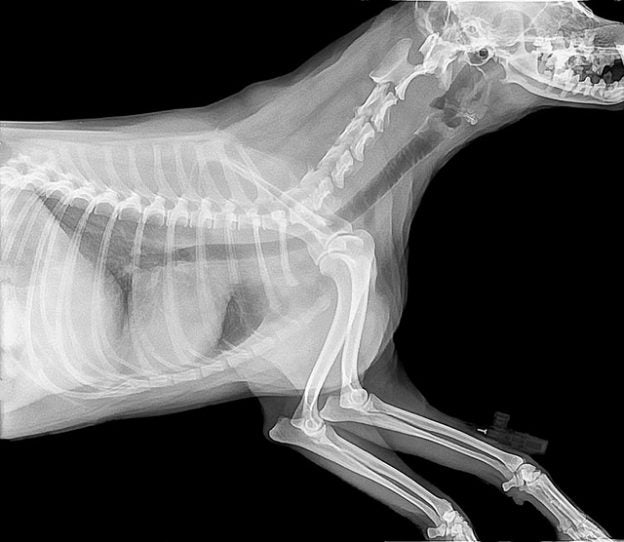
    This course is intended for veterinarians who are interested in building a solid foundation interpreting non-cardiopulmonary abnormalities in thoracic radiographs of dogs and cats. The course will cover anatomy of the thorax, trachea, esophagus, mediastinal structures, pleural space, ribs and sternum. By the end of the course the participant should understand the normal anatomy of the thorax, be able to recognize abnormalities in the trachea, esophagus, mediastinum, pleural space, ribs and sternum.

    Presenter: Kevin Jepsen-Grant, DVM
    Course Open: April 26-June 24, 2021
    Real Time Sessions (RTS): Mondays, May 3, 17, 24, June 7 and 14, 2021; 9:00-10:30 pm ET (USA) World Clock Converter
    Total CE Credit: 7.5
    RACE Category: 7.5 hours Medical

    Learning Objectives:
    Upon completion of the course, the participant should be able to

      • understand the normal anatomy of the thorax in dogs and cats.
      • discuss how to evaluate a rotated radiograph and what landmarks to look for.
      • compare normal radiographs across various canine thoracic .

    conformations (deep chested, brachycephalic, etc.).

    • recognize abnormalities associated with the trachea and esophagus and use of normal anatomy to identify abnormality.
    • understand the limitations of radiography for evaluations of the trachea and esophagus.
    • discuss a variety of disease processes in these areas.
    • understand the structures of the mediastinal areas not trachea and esophagus.
    • recognize abnormalities in these areas and describe them accurately.
    • recognize abnormalities within the pleural space including fluid, air, and tissue.
    • discuss a number of disease processes that involve the pleural space.
    • recognize abnormalities of the ribs and sternum and how they can relate to the pleural space.
    • discuss a number of disease processes that can impact the osseous structures of the thorax.

    Level and Prerequisites: This intermediate VIN CE course is open for enrollment to veterinarians actively interested in thoracic radiology.
    Accreditation: This course is approved for 7.5 hours of continuing education credit by RACE for veterinarians. (RACE 20-766755)

    Course Agenda:

    Week 1 (Real Time Session May 3, 2021): Anatomy of the Thorax
    This session will cover the normal anatomy of the thorax in dogs and cats and discussion on how to compare normal radiographs.

    **** BREAK – May 10, 2021 ****

    Week 2 (Real Time Session May 17, 2021): Trachea and Esophagus
    This session will cover the abnormalities that are associated with the trachea and esophagus and discuss disease processes in these areas.

    Week 3 (Real Time Session May 24, 2021): Mediastinal Structures
    This session will cover the structures of the mediastinal areas and how to recognize abnormalities in these areas.

    **** BREAK – May 31, 2021 ****

    Week 4 (Real Time Session June 7, 2021): Pleural Space
    This session will cover how to recognize abnormalities in the pleural space and the disease process in this area.

    Week 5 (Real Time Session June 10, 2021): Ribs and Sternum
    This session will cover how to recognize abnormalities in the ribs and sternum and the disease process in this area.

    Successful completion (scoring 80% or better) on the end-of-course test is required to earn a certificate of completion for the course. To learn more about the requirements for earning a CE certificate, please refer to Receiving Your CE Credit and Course Completion Certificate.

    Course Materials: Course materials will be available in the course library prior to each Real Time Session.

    Required Textbook(s): There is no required textbook for this course.

    Tuition: Member $173 ($156 early bird special if enrolled by April 12, 2021)
    Non-Member $274 ($247 early bird special if enrolled by April 12, 2021)
    Prices are listed in US dollars.

    *To ensure participants are ready and prepared for classes, enrollment will close on May 3, 2021 at 5 pm ET (USA) or when the maximum number of participants is reached.

    *For more information on how online CE works, see the Participant Resource Center.

    1. Enrollment qualifications: VIN CE courses are open to VIN member and non-member veterinarians. Veterinarians enrolling in a VSPN CE course must be a VIN member. Veterinary support staff must be a VSPN member to enroll in a VSPN CE or a VIN CE course open to VSPN member enrollment.
    2. Each enrollee must be able to receive emails from @vspn.org and @vin.com addresses. Email is our major form of communication with participants; personal emails are highly recommended rather than clinic/hospital email addresses.
    3. For further assistance call 800-846-0028 ext. 797 or email . Please include the course title, your full name, and contact information in your correspondence.

    Course withdrawal and refund policy: A complete refund of the paid course price will be issued when your withdrawal request is received prior to the listed start date of the course. If you wish to withdraw after the start date please contact the VIN office 800-846-0028 ext. 797 to discuss eligibility for a pro-rated refund.

    *For more information on VIN’s upcoming CE courses, check the VIN Course Catalog.

    Katherine James, DVM, PhD, DACVIM (SAIM)
    VIN Education Director

    VIN CE Services: 
    800-846-0028 or 530-756-4881; ext. 797
    or direct line to VIN/VSPN from the United Kingdom: 01 45 222 6154
    or direct line to VIN/VSPN from Australia: 02 6145 2357

    WEBSITE LINK:  https://www.vin.com/ce/DIAG410-0421.htm

  • Online Course – Open 4/13/21 to 5/7/21 – Responsible Antimicrobial Use 2021 – VIN (fee applies)

    Online Course – Open 4/13/21 to 5/7/21 – Responsible Antimicrobial Use 2021 – VIN (fee applies)

    Antimicrobial resistance is an increasing problem in both human and veterinary medicine. Whenever an antimicrobial is used, it inadvertently selects for resistance by killing or inhibiting sensitive bacteria and leaving behind resistant organisms. As a result, medicines become ineffective and infections persist, increasing hospital times, cost and morbidity. Inappropriate antibiotic use can lead to superbugs that are difficult or impossible to treat with our current antibiotic options. This course will discuss the mechanisms of antimicrobial resistance, the use of “best” practices to avoid the emergence and spread of antimicrobial resistance.

    Presenters: Peter Foley, MSc, DVM, DACVIM (SAIM)
    Sandra McConkey, DVM, PhD, Diplomate ACVP
    Course Open: April 13-May 7, 2021
    Real Time Sessions (RTS): Tuesdays, April 20 and 27, 2021; 8:00-10:00 pm ET (USA) World Clock Converter
    Total CE Credit: 4
    RACE Category: 4 hours Medical

    Learning Objectives:
    Upon completion of the course, the participant should be able to

    • understand the importance of preventing antimicrobial resistance.
    • cescribe what resistance (including multi-drug resistance) is, how and why it occurs, and when antimicrobial use is required.
    • explain empirical vs rational choice of antimicrobials.
    • explain how to get the most information out of an MIC (Minimum Inhibitory Concentration) result.
    • identify when and which antimicrobials are appropriate for small animal diseases, including the following scenarios.
      • perioperative antibiotic use
      • urinary tract infections
      • miscellaneous infectious diseases

    Level and Prerequisites: This basic VIN CE course is open for enrollment to veterinarians and veterinary students actively interested in antimicrobial resistance stewardship.
    Accreditation: This course is approved for 4 hours of continuing education credit by RACE for veterinarians. (RACE 22-39935)

    Course Agenda:

    Week 1 (Real Time Session April 20, 2021): Antimicrobial Resistance – Understanding the Problem
    Presenter: Sandra McConkey, DVM, PhD, DACVP

    Week 2 (Real Time Session April 27, 2021): Rational Antimicrobial Therapy for Small Animals: What to Choose for Specific Diseases
    Presenters: Peter Foley, DVM, DACVIM (SAIM)

    Successful completion (scoring 80% or better) on the end-of-course test is required to earn a certificate of completion for the course. To learn more about the requirements for earning a CE certificate, please refer to Receiving Your CE Credit and Course Completion Certificate.

    Course Materials: Course materials will be available in the course library prior to each Real Time Session.
    Required Textbook(s): There is no required textbook for this course.

    Tuition: Member $92 ($83 early bird special if enrolled by March 30, 2021)
    Non-Member $169 ($152 early bird special if enrolled by March 30, 2021)
    Prices are listed in US dollars.

    *To ensure participants are ready and prepared for classes, enrollment will close on April 20, 2021 at 5 pm ET (USA) or when the maximum number of participants is reached.

    *For more information on how online CE works, see the Participant Resource Center.

    1. Erollment qualifications: VIN CE courses are open to VIN member and non-member veterinarians. Veterinarians enrolling in a VSPN CE course must be a VIN member. Veterinary support staff must be a VSPN member to enroll in a VSPN CE or a VIN CE course open to VSPN member enrollment.
    2. Each enrollee must be able to receive emails from @vspn.org and @vin.com addresses. Email is our major form of communication with participants; personal emails are highly recommended rather than clinic/hospital email addresses.
    3. For further assistance call 800-846-0028 ext. 797 or email . Please include the course title, your full name, and contact information in your correspondence.

    Course withdrawal and refund policy: A complete refund of the paid course price will be issued when your withdrawal request is received prior to the listed start date of the course. If you wish to withdraw after the start date please contact the VIN office 800-846-0028 ext. 797 to discuss eligibility for a pro-rated refund.

    *For more information on VIN’s upcoming CE courses, check the VIN Course Catalog.

    Katherine James, DVM, PhD, DACVIM (SAIM)
    VIN Education Director

    VIN CE Services: 
    800-846-0028 or 530-756-4881; ext. 797
    or direct line to VIN/VSPN from the United Kingdom: 01 45 222 6154
    or direct line to VIN/VSPN from Australia: 02 6145 2357
    WEBSITE LINK:  https://www.vin.com/ce/PHAR303-0421.htm

  • Online Event – 4/7/21 – Mindfulness for Animal Welfare – Mindful Vet Med

    Online Event – 4/7/21 – Mindfulness for Animal Welfare – Mindful Vet Med

    This session will include brief practices as well as an overview of mindfulness as it relates to the animal welfare field. We will take a look at the challenges and frustrations we face which can lead to things like compassion fatigue and burn out, and which can also leave us questioning ourselves and even our ability to move forward. Come join us for an evening of connection and possibility as we explore opportunities to move through our busy days with more space and less reactivity.

    WEBSITE LINK:  www.mindfulvetmed.com/coursecalendar

  • Online Event – 4/4/21 – Mindfulness for Animal Welfare – Mindful Vet Med

    Online Event – 4/4/21 – Mindfulness for Animal Welfare – Mindful Vet Med

    This session will include brief practices as well as an overview of mindfulness as it relates to the animal welfare field. We will take a look at the challenges and frustrations we face which can lead to things like compassion fatigue and burn out, and which can also leave us questioning ourselves and even our ability to move forward. Come join us for an evening of connection and possibility as we explore opportunities to move through our busy days with more space and less reactivity.

    WEBSITE LINK:  www.mindfulvetmed.com/coursecalendar

  • Webinar – 3/31/21 – Classical and Operant Conditioning Approaches to Separation Related Problems – Pet Professional Guild (fee applies)

    Webinar – 3/31/21 – Classical and Operant Conditioning Approaches to Separation Related Problems – Pet Professional Guild (fee applies)

    Separation related problems seem to be on most dog parents’ minds nowadays as the promise of covid vaccines portends a return to working in offices. We are already seeing an increase in dogs displaying more frustration than anxiety when left alone nowadays, as “pandemic pups” — those adopted during lockdowns — have had little opportunity to be left alone or even just relax in a quiet setting.

    While systematic desensitization continues to be the gold standard training method for dogs who are afraid to be alone, a down-stay DRI is highly effective for dogs who are frustrated and can even be helpful for the fearful pups as well. Join us to brush up on your desensitization training skills as well as learn how to use a DRI down-stay to help more families gain the ability to leave their homes without worrying about their dog.

    Learning Objectives:

    1. Understand the different types of separation related problems and how to distinguish them. (i.e anxiety, frustration, underlying health issue.)
    2. Prepare clients to understand how desensitization works so that they are prepared to work at the dog’s pace.
    3. Actively assess the dog’s fear/frustration threshold while beginning to help the dog become more relaxed within the first desensitization session.
    4. Use down-stay training to aid in a number of ways as needed per each dog: impulse control, frustration reduction, increased relaxation, and habituation to the sights and sounds of a departure.

    CEUs: PPAB 1.5, CCPDT (pending), IAABC (pending), KPA (pending)

    Registered for the live event, get busy and cannot make it?

    Don’t worry, you will automatically receive a recording!

    About The Presenter

    Northern Virginia based certified canine separation anxiety trainer and honors graduate of Jean Donaldson’s Academy for Dog Trainers, Tracy Krulik, CTC, CSAT, is the founder and managing editor of iSpeakDog — a website and public awareness campaign to teach dog body language and behavior.Krulik trains dogs with separation anxiety for the Humane Rescue Alliance in Washington, D.C., group separation anxiety classes for Your Dog’s Friend, and works with private clients around the world remotely online. Her writing can be found in publications including The Bark magazine, The Washington Post, and The Chronicle of the Dog. Krulik’s passion is helping fearful dogs discover confidence and joy — just as she did for her once “fraidy” pup, Emma the Beagle. Visit www.tracykrulik.com to learn more.

    WEBSITE LINK:  https://petprofessionalguild.com/event-4156379