
Shelter Learniverse and Industry-Wide Calendar

Blog

  • Online Course – 3/4/21 – CARAT™: Ethology of the Individual – Suzanne Clothier (fee applies)

    Online Course – 3/4/21 – CARAT™: Ethology of the Individual – Suzanne Clothier (fee applies)

    Did you miss CARAT last time? Here’s your chance to join us and find out why people say, “CARAT changes everything!”

    CARAT is a novel temperament assessment system that categorizes behavior traits in multiple components that are intuitive and practical. CARAT is truly a game changer that will alter how you assess, understand and work with dogs.

    CARAT takes a detailed view of the individual dog as a unique combination of many factors working together to influence, exacerbate, mitigate and enhance each other. In the profile created by the nuances and specifics of this complex interaction of multiple traits, an accurate picture is created of the individual, regardless of breed or age.

    At all times, behavior is assessed according to how productive, functional, or adaptive it may be, with a full understanding that what may be productive, functional or adaptive in one context may not be in another context. For example, there would be great differences in the CARAT profiles for a successful guide dog, competitive agility dog and a suitable companion for an elderly person with mobility issues.


    What Does CARAT Assess?

    CARAT looks at these main categories and specifics of temperament traits:

    1. CORE:  Arousal, Resilience, Energy
    2. SOCIAL: Sociability, Social Tolerance, Social Use of Space
    3. SENSORY: Visual, Auditory, Kinesthetic, Olfactory
    4. PERSISTENCE: Visual, Auditory, Kinesthetic, Olfactory, Predatory/Chase
    5. INTERACTIVE:  Patience, Biddability w/Familiar, Biddability w/Stranger
    6. Complex traits:  Social Confidence, Environmental Confidence, Self Modulation


    This is an online course, with all events taking place online through Thinkific & Zoom. The details:

    ·      The complete content will be presented in 8 sessions, each approx 1.5 hours in length.

    ·      Upon completion of the course, access to private CARAT discussion group.

    ·      We will release two pre-recorded sessions each week for 4 weeks.

    ·      You may watch the recorded sessions any time, at your convenience.

    ·      Q&A Zoom meeting each week. Attend live, or submit questions ahead of time.

    ·      In all cases, the Q&A sessions will also be recorded. Link provided to those recordings.

    ·      Slides for all presentations will be available for you to download and use for note taking.

    ·      The CARAT Introduction Handout will be available for you to download.

    ·      You will have access to all online materials for 120 days from start date.


    Suzanne Clothier, Instructor

    Begins March 4, 2021 – 5 weeks

    Fee: $350.00 (Early BirdDog discounts and payment plan available)

    CEUS for IAABC, PPAB, CCPDT

     

    WEB LINK:  https://relationshipcenteredtraining.thinkific.com/courses/carat-spring-2021

  • Online Course – Starts 3/1/21 – RAT™: Relationship Assessment Tool – Certification Course with Suzanne Clothier (fee applies)

    Online Course – Starts 3/1/21 – RAT™: Relationship Assessment Tool – Certification Course with Suzanne Clothier (fee applies)

    RAT™ is a rapid assessment tool that provides clear information about each relationship. Whoever they may be, in every relationship the handler brings his or her habits, personalities, needs and style to interact with the dog, who also brings his own personality, patterns of response, needs and style. We need to work with the whole package.

    RAT™ clearly identifies the strengths and weaknesses of any dog/handler team. Training Triage helps you prioritize and develop a sensible, targeted training plan for improving and strengthening the relationship. Put your training time, energy and resources into addressing the actual issues, not following a one-size-fits-all training plan. RAT™ is a must-have tool that streamlines your training so that you can be as effective, humane and customized as possible.

    Grounded in detailed observations, RAT™ can be used for initial assessment as well as for monitoring progress over time or situations. RAT™ can be done in almost any setting to gather critical information about the dog/handler team.

    RAT™ is ideal for trainers, instructors, shelter workers, rescue groups, veterinarians, vet techs, breeders, service dog trainers, AAI/AAT and anyone interested in understanding and enhancing the dog/human relationship.

    Suzanne Clothier, Instructor

    Begins March 1, 2021

    CEUs pending

    WEBSITE LINK:  https://relationshipcenteredtraining.thinkific.com/courses/rat-assessment

  • Webinar – 2/20/21 – An Introduction to Fear-based Behaviors Across Species: Dogs, Horses, Cats, Birds – Training Matters (fee applies)

    Webinar – 2/20/21 – An Introduction to Fear-based Behaviors Across Species: Dogs, Horses, Cats, Birds – Training Matters (fee applies)

    With Debbie Jacobs, CPDT-KA, RBT; Michelle Martiya, equine trainer; Katenna Jones, ScM, ACAAB,CCBC, CDBC, CPDT-KA; Emily Strong, CDBC, CPDT-KA, SBA.

    February 20, 2021, noon to 3 p.m. eastern time

    The science of how animals learn and overcome fear-based behavior challenges such as fear of people, discomfort with being handled, fear of other animals, terror in particular environments, is the same across species. What is not the same is how trainers work with different species because of the animals’ particular needs and safety considerations for the humans working with them.

    We have assembled an expert group to talk about how they work with scared animals in a species with which they specialize. In this online seminar, Debbie Jacobs will talk about dogs, Michelle Martiya about horses, Katenna Jones about cats, and Emily Strong about birds. These ladies will discuss the behavioral profile of the fearful animals they often see, that is the behaviors they exhibit and their typical history. The presenters will then talk about how they work through specific behavior challenges, highlighting what may be different about working through the situation with a dog, horse, cat or bird in terms of management, safety, reinforcement delivery, and other aspects of the training process.

    The intent is to take a comparative approach. What is the same and what is different about working with traumatized animals of these different species, as well as to highlight the particular considerations with each species. In addition to giving presentations, the presenters will be available for a Q&A session afterwards. This promises to be a very interesting and educational event with some of the best trainers in the business, and certainly some of the best at handling fear-based behavior including aggression and reactivity.

    CEUs are available. Three from IAABC; 2.5 from CCPCT for trainers and .5 for behavior consultants.

    WEBSITE LINK:  http://mattersdogtraining.com/events/

  • Online Course – 2/11/21 to 2/13/21 – Eyes, ears and beyond… – Dr. Ashley Bourgeois and Dr. Alison Clode – IVS (fee applies)

    Online Course – 2/11/21 to 2/13/21 – Eyes, ears and beyond… – Dr. Ashley Bourgeois and Dr. Alison Clode – IVS (fee applies)

    Alison and Ashley are going to discuss management of the most common problems that they encounter in their clinical practices. This course will present a practical approach to the diagnosis and management of these common problems using a combination of didactic and case-based teaching. This combination of an Ophthalmologist and Dermatologist is sure to provide you with some very practical tips on a broad range of topics.

    Ashley Bourgeois D.V.M.

    Diplomate, American College of Veterinary Dermatology
    Animal Dermatology Clinic
    Portland, OR

    Alison Clode D.V.M.

    Diplomate, American College of Veterinary Ophthalmologists
    Staff Ophthalmologist
    Port City Veterinary Referral Hospital
    Portsmouth, NH

    Seminar Schedule:

    Single day registration available: Limited to 80 registrants each day to enhance the webinar question and answer experience

    All times are Eastern time. 

    Seminars start each day at 8.00am Pacific, 9.00am Mtn, 10.00am Central & 11.00am Eastern

    Thursday February 11 (5.5 CE hrs)

    8:00am – 1:30pm Pacific11:00am – 4:30pm  Eastern

    11:00am – 1:45pm ET

    Dr. Bourgeois

    • What am I missing in the itchy dog?
    • How to conquer the itchy cat
    • Topical therapies

    2:00pm – 4:30pm  ET

    Dr. Clode

    • How should I perform a complete ophthalmic exam?
    • How should I manage entropion in puppies and kittens?
    • How should I manage entropion in older dogs and cats?
    • What can I do about distichia?
    • How should I manage ectopic cilia?
    • How should I approach eyelid lacerations?
    • Do I realllllyyy have to replace that prolapsed third eyelid gland?
    • What’s going on with blepharitis in dogs?
    • What’s going on with blepharitis in cats?
    • What can I do for KCS, especially when it’s non-responsive?
    • What is a good approach to epiphora?
    • What can be done for tear staining?
    • How should I manage eyelid tumors in dogs?
    • What about eyelid tumors in cats?

    Friday February 12 (5.5 CE hrs) 

    8:00am – 1:30pm Pacific11:00am – 4:30pm Eastern

    11:00am – 1:45pm ET

    Dr. Clode

    • How should I recognize and manage simple corneal ulcers in dogs?
    • What about nonhealing ulcers in dogs?
    • How should I recognize and manage complicated corneal ulcers in dogs?
    • What about corneal ulcers in cats?
    • How should I diagnose and manage eosinophilic keratitis in cats?

    2:00pm – 4:30pm ET

    Dr. Bourgeois

    • Diagnosing otitis the right way
    • From ear drops to pills: how to effectively treat otitis externa and media

    Saturday February 13 (5.0CE hrs)

    8:00am – 1:00pm Pacific11:00am – 4:00pm  Eastern

    11:00am – 1:30pm ET

    Dr. Bourgeois

    • Effective client communications
    • Don’t fear the smear (basics of cytology)
    • My thoughts on pyoderma management

    1:40pm – 4:00pm ET

    Dr. Clode

    • What is Ocu-GLO and what can it be used for?
    • Topical steroids or cyclosporine or NSAIDs….?
    • Why is this cornea blue?
    • How should I handle exophthalmos?

    Seminar Topics:

    Dr. Bourgeois

    What am I missing in the itchy dog?

    Several studies show that pruritus is the number one reason a client brings their dog to the veterinarian. Allergic skin diseases are common problems in canine patients, and many of the clinical presentations are similar which can make these cases frustrating. This lecture will focus on the allergic workup, acute treatment of pruritus, and client communication.

    How to conquer the itchy cat

    Different categories of feline allergies can be difficult to differentiate from one another.  Understanding the different patterns of cutaneous lesions, response to treatment, and management of secondary issues is important for control.This lecture will present how to differentiate and perform a diagnostic workup for flea, food, and environmental allergies in cats.

    Diagnosing otitis the right way

    Managing difficult otitis externa cases in cats and dogs can be challenging, chronic, and frustrating. This lecture will discuss a complete approach to the diagnostic workup of otitis externa including cytology, culture and sensitivity, handheld otoscopy, and video otoscopy.

    From ear drops to pills: how to effectively treat otitis externa and media

    Choosing appropriate ear cleansers and initial therapeutics can be imperative in defeating micro-organisms. However, systemic therapy can also be used to help alleviate discomfort and treat infection in complicated cases. This is especially true when disease extends deeper than the external ear canal. This lecture will address how to assess the best treatment plan for every type of otitis case from a simple yeast otitis to a resistant otitis media.

    Don’t fear the smear (basics of cytology)

    Cytology is one of the most important diagnostic tools in dermatology.  A quick, inexpensive test that can be essential in diagnosing and managing various skin diseases.  This lecture will discuss what different findings of cells, organisms and structures may indicate.  Also, techniques for collecting and interpreting cytologies from different anatomical sites will be discussed.


    Dr. Clode

    How should I perform a complete ophthalmic exam?

    How should I manage entropion in puppies and kittens?

    How should I manage entropion in older dogs and cats?

    What can I do about distichia?

    How should I manage ectopic cilia?

    How should I approach eyelid lacerations?

    Do I realllllyyy have to replace that prolapsed third eyelid gland?

    What’s going on with blepharitis in dogs?

    What’s going on with blepharitis in cats?

    What can I do for KCS, especially when it’s non-responsive?

    How should I recognize and manage simple corneal ulcers in dogs?

    What about nonhealing ulcers in dogs?

    How should I recognize and manage complicated corneal ulcers in dogs? 2020

    What about corneal ulcers in cats?

    How should I diagnose and manage eosinophilic keratitis in cats?

    What is a good approach to epiphora?

    What can be done for tear staining?

    How should I manage eyelid tumors in dogs?

    What about eyelid tumors in cats?

    What is Ocu-GLO and what can it be used for?

    Topical steroids or cyclosporine or NSAIDs….?

    Why is this cornea blue?

    How should I handle exophthalmos?

    Register Now


    WEBSITE LINK:  https://www.ivseminars.com/seminars/eyes-ears-beyond-online-course/

  • Webinar – 3/18/21 – Confronting Conflict with Teams – Banfield

    Webinar – 3/18/21 – Confronting Conflict with Teams – Banfield

    Conflict is something that, as much as we try, we cannot avoid because conflict is comes up anytime your view differs from another’s — and humans are opinionated beings. While most of us have a strong reactions to conflict, including (but not limited to) fear; avoidance; and/or dread, conflict can also have positive impacts. It can allow for exploration of new and different ways of doing things resulting in better outcomes. When we think of the negatives of conflict it’s because of the emotions that conflict evokes — often making situations feel explosive. By learning how to step up to conflict and confronting it head on by using the right approach, you can turn conflict into a positive for both you and your team.

    Date: March 18
    Time:  11:00 – 12:30pm PST
    Course Timing: 1.5 hour virtual session with 15 minute pre-work (RACE approved)

    This session will help you:

    • Define the five modes of handling conflict; competing, collaborating, avoiding, accommodating
    • Help you understand how to identify the best mode for various situations to produce a positive experience
    • Identify where you may or may not be flexing your approach to conflict in a current team situation to determine what approach would be best to get you a positive outcome

    When we step up to conflict, instead of away from it, and take the right approach we can change our perception and, ultimately, end in a better place than we are today.

    Join us for the conversation!

    WEBSITE LINK:  https://app.jobvite.com/TalentNetwork/action/campaign/w/Nzc3MzE

  • Webinar – 2/3/21 – Confronting Conflict with Teams – Banfield

    Webinar – 2/3/21 – Confronting Conflict with Teams – Banfield

    Conflict is something that, as much as we try, we cannot avoid because conflict is comes up anytime your view differs from another’s — and humans are opinionated beings. While most of us have a strong reactions to conflict, including (but not limited to) fear; avoidance; and/or dread, conflict can also have positive impacts. It can allow for exploration of new and different ways of doing things resulting in better outcomes. When we think of the negatives of conflict it’s because of the emotions that conflict evokes — often making situations feel explosive. By learning how to step up to conflict and confronting it head on by using the right approach, you can turn conflict into a positive for both you and your team.

    Date: February 3
    Time:  9:00 – 10:30am PST
    Course Timing: 1.5 hour virtual session with 15 minute pre-work (RACE approved)

    This session will help you:

    • Define the five modes of handling conflict; competing, collaborating, avoiding, accommodating
    • Help you understand how to identify the best mode for various situations to produce a positive experience
    • Identify where you may or may not be flexing your approach to conflict in a current team situation to determine what approach would be best to get you a positive outcome

    When we step up to conflict, instead of away from it, and take the right approach we can change our perception and, ultimately, end in a better place than we are today.

    Join us for the conversation!

    WEBSITE LINK:  https://app.jobvite.com/TalentNetwork/action/campaign/w/Nzc3MzA

  • Webinar – 1/12/21 – Confronting Conflict with Teams – Banfield

    Webinar – 1/12/21 – Confronting Conflict with Teams – Banfield

    Conflict is something that, as much as we try, we cannot avoid because conflict is comes up anytime your view differs from another’s — and humans are opinionated beings. While most of us have a strong reactions to conflict, including (but not limited to) fear; avoidance; and/or dread, conflict can also have positive impacts. It can allow for exploration of new and different ways of doing things resulting in better outcomes. When we think of the negatives of conflict it’s because of the emotions that conflict evokes — often making situations feel explosive. By learning how to step up to conflict and confronting it head on by using the right approach, you can turn conflict into a positive for both you and your team.

    Date: January 12
    Time:  9:00 – 10:30am PST
    Course Timing: 1.5 hour virtual session with 15 minute pre-work (RACE approved)

    This session will help you:

    • Define the five modes of handling conflict; competing, collaborating, avoiding, accommodating
    • Help you understand how to identify the best mode for various situations to produce a positive experience
    • Identify where you may or may not be flexing your approach to conflict in a current team situation to determine what approach would be best to get you a positive outcome

    When we step up to conflict, instead of away from it, and take the right approach we can change our perception and, ultimately, end in a better place than we are today.

    Join us for the conversation!

    WEBSITE LINK:  https://banfield-continuing-education-series.webflow.io/

  • Online Event – 1/11/21 – MCC 3M World Record Cat Conference Call – Million Cat Challenge & Maddie’s Fund

    Online Event – 1/11/21 – MCC 3M World Record Cat Conference Call – Million Cat Challenge & Maddie’s Fund

    Do you have 15 minutes to help 3,000,000 cats make history TODAY?

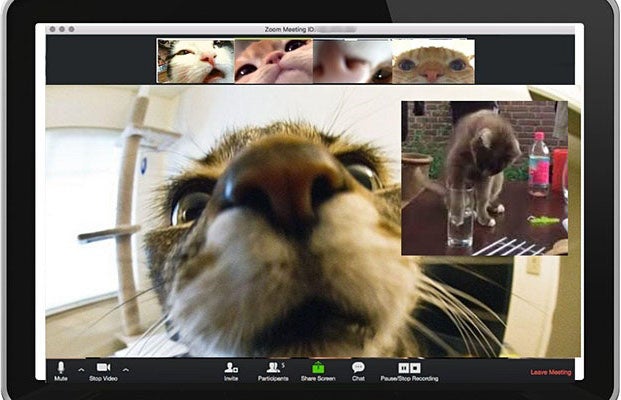
    On January 11, 2021 at 5:00pm PT, the Million Cat Challenge cats’ lives saved counter is on track to hit its 3,000,000th life saved. Three million cats that have been spared euthanasia and are instead happily hogging couches, napping on warm car hoods, and dunking their paws in water glasses across the continent.

    To celebrate, the cats are taking over the internet in an effort to double down and mark this historic moment with a world record: World’s Largest Online Toast!

    We only have a 15 minute window to get ‘er done, so tell your cat to be ready to roll at 5:00 pm sharp.

    People belonging to cats: Please have ready a tasty beverage for you and a smelly treat for your cat so we raise a can to 3 million cats saved by North American shelters participating in the Million Cat Challenge!

    People not yet belonging to cats: Don’t forget a beverage of your choice!

    Register here: https://www.eventbrite.ca/e/133136315303

    Zoom location: sheltermedicine.zoom.us

    Meeting ID: 991 1305 8370

    Password: 3M Cats

    One Tap Mobile:

    +16699006833,,99113058370# US (San Jose)

    +12532158782,,99113058370# US (Tacoma)

    Dial by your location

    +1 669 900 6833 US (San Jose)

    +1 253 215 8782 US (Tacoma)

    +1 346 248 7799 US (Houston)

    +1 646 876 9923 US (New York)

    +1 301 715 8592 US (Washington D.C)

    +1 312 626 6799 US (Chicago)

    Link: Click Here to Join

    Bye for meow,

    Team Million Cat Challenge

    WEBSITE LINK:  https://www.eventbrite.ca/e/133136315303

  • Online Course – Starts 3/7/21 – Feline Behavior Solutions: Teaching Foundation Behaviors for Modifying Behavior – IAABC (fee applies)

    Online Course – Starts 3/7/21 – Feline Behavior Solutions: Teaching Foundation Behaviors for Modifying Behavior – IAABC (fee applies)

    About the Course

    Modification of any problematic or unwanted behavior requires mechanical skill, knowledge of species-specific behavior, and experience with a variety of strategies and techniques. This course will provide opportunities for anyone who works with cats to gain all of that, and more. Each of the five weeks is packed with information that can be directly and immediately applied to a variety of cat behavior cases, from aggression to anxiety and from fighting to fear. This course was created for cat behavior consultants who are looking to take on more advanced cases, or cat lovers simply looking to teach cats specific skills. Content is relevant to anyone who works with cats in a professional, volunteer, or personal capacity.


    Date Register
    Course Begins: March 7, 2021
    Duration: 5 weeks
    Instructor: Katenna Jones, ACAAB, CCBC
    Register Now


    Required Course Materials

    • Access to at least one cat throughout the duration of the course that
      • is social and friendly
      • has not been previously, formally trained
      • is food, touch, praise, or toy motivated
      • Access to multiple cats is recommended as a “backup” in case your primary isn’t feeling well or isn’t in the mood to train
    • Ability to record, trim, and upload videos with audio of cat training sessions
    • Clicker (iClick recommended)
    • Target stick (to be discussed in week 1, can be made or purchased – check out example here)
    • Cat rewards (to be discussed in week 1)

    Weekly Content

    Week 1 – Tools, Techniques, and Targets

    We begin this course with a review of various tools, techniques, and tips that can be useful when addressing feline behavior problems.

    Week 2 – Improving Mechanical Skill

    This week students will learn about setting criteria, adjusting rates of reinforcement, assessing progress, DRI/DRO/DRA, and more.

    Week 3 – Building Toward Useful Behaviors

    This week, students will learn how to take target training to the next level and begin teaching cats skills that can be applied to the real world.

    Week 4 – Achieving Fluency

    This week, students will learn to assist their cats in becoming fluent in the behaviors they have been working on throughout this course.

    Week 5 – Critical Self-Assessment

    This week, students will critically self-assess their work throughout this course to identify where they excelled, where they succeeded, and where they could have been done better.

    Recommended Supplemental Materials

    • What is My Cat Saying? Feline Communication 101 (Munera) DVD
    • Understanding Cat Behavior (Roger Tabor)
    • Clicker Training for Cats (Karen Pryor)
    • Starting from Scratch: How to Correct Behavior Problems in Your Adult Cat (Pam Johnson-Bennett)
    • Twisted Whiskers: Solving Your Cat’s Behavior Problems (Pam Johnson-Bennett)

    Prerequisites

    • Understanding of and ability to effectively marker train (any species)
    • Understanding of and ability to effectively train “target” or “touch” (any species)

    * Experience with cats not required

    Class Schedule

    This five-week course will begin on the specified start date. Students will have access to the course material for 60 days after the course ends.

    Course Completion/CEU Requirements

    Auditors must review all course material. This will be verified in the Learning Management System.

    Full Students must complete the homework assignments and participate in forum discussions. Students should expect to spend an average of 4 hours per week on course material and viewing, depending on individual speed of learning and the week’s materials.

    Registration Information

    Auditor Full Student
    CEUs 5.5 (CCPDT, IAABC, KPA) 9.5 (CCPDT); 12.5 (IAABC, KPA)
    Member Cost $174* $274*
    Non-Member Cost $199 $324

    *IAABC Members – log into your member account for the discount code

    Online Course Cancellation Policy

    • Full refunds available more than 30 days before program start.
    • 50% refund available 16 – 30 days before program start.
    • No refunds available 15 or fewer days before program start.

    About the Instructor

    Through her business Jones Animal Behavior, Katenna Jones provides private dog and cat behavior consulting services, group classes, and seminars at both local and national events. Katenna is the former Director of Educational Programs for the Association of Professional Dog Trainers, Animal Behaviorist for the American Humane Association, and Behaviorist and Investigator for the RISPCA.

    She has been involved in animal sheltering and rescue since 2000, is a disaster responder, is author of Fetching the Perfect Dog Trainer: Getting the Best for You and Your Dog and has contributed to numerous local and national publications.

    Katenna earned her Master’s from Brown University where she studied animal behavior, learning and cognition. She is an Associate Certified Applied Animal Behaviorist, Certified Cat and Dog Behavior Consultant, and Certified Pet Dog Trainer.

    She shares her RI home with her husband, two adopted cats, and adopted dog.

    If you have questions, email us at courses@iaabc.org.


    WEBSITE LINK:  https://m.iaabc.org/courses/feline-behavior-solutions/

  • Online Course – Starts 2/8/21 – Stress and the Animal in Front of You: The Impact of Stress on Behavior – IAABC (fee applies)

    Online Course – Starts 2/8/21 – Stress and the Animal in Front of You: The Impact of Stress on Behavior – IAABC (fee applies)

    This course will help animal behavior consultants understand the impact of stress on animal behavior at each life stage and apply this information to working directly with those animals.

    Date Register
    Course Begins: February 8, 2021
    Weekly online meetings begin: February 15th at 7pm EST
    Duration: 4 Weeks
    Instructor: Kristina Spaulding, PhD, CAAB
    Register Now
    Auditors may learn from other students but will not receive instructor feedback.
    Auditors do not attend online meetings and meetings are not recorded.

    About the Course

    This course will help you:

    • Define and recognize indicators of stress
    • Identify and distinguish between the different types of stress
    • Appreciate the impact of stress on the brain and behavior over the course of an animal’s life
    • Describe the basic physiology of stress
    • Apply what you learn to your own training and behavior cases

    Class Schedule

    This is a 4-week instructor-led course. Each week includes a recorded lecture, a scheduled live discussion, recommended readings, and guiding questions. Knowledge of the lecture material will be assessed through participation in course discussions. Students will have access to the course material for 60 days after the course ends.


    Course Completion/CEU Requirements

    To receive CEUs and/or a certificate of completion:

    Auditors must review all course material. This will be verified in the Learning Management System.

    Full Students must review all course materials, visit the learning site/discussion forum regularly (at least three days per week), attend the four weekly class meetings, and prepare responses to a set of guiding questions for each weekly class meeting discussion. Students who miss more than one meeting will not receive credit for the course.

    Students should expect to spend an average of 2 hours per week on course material and viewing, depending on individual speed of learning and the week’s materials.


    Registration Information

    Auditor Full Student
    CEUs 5 (CCPDT, IAABC, KPA) 9 (CCPDT, IAABC, KPA)
    Member Cost $159* $239*
    Non-Member Cost $179 $279

    *IAABC Members – log into your member account for the discount code


    Online Course Cancellation Policy

    • Full refunds available more than 30 days before program start.
    • 50% refund available 16 – 30 days before program start.
    • No refunds available 15 or fewer days before program start.

    About the Instructor

    Kristina Spaulding, PhD, CAAB has a PhD in biopsychology – the study of the biological basis of behavior – and is a Certified Applied Animal Behaviorist through the Animal Behavior Society. She specializes in stress and behavior, social cognition and emotion, positive welfare and the prevention and treatment of behavior problems in dogs. In addition to her academic background, she has been in the dog training and behavior profession since 2000. She currently splits her time between private behavior work and teaching other dog trainers and behavior consultants online and through seminars and conferences.

    In addition, Dr. Spaulding is a member of the IAABC Foundation Board. She is also a member of the Fear Free Advisory Group and an authorized Speaker for Fear Free, an organization that advocates for minimizing fear, anxiety and stress for pets at vet clinics, groomers and training facilities. She also chairs two task forces for Meeting of the Minds, a coalition of top dog professionals across the country charged with improving the quality of life for our dogs.

    Before opening Smart Dog, Dr. Spaulding earned her B.S. in Wildlife Ecology at the University of Wisconsin – Madison. In college, she volunteered for a year at the local humane society. She was then hired by the same shelter. During her time at the animal shelter, she and a coworker established a training program for shelter dogs and their volunteer walkers to help make the dogs more adoptable. She also served as an assistant trainer at Dog’s Best Friend which was owned at that time by Certified Applied Animal Behaviorist Dr. Patricia McConnell.


    If you have questions, email us at courses@iaabc.org.


    WEBSITE LINK:  https://m.iaabc.org/courses/impact-stress-behavior/