Shelter Learniverse and Industry-Wide Calendar

Blog

  • Webinar – 12/10/20 – Fighting like Cats & Dogs: Dealing with Interspecies Aggression – Katenna Jones – FDSA (fee applies)

    Webinar – 12/10/20 – Fighting like Cats & Dogs: Dealing with Interspecies Aggression – Katenna Jones – FDSA (fee applies)

    Date: Thursday, December 10, 2020
    Time: 3pm Pacific Time (Click here for time at FDSA (Pacific Time).
    Fee: $19.95 – Registration required PRIOR to scheduled presentation time.

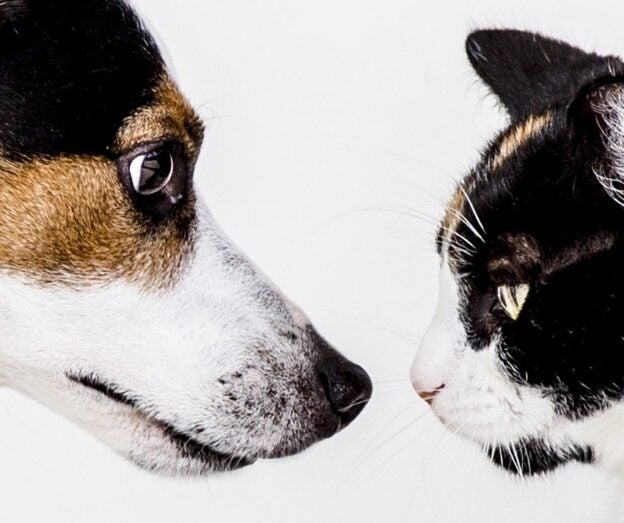
    You’ve heard the saying – “they were fighting like cats and dogs!” So often images depict dogs chasing cats and the cats running in terror like this is just the accepted norm. Well do I have good news for you (and your pets!). Quite often canines and felines can cohabitate in harmony – or at least mutual acceptance – by taking specific measures. This webinar will review steps for appropriate introductions when adding a new pet, as well as interventions if they already live together. The goals here are to reduce stress, increase safety, and improve happiness for all species involved.

    WEBSITE LINK:  https://www.fenzidogsportsacademy.com/index.php/self-study/webinars

  • Webinar – 12/3/20 – Is it fear, anxiety, or something else? – Sharon Carroll – FDSA (fee applies)

    Webinar – 12/3/20 – Is it fear, anxiety, or something else? – Sharon Carroll – FDSA (fee applies)

    Date: Thursday, December 3, 2020
    Time: 6pm Pacific Time (Click here for time at FDSA (Pacific Time).
    Fee: $19.95 – Registration required PRIOR to scheduled presentation time.

    Currently there are a range of psychopathologies described in dogs. These include canine-PTSD, depressive-like conditions, ADHD-like disorders, canine compulsive disorder and a range of specific anxiety conditions and phobias. Each of these disorders is characterized by the presence of a collection of specific individual behaviors.

    Some of the individual behaviors occurring in the above disorders are abnormal at any time, whilst many are normal under certain circumstances.
As we all become more aware of canine emotions, and we strive to ensure the psychological wellbeing of our dogs, it can become increasingly difficult to know what’s normal and what’s not.

    When working out what’s normal, it needs to be remembered, that whilst there is a lot of discussion on the impact of genetics on behavioral pathologies, normal behaviors have a genetic basis as well (i.e. breed-related behaviors). These can include such traits as hypervigilance to movement, consistently high energy levels, low frustration thresholds, rapid escalation to high arousal, owner guarding behaviors, and provocation by the presence of unknown dogs or people.

    So, when we see a dog lunging and barking at an approaching stranger, they may be demonstrating fear-based behaviors, but there may be another cause entirely. We need to ensure we are correctly identifying the emotion behind the behavior, so we can select the correct training approach. Using an incorrect strategy may be ineffective or it could even allow the behavior to escalate further. Looking at the individual behaviors more closely, and through a more objective lens, we can ensure each dog receives the help it needs.

    In this webinar we will discuss fear, anxiety, frustration and over-arousal. We will look at common genetic traits that can lead to behavioral issues, and discuss various behavior-modifying techniques for reactivity, and the performance of aggressive behaviors toward people and dogs. We will also identify key behaviors that indicate it is time to seek out help from a veterinary behavior specialist.

    WEBSITE LINK:  https://www.fenzidogsportsacademy.com/index.php/self-study/webinars

  • Webinar – 12/3/20 – UF VETS – Emergency and Disaster Response in a Pandemic – Virox

    Webinar – 12/3/20 – UF VETS – Emergency and Disaster Response in a Pandemic – Virox

    During this session, members from the University of Florida’s Veterinary Emergency Treatment Service will share how their unit has responded to state disasters and local emergencies in the past, and what has changed since COVID-19. This discussion will include how to prepare for a disaster impacting your community, as well as how to get involved in emergency and disaster response.

    Dr. Lawrence “Larry” Garcia is a Clinical Assistant Professor and the Medical Director for the Veterinary Emergency Treatment Service (VETS) team at the University of Florida College of Veterinary Medicine.  Prior to joining the university, Dr. Garcia was a shelter veterinarian in a large county shelter in South Florida.  While in this role, Dr. Garcia participated in a multiple response drills and provided veterinary insight for county emergency protocols and procedures.  Before, during, and after disasters he served the county emergency management ESF17 division in the EOC as well as guidance for shelter and field operations. In his role as UF VETS Medical Director, Dr. Garcia oversees medical and pharmaceutical inventory, equipment maintenance, protocol writing, medical oversight, training and team leadership.  He has participated in several disaster response exercises and led a state requested field hospital deployment. As a faculty member, Dr. Garcia has developed and implemented two clinical clerkships in which third and fourth year veterinary students are fully integrated into municipal animal shelter operations. He also teaches a graduate level Introduction to Veterinary Disaster Response.

    Brandi Phillips first began working with the UF Veterinary Emergency Treatment Service in 2011 as a curriculum specialist. Phillips leads animal technical rescue training provided to first responders throughout the state of Florida. Over the years, Phillips responded to numerous technical rescue calls involving dogs, cows, and horses. She has also cross trained in other technical rescue disciplines, including rope rescue, confined space, and swiftwater rescue. She serves as a subject matter expert on the NFPA committees for technical rescue (1006 and 2500) and the Florida State Agricultural Response Team (SART) steering committe​​​​​​​e. Phillips also deploys as support staff for the veterinary disaster response team, and serves as public information officer for the team.

    WEBSITE LINK:  https://event.webinarjam.com/register/178/1nzgktx7

  • Webinar – 12/8/20 – Ringworm Cats and Kittens: From Fungus to Forever Homes – Missouri Coalition of Animal Care Organizations

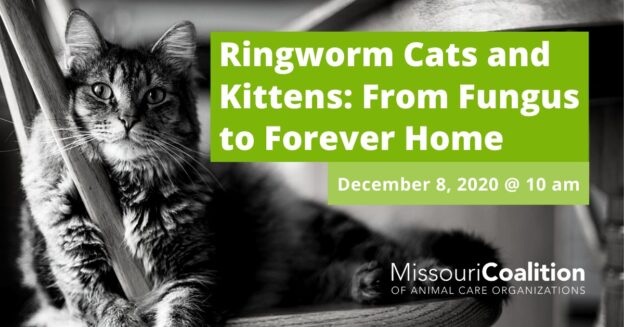
    Webinar – 12/8/20 – Ringworm Cats and Kittens: From Fungus to Forever Homes – Missouri Coalition of Animal Care Organizations

    The Missouri Coalition of Animal Care Organizations welcomes cat expert Stephanie Stryker to discuss deliberate and thoughtful housing ideas for ringworm cats inside the shelter so they are accessible and noticed by adopters. She’ll discuss how to market/counsel adopters on ringworm cats and what to do to set them up for success when they leave the shelter. Recommended treatments and our in-home care handouts will be included.

    Stephanie has been working in animal welfare since 2011, in both Arizona and Utah, and she started as an “all around” cat staff in a nonprofit rescue shelter where they did daily care, medical treatment, adoptions, and store transports. Then she worked at a sanctuary where she worked primarily with Feline Leukemia cats, providing care and medical treatment. That was followed by 3 years working in and overseeing a community cat program alongside Pima Animal Care Center where she is now the Cat Programs Coordinator, overseeing the adoption and behavior programs for the in-shelter cats.

    The Missouri Coalition of Animal Care Organizations seeks to transform the collective impact of animal welfare organizations through a collaborative network that supports Missouri’s companion animals and their communities. We’re conducting regular calls to help connect animal advocates in our community and elevate our knowledge of progressive strategies to support pets and their families. You can join our movement by becoming a member of the Coalition today! www.missourianimals.org

    WEBSITE LINK:  https://fb.me/e/3bNQnTCec

  • Online Course – 1/12/21 and 1/19/21 – A Fresh Look at the Management of Osteoarthritis in Dogs – CVMA (fee applies)

    Online Course – 1/12/21 and 1/19/21 – A Fresh Look at the Management of Osteoarthritis in Dogs – CVMA (fee applies)

    This seminar is open to veterinarians, veterinary technicians, veterinary hospital staff, and veterinary students only.

    Course Description

    A Fresh Look at the Management of Osteoarthritis in Dogs
    Osteoarthritis (OA) commonly affects dogs, most often because of a handful of orthopedic diseases. Unfortunately, there is little standardization in the detection, staging, and management of OA. This presentation will focus on the sources of OA in dogs, the impact of OA on limbs and mobility in dogs, the management options that positively impact dogs with OA, and the principles and logistics of long-term OA management programs. The functional stages of OA and management steps to consider at each of these stages will be discussed. At the end of this presentation, veterinarians will be comfortable with screening dogs for OA, staging OA in affected dogs, discussing the impact of classic forms of OA management, and developing a management program adapted to the dog and its owner.

    Speaker

    Denis Marcellin-Little, DEDV, DACVS, DACVSMR

    Dr. Marcellin-Little is professor of small animal orthopedic surgery at the University of California, Davis, where he is Small Animal Orthopedics Service Chief. He recently completed a year as chair of the Faculty of the School of Veterinary Medicine. Dr. Marcellin-Little graduated from veterinary school in Toulouse, France and completed a surgical residency at North Carolina State University (NC State). After his residency, Dr. Marcellin-Little taught at NC State for 24 years and moved to UC Davis in 2017.

    Dates and Times

    Tuesday, January 12, 2021 | 12:30 PM-1:45 PM
    Registration, cancellation, and substitution deadline: January 6, 2021.

    Tuesday, January 19, 2021 | 5:30 PM-6:45 PM
    Registration, cancellation, and substitution deadline: January 13, 2021.

    Price

    CVMA Members Non-Members
    DVM: $49 DVM: $79
    RVT/Veterinary Staff: $25 RVT/Veterinary Staff: $45
    DVM/RVT Student: $20 DVM/RVT Student: $20

    Registration

    3 ways to register:

    This course qualifies for 1.5 hours of interactive learning. Each paid registrant will be allowed access via one phone line and one log-in and will receive a certificate upon completion. An email will be sent to the registered attendee with login information on how to begin the webinar. CVMA reserves the right to invoice those individuals and/or organizations that are logged in or connected from telephone numbers that don’t correspond to a paid registration. This course is open to veterinarians, technicians and hospital staff.

    If multiple registrants intend to view the online seminar together under one log-in, please contact the CVMA office for an attendance form at 800.655.2862 or email staff@cvma.net.

    Terms and Conditions

    Cancellation/Refund Policy: All cancellation requests must be made in writing and submitted by fax, email, or regular mail no later than the date advertised above to receive a full refund, less a 10 percent administration fee. No refunds will be issued for cancellations received after the above cancellation date.

    Attn: Meetings & Events Department
    California Veterinary Medical Association
    1400 River Park Dr, Ste 100
    Sacramento, CA 95815
    By fax: 916.646.9156
    By email: staff@cvma.net

    • Webinar login is for use by the attendee only and login/passwords provided by CVMA should not be shared with others; doing so may hinder your own access, as webinar entry is by pre-registration only.
    • Course materials provided by CVMA is for use by the registered attendee only and should not be reproduced or shared with others.
    • The virtual platform CVMA uses allows audio, documents, materials, chat and Q & A exchanged or viewed during the session may be recorded. By joining a session, you automatically consent to such recordings.
    • CVMA and its service provider of audio and online conferencing services are not responsible for unauthorized access to such information by hackers or others that obtain access through illegal measures.

    If you have any questions, please call the CVMA office at 800.655.2862.

    WEBSITE LINK:  https://cvma.net/learning/cvma-ce-programs-2/online-seminar-osteoarthritis-january-12-19-2021/

  • Online Conference – 2/20/21 to 2/21/21 – Fear Free Pet Behavior Symposium – San Francisco SPCA

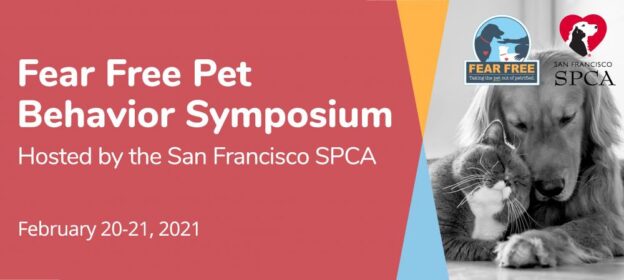
    Online Conference – 2/20/21 to 2/21/21 – Fear Free Pet Behavior Symposium – San Francisco SPCA

    You are invited to the virtual Fear Free Pet Behavior Symposium Hosted by the San Francisco SPCA.

    Over two days, the best minds in veterinary medicine will present to three focused audiences: Shelter Personnel, Pet Guardians, and Veterinary Professionals.

    Featuring renowned Fear Free founder Dr. Marty Becker, SF SPCA leading Board-Certified Veterinary Behaviorists Dr. Jeannine Berger and Dr. Wailani Sung, and a variety of Fear Free experts from the veterinary and shelter world, this virtual symposium will focus on the practical and environmental concepts of Fear Free as well as the latest strategies and processes demonstrated in veterinary clinics and shelters today; RACE CE credit will be available for both the shelter and veterinary sessions. Pet Guardian audiences will be treated to insights on how Fear Free practices can elevate animal interactions at home and in pet care environments.

    Join us to learn about the most relevant veterinary, shelter, and pet care practices and innovations happening today.

    Saturday, 02/20/2021
    Shelter Personnel $149.00
    Pet Guardians $9.99

    Sunday, 02/21/2021
    Veterinary Professionals $295.00

    The shelter and veterinary track sessions will all be submitted for RACE approval. The Shelter Personnel track will be approved for 8 RACE-approved CE hours and the veterinary professional track will be approved for 16 RACE-approved CE hours. All registrants will have on-demand access to their registered track sessions for 90 days following the live event.

    WEBSITE LINK: https://conferenceondemand.net/spca/fearfree2021

  • Webinar – 1/21/21 – Preserving the Bond: the Veterinarian’s Role in Pre-Empting Animal Cruelty – NACA/Justice Clearinghouse

    Webinar – 1/21/21 – Preserving the Bond: the Veterinarian’s Role in Pre-Empting Animal Cruelty – NACA/Justice Clearinghouse

    When a low-income client presents a severely neglected animal to a veterinarian for treatment, the doctor faces a difficult conundrum: is it their duty to protect the animal from continued neglect, or is it their duty to help the person who may be struggling financially to care for their animal? In states where veterinary reporting of animal cruelty is mandatory, the stress this ethical dilemma can put on a veterinarian is significant. Throughout this webinar, the presenters will discuss the veterinarian’s role in both preserving the human-animal bond and addressing animal cruelty resulting from poverty.


    Webinars in this Series with the ALDF include:


    Or click here to view and register for other upcoming NACA  webinars on the JCH Platform.


    The National Animal Care & Control Association (NACA) was formed in 1978 for the express purpose of assisting its members to perform their duties in a professional manner. We believe only carefully selected and properly trained animal control personnel can correct community problems resulting from irresponsible animal ownership. NACA’s purpose is to preserve the Human/Animal Bond by insisting on responsible animal ownership.


    Founded in 1979, the Animal Legal Defense Fund’s mission is to protect the lives and advance the interests of animals through the legal system. The Animal Legal Defense Fund accomplishes this mission by filing high-impact lawsuits to protect animals from harm, providing free legal assistance and training to prosecutors to assure that animal abusers are held accountable for their crimes, supporting tough animal protection legislation and fighting legislation harmful to animals, and providing resources and opportunities to law students and professionals to advance the emerging field of animal law.


    Presenters:

    Dr. Kris Otteman brings 34 years of veterinary and leadership experience to her current role as Senior Advisor to the Oregon Humane Society and Veterinary Leadership and Forensics Expert. She is also a courtesy faculty member for Oregon State University College of Veterinary Medicine and a board-certified specialist, ABVP Shelter Medicine, and a Certified Animal Welfare Administrator.

    As a member of the senior leadership team at OHS for 14 years, she lead the development of the Shelter Medical Services including the teaching program for Oregon State University, College of Veterinary Medicine, and for Veterinary Forensics Services.

    The OHS Animal Medical Learning Center, the nation’s first shelter teaching hospital, cares for over 12,000 shelter pets annually, provides over 5,000 low-income spay-neuter, and wellness services, and houses a comprehensive veterinary forensic team posed to provide onsite or field services.

    As co-founder of Banfield, The Pet Hospital, her background also includes seven years in a mixed animal practice in southern Oregon. Her broad experience at Banfield included executive leadership and management as well as a strategic partnership with PetSmart Charities on national fundraising and adoption initiatives. She has served on the board for Cat Adoption Team, as a trustee of Banfield Charitable Trust, and has been a member of the Oregon Veterinary Medical Licensing Board. Dr. Otteman is a Charter Member of the International Veterinary Forensic Sciences Association, served on the National Shelter Medicine Organizing committee, and most recently was awarded the OSU/CVM Alumni Fellow award for her work in the profession that has advanced and improved veterinary education and the partnerships between animal welfare and veterinary professionals.


    Linda Fielder has over 20 years of experience as an animal welfare specialist, 15 of which were spent at the Oregon Humane Society. As Director of Shelter Medicine and Humane Investigations there, Linda oversaw every aspect of animal cruelty cases from the point they were first reported through the victim animals’ recovery and rehoming. A Certified Animal Welfare Administrator and a Certified Property and Evidence Specialist, Linda’s expertise in veterinary medicine and humane care and treatment of animals combined with her understanding of evidence collection and handling, resulted in successful large scale criminal seizures involving livestock, dog breeders, fighting animals and animal hoarding scenarios. She has extensive experience in developing and implementing procedures that preserve both the wellbeing of the animals and the integrity of the criminal case.

    In addition to supervising a fully operational 12,000 square foot veterinary teaching hospital and a law enforcement division with statewide jurisdiction, Linda also conceptualized and oversaw OHS’ Emergency Animal Sheltering certification program, one of the first in the country, which enabled staff and volunteers to respond nationwide to natural disasters and large scale cruelty cases. She created the annual Victim to Verdict conference which was the first in the region to bring together multi-disciplinary players in animal cruelty cases for training.

    Linda has trained veterinarians, prosecutors, and law enforcement professionals from across the globe in crime scene processing, large-scale seizures, and link between animal cruelty and human violence.


    Senior Staff Attorney Emily Lewis works directly with law enforcement agencies, prosecutors and rescue groups providing direction and support for all aspects of criminal animal cruelty investigation and prosecution.  She supports front-line responders by training and consulting on search warrant drafting, evidence collection and scene processing best practices.

    Emily joined the Animal Legal Defense Fund after serving as staff attorney for the Oregon Humane Society Humane Law Enforcement Division, where she directly participated in hundreds of animal cruelty investigations, including the raid of a massive animal-fighting compound, cases involving large-scale neglect of livestock, and all manner of  puppy mill and animal hoarder scenarios. It is this firsthand experience that has given her such a deep understanding of animal cruelty casework and prosecution. At the Capital, Emily was integral in the passage of a number of important animal protection bills including stricter laws prohibiting animal fighting, oversight of animal rescue entities, the Humane Agent Bill, increased cross reporting, and strengthening of pre-trial remedies available to animal care agencies or individuals. Emily’s work on these bills  — along with her implementation of the first legal internship program at the humane society and her support and training of agency officers, staff and veterinarians — contributed to the rise of the Oregon Humane Society as a national leader in the field of animal cruelty investigation and veterinary forensics, in particular. She has presented nationally and internationally on the importance of the veterinarian’s role in recognizing, reporting and responding to animal neglect and abuse.

    Emily holds a JD and Master of Studies in Environmental Law (MSEL) from Vermont Law School, where she graduated with honors and was awarded the Academic Excellence Award  in both Torts and Environmental Ethics. She earned a B.A. in Environmental Ethics & Policy and was awarded the Arthur Schoenfeldt Environmental Ethics and Policy Award from the University of Portland. She is a two time winner of Spot Magazine’s “Top Dog: Attorney” award (2014 and 2016).

    Emily is passionate about her role as a voice for animals and aiding in the pursuit of justice on their behalf.

    Based in Portland, Ore., Emily lives with her rescued Great Dane, Whiskey. She enjoys running, live music, visiting the Pacific Ocean coastline, and spends time on her weekends volunteering at the Family Dogs New Life Shelter.

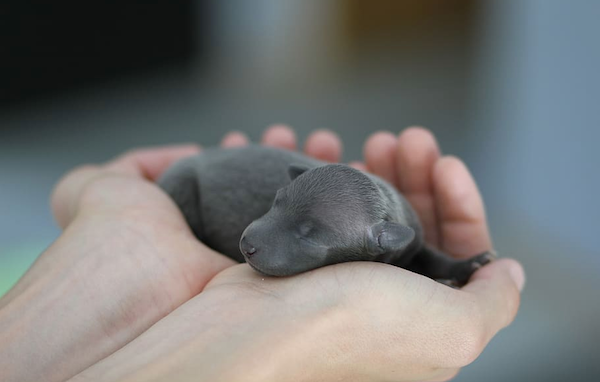
  • Online Course – Registration open until full – Course starts 2/2/21 – Medical Care of the Neonatal Puppy and Kitten: Those Important First Weeks – VIN (fee applies)

    Online Course – Registration open until full – Course starts 2/2/21 – Medical Care of the Neonatal Puppy and Kitten: Those Important First Weeks – VIN (fee applies)

    The lectures for this course will be presented in an audio format using a webinar platform.

    Presenter: Joni Freshman, DVM, MS, DACVIM
    Course Open: January 26-March 5, 2021
    Real Time Sessions (RTS): Tuesdays, February 2, 9, 16, and 23, 2021; 9:00-10:30 pm ET (USA)
    Course RTS Times in Your Area: World Clock Converter


    Level and Prerequisites: This basic course will be open to veterinarians actively interested in canine and feline neonatal care including husbandry and monitoring, physiologic differences, causes of illness in neonates, evaluation of ill neonates to include diagnostic testing, and treatment of ill neonates.
    VIN CE Course: Open to veterinarians. This course is approved by RACE for veterinarians. (RACE 20-799692)


    Course Information:
    Understanding and competency of neonatal differences in physiology, evaluation, care, response to treatment, and common afflictions is critical to the survival of these youngest patients. Importantly, ill neonates can die quite quickly if appropriate action is not taken in a timely manner. Many owners of pregnant animals have little knowledge of how to care for these small patients as well. This course will discuss the important aspects of home husbandry, the physiologic differences between neonates and older patients, the common causes of illness, evaluation and testing of ill neonates, and finally treatment of these tiny patients.


    Week 1 (Real Time Session February 2, 2021): Neonatal Husbandry and Physiology
    Presenter: Joni Freshman, DVM, MS, DACVIM
    Format: Audio
    Objectives: Upon completion of this session, the participant should be able to

    • Understand the basic care and monitoring needs for neonates in the home
    • Explain to owners of litters important management actions at home
    • Understand the physiologic differences between neonates and older puppies and kittens


    Week 2 (Real Time Session February 9, 2021): Causes of Neonatal Illness
    Presenter: Joni Freshman, DVM, MS, DACVIM
    Format: Audio
    Objectives: Upon completion of this session, the participant should be able to

    • Understand the variety of illnesses that commonly affect neonatal puppies and kittens
    • Form a differential diagnosis for the clinical signs presented in a neonatal patient
    • Understand the comorbidities that often occur in this context
    • Understand the pathology of common neonatal health conditions


    Week 3 (Real Time Session February 16, 2021): Evaluation of the Ill Neonate
    Presenter: Joni Freshman, DVM, MS, DACVIM
    Format: Audio
    Objectives: Upon completion of this session, the participant should be able to

    • Complete a physical exam on a neonatal puppy or kitten
    • Recognize clinical signs of the ill neonate
    • Understand what diagnostic steps can be taken on a neonate
    • Calculate the amount of blood to safely draw from a neonate
    • Make critical decisions on which tests are the most important for an ill neonate


    Week 4 (Real Time Session February 23, 2021): Treatment of the Ill Neonate
    Presenter: Joni Freshman, DVM, MS, DACVIM
    Format: Audio
    Objectives: Upon completion of this session, the participant should be able to

    • Determine treatment plans for the ill neonate
    • Implement care for the ill neonate, including intraosseous administration of medication or blood, intranasal oxygen administration
    • Understand administration of fluids and nutrition in the neonate
    • Understand medication alterations in the neonate.


    Successful completion (scoring 80% or better) on the end-of-course test is required to earn a certificate of completion for the course. To learn more about the requirements for earning a CE certificate, please refer to Receiving Your CE Credit and Course Completion Certificate.


    Course Materials: Course materials will be available in the course library prior to each Real Time Session.
    Required Textbook(s): There is no required textbook for this course.


    About the Presenter:
    Joni Freshman is a 1984 graduate of the Colorado State University School of Veterinary Medicine and Biomedical Sciences. She spent 6 months interning at the Denver Zoo, then completed a small animal medicine and surgery internship at Auburn University. She returned to CSU for a 3-year internal medicine residency and an MS in Clinical Sciences with her research in canine reproduction. In 1990 she became a Diplomate of the ACVIM. After managing reproduction centers in Los Angeles and Dallas (with semen freezing center) she returned to Colorado and joined a practice, opened a semen-freezing center, with a practice of 60% reproduction/neonatal and the rest internal medicine and general practice until 2001.


    All along Joni has presented continuing education to national and international professional audiences as well as breed clubs on the topics of reproduction/neonatal care and has authored numerous journal articles and book chapters in this field. In 2001 she left full-time practice to focus on her business, Canine Consultations, where she writes, teaches, speaks, is an expert witness, and consults in the field of small animal reproduction and neonatology. She is a reproduction, pediatrics, and genetics consultant for the Veterinary Information Network and consults for Antech Veterinary Laboratory for small animal reproduction and neonatology, and also for a variety of commercial companies.


    In 2003 she completed her veterinary acupuncture course at CSU and also operates AcuPets–a mobile veterinary acupuncture/manual adjustment/therapeutic laser practice that serves Colorado’s Pikes Peak area.


    Finally, she has been active with her Belgian Tervuren for over 34 years in conformation, agility, rally, scent work, obedience, coursing, barn hunt, and herding. Her AKC registered Zephyre Belgian Tervuren breeding program has produced Group winners and placers, Eukanuba award winners, the 2013 Top Owner Handled Belgian Tervuren, and High In Trial dogs in obedience, agility, herding, and scent work sport. Joni is an AKC licensed judge for the four Belgian Shepherd breeds and for AKC Scent Work and USCSS Scent work and judged conformation at the 2015 Belgian Tervuren National Specialty. She is currently training her seventh generation of breed champion and performance dogs.


    Total CE Credit: 6


    Tuition: Member $138 ($124 early bird special if enrolled by January 19, 2021)
    Non-Member $231 ($208 early bird special if enrolled by January 19, 2021)
    Prices are listed in US dollars.


    *To ensure participants are ready and prepared for classes, enrollment will close on February 2, 2021 at 5 pm ET (USA) or when the maximum number of participants is reached.


    *For more information on how online CE works, see the Participant Resource Center.


    To Enroll:

    1. Enrollment qualifications: VIN CE courses are open to VIN member and non-member veterinarians. Veterinarians enrolling in a VSPN CE course must be a VIN member. Veterinary support staff must be a VSPN member to enroll in a VSPN CE or a VIN CE course open to VSPN member enrollment.
    2. Each enrollee must be able to receive emails from @vspn.org and @vin.com addresses. Email is our major form of communication with participants; personal emails are highly recommended rather than clinic/hospital email addresses.
    3. Each person is individually responsible for his/her own registration. To ensure that all information received is secure and correct, please do not enroll for a course on behalf of another individual.
    4. For further assistance call 800-846-0028 ext. 797 or email . Please include the course title, your full name, and contact information in your correspondence.


    “This program (20-799692) is approved by the AAVSB RACE to offer a total of 6 CE Credits, with a maximum of 6 CE Credits being available to any individual veterinarian. This RACE approval is for the subject matter categories of: Medical, using the delivery method of Interactive-Distance: (Web-based, Teleconference or Audio-Conference). This approval is valid in jurisdictions which recognize AAVSB RACE; however, participants are responsible for ascertaining each board’s CE requirements.”


    Course withdrawal and refund policy: A complete refund of the paid course price will be issued when your withdrawal request is received prior to the listed start date of the course. If you wish to withdraw after the start date please contact the VIN office 800-846-0028 ext. 797 to discuss eligibility for a pro-rated refund.


    *For more information on VIN’s upcoming CE courses, check the VIN Course Catalog.


    Katherine James, DVM, PhD, DACVIM (SAIM)
    VIN Education Director


    VIN CE Services:
    800-846-0028 or 530-756-4881; ext. 797
    or direct line to VIN/VSPN from the United Kingdom: 01 45 222 6154
    or direct line to VIN/VSPN from Australia: 02 6145 2357
     

    WEBSITE LINK:  https://www.vin.com/ce/REPR300-0121.htm

  • Webinar – 12/17/20 – Shelter Behavior Roundtable: Supporting Shy and Fearful Cats in the Shelter and at Home – ASPCAPro

    Webinar – 12/17/20 – Shelter Behavior Roundtable: Supporting Shy and Fearful Cats in the Shelter and at Home – ASPCAPro


    About this Webinar

    With more shelters opening up to visitors, you’re likely placing more cats in new homes, and some of these cats may need some extra help with the transition. Join the ASPCA Learning Lab and colleagues in the field for a roundtable discussion where your questions will be answered via live Q&A. During this session, you’ll have the opportunity to engage with experts on methods that will help your shy and fearful feline friends feel at home wherever they are.

    Takeaways

    • Setting up a welcoming space at your shelter
    • Safely transitioning from the shelter to their new home
    • Best practices when creating a welcoming and safe environment in their new home

    Suited For

    Animal behavior and shelter professionals

    Credits

    This presentation has been approved for 0.5 CEUs for trainers and 0.5 CEUs for behavior consultants by the CCPDT.

    WEBSITE LINK:  https://www.aspcapro.org/training/webinar/shelter-behavior-roundtable-supporting-shy-and-fearful-cats-shelter-and-home

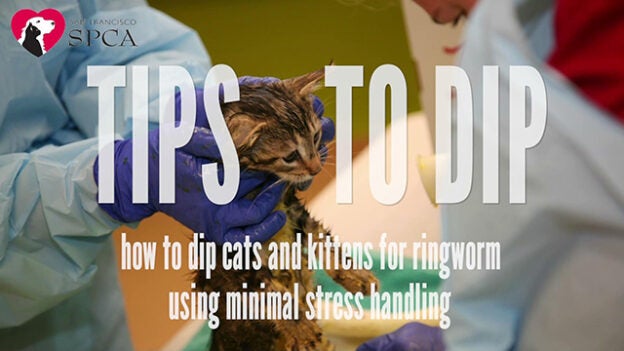
  • Tips to Dip: Best Practices for Ringworm Treatment

    Tips to Dip: Best Practices for Ringworm Treatment

    Ringworm is not a worm. A lime sulfur “dip” doesn’t involve lowering a kitten into a bucket of liquid. You don’t have to be the San Francisco SPCA’s Laura Mullen to know that.

    But you do have to be Laura Mullen, CAWA, to combat dermatophytosis in animal shelters by creating a program known as SPORE (Shelters Preventing Outbreaks of Ringworm through Education). Since 2013, Laura has trained folks from dozens of shelters how to prevent and manage the disease.

    To further her fungus-fighting mission, last month Laura gave a presentation to California shelters during our weekly CASCAR Zoom call. CASCAR, a group formed in response to COVID-19, gives animal shelter leaders in California and KSMP team members a chance to meet regularly and support each other through this challenging time.

    Laura’s presentation focused on empowering volunteers to safely foster cats and kittens with ringworm. Soon after, Laura shared a ringworm treatment video with us that we want to share with you.

    Find “Tips to Dip: How to Dip Cats and Kittens for Ringworm Using Minimal Stress Handling” at sheltermedicine.com in the Treating Ringworm chapter of the Ringworm Guidebook in our online resource library.

    Thanks to Laura and the SF SPCA for spreading the word about how not to spread ringworm!