It’s back! Get ready for Our 7th Online Cat Conference.
Each year, the worldwide Community Cats Podcast community joins together at this unique virtual event—no travel required! During three comprehensive days of cat-centric content, speakers from a wide variety of roles in animal welfare will give you their perspective on the industry and valuable information that will help you or your organization create a more humane world for community cats.
Early bird registration is just $50 (increases to $75 in December so don’t wait!) and includes access to the live event and recorded sessions after the event, as well as speaker slides, handouts, and more.
#ThanksToMaddie we have several scholarships available for folks helping cats in the United States. If you would like a scholarship please fill out this short form below. Scholarships are limited.
The animal protection field is both incredibly rewarding and challenging. This webinar will discuss the causes and symptoms of compassion fatigue and provide a suite of skills for building and maintaining a healthy and intentional culture of skillful communication, openness, and personal responsibility.
Topics to be covered:
A shared language and understanding of the causes and symptoms of compassion fatigue
Skills that can be used to build and maintain a healthy and intentional culture
Communication, openness, and personal responsibility related to compassion fatigue
This webinar has been certified by the National Animal Care & Control Association and is approved for1 Continuing Education Unit. Please refer to your NACA membership portal for current CEU submission process. Current NACA Members who attend the live presentation or watch the recording will be able to download a jointly issued attendance certificate that includes the National Animal Care & Control Association logo. Visit the NACA training page for a complete list of future trainings.
About the Presenter:
Hilary Anne Hager is the Vice President of Outreach, Engagement and Training for the Humane Society of the United States. She has spent the last twenty years in the animal protection field, working at two different animal shelters, volunteering in wildlife rehabilitation, and as a member of the board of directors for several organizations, including a chimpanzee sanctuary, a “friends-of” nonprofit group supporting a municipal shelter, and a state federation of animal welfare organizations. She teaches compassion fatigue workshops around the country to help provide members of the animal protection community the support and resources to maintain their own well-being while working in a challenging and emotionally-charged environment. Hilary holds a master’s degree in Nonprofit Leadership from Seattle University.
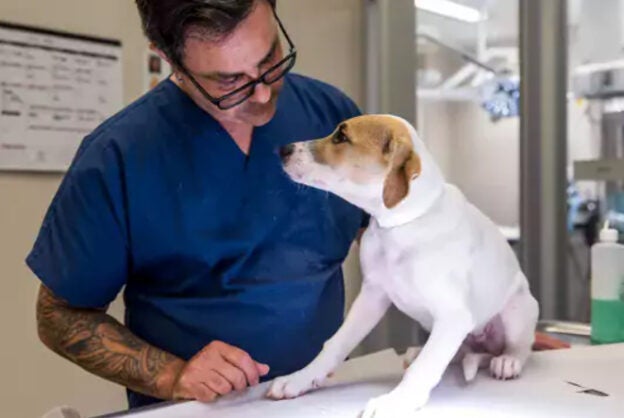
What to do about canine dental health is one of the hottest topics in accessible veterinary care today. While everyone agrees that all dogs would benefit from regular dental procedures, the cost of dental care (including digital dental radiography) is well beyond the reach of many pet owners. Many shelter and community clinics provide some dental care to patients but often do so with guilt and conflict about not being able to provide the extensive care needed (or even worry about practicing below the perceived standard of care).
In this webinar, we will present results from an ASPCA-funded study that investigated the impact of dental cleaning on the quality of life of canine patients. Additionally, we investigated how an empirical treatment plan (pulling any obvious loose or severely diseased teeth) compared to recommendations made from a blinded radiograph review. Finally, we documented the incidence of retained roots for dogs who had extractions and followed these dogs forward in time for 6 months. This project aimed to answer the question of whether or not providing some care was better than providing no care for patients with end-stage canine dental disease. As many dogs ideally need dental procedures as often as every year, it is essential to come up with an affordable approach.
Takeaways
Understand current controversies around canine dental care.
Be able to describe strategies to make dentistry procedures more efficient.
Discuss improving communication around dental care using spectrum of care approaches.
Credits
This program has been RACE approved for 1 hour of continuing education credit in jurisdictions that recognize RACE approval.
Camp Maddie is a new learning series beginning with a virtual half-day foster edition on Thursday, December 7, 9am-1 pm PT (12 pm-4 pm ET). At Camp Maddie, we will cover various topics in to-the-point presentations, panel discussions, strategy-sharing seminars, videos and question and answer sessions. The focus will be on recruiting foster caregivers for adult dogs. Presenters will discuss breaking down barriers in the foster field, how they recruit foster caregivers and provide insight into strategies they use to make fostering accessible in their communities.
Maddie’s Fund will also be giving $200 grants to (4) lucky participants who join us live at Camp Maddie: Foster Edition on 12/7!
Topics and featured programs include:
Dog Foster Recruitment Strategies that are Working Right Now
Low-Barrier Onboarding for High Community Engagement
Maximizing Placements through Collaboration at Operation Kindness
Expanding Foster Programs with Foster+ at Dallas Pets Alive!
Doggy Day Out Marketing Process at KC Pet Project
Foster Dog Social Events at Animal Welfare League of Arlington
Innovative Foster Caregiver Recruitment Techniques at Palm Valley Animal Society
Converting Pet Finders to Foster Caregivers at Austin Pets Alive!
and more!
Who should attend? Everyone is welcome! Camp Maddie is perfect for those interested or involved in existing foster care programs, foster coordinators, marketing, leadership and operations enthusiasts.
The University of Wisconsin Shelter Medicine Program is excited to announce the next installment of National Shelter Medicine Rounds!
National Rounds is a platform for discussion of current topics relevant to shelter medicine for continued learning and collaboration. While primarily intended or shelter veterinarians, others interested in shelter medicine are welcome to join; we believe everyone will take something away from these calls! The national rounds call will take place Tuesday, November 14 from 2:30 to 3:30 Central Time.
As discussed during our rounds conversation in August, if we really want to change the experiences of the animals and the people we serve, we need to think outside our shelter walls or the foster homes that make up our rescues.
Join us for a continuation of the discussion on the connection between equity, well-being, resources, and capacity.
We are grateful to have two guests join us for rounds next week. Angela Rayburn is the Operations Manager overseeing Field Services at Chicago Animal Care and Control and AJ Caldwell is a National Shelter Support Specialist with Best Friends Animal Society and comes to that role with a background of being an officer in municipal animal control. They will share their perspectives on efforts to implement more positive, resource-based field services operations.
We hope to have an open discussion, so come with questions and feel free to unmute to participate! Our hope is to create a space that feels safe for all participants; we ask you to follow these Accountable Space guidelines. The presentation portion of National Rounds will be recorded, but the discussion and Q & A sessions will not.
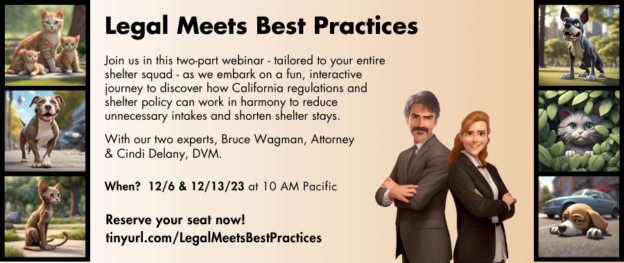
Legal Meets Best Practices: Translating California regulations into best practices that benefit you, your shelter, and the people and animals in your community.
Part 1 – December 6, 2023 – 10 AM to 11:30 AM Pacific
Part 2 – December 13, 2023 – 10 AM to 11:30 AM Pacific
Join us in this two-part series as we embark on a fun, interactive journey to demystify California’s legal landscape and discover how California laws and regulations can work in harmony with shelter policy to reduce unnecessary intakes and shorten shelter stays.
In this series, we will cut through the legalese, distill key takeaways, and provide you with practical, “what does this mean for me and my work?” guidance. If your shelter squad only ever attends one webinar series about how legal guidelines can be used to your advantage, let this be the one.
At the end of this series, you’ll understand how California laws and regulations should impact and inform best practices in how your shelter approaches critical areas including:
Improving Community Cat Programs
Getting lost animals home fast
Focusing intake on the neediest animals
Knowing intake & holding period requirements
Knowing who can do what in the shelter
Powered by partnership. This webinar is brought to you by the Maddie’sⓇ Million Pet Challenge Learniverse at the UC Davis Koret Shelter Medicine Program, San Francisco SPCA’s Shelter PALS program, and CalAnimals. By sharing our diverse expertise and working together to find the intersections where California law impacts animal shelters, we’ve formulated holistic shelter practices that allow you to better leverage the law.
Want to invite others to this webinar?
Download, print, and share this flyer and post it at your shelter to invite other staff members!
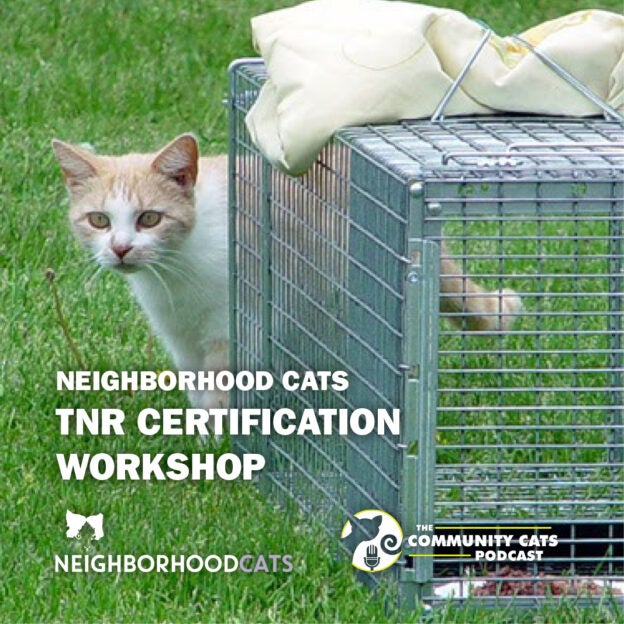
Are you ready to be part of the solution for feral and stray cats in your neighborhood? Our expert instructors will teach you best practices for Trap-Neuter-Return (TNR) and colony management. Learn what TNR is and why it works. We’ll cover getting along with neighbors, preparations for trapping, trapping itself (including entire colonies at once), feeding, providing winter shelter, and more. Take advantage of the interactive format, extensive handouts, and video footage of actual projects. Attendees will receive a certificate after taking a short quiz and gain access to an ongoing Facebook group for networking with other TNR activists. Instructed by Susan Richmond, executive director, and Bryan Kortis, national programs director. Session duration is 2.5 hours, followed by an optional 15-minute Q&A session. Workshops held monthly.
The Principles of Contemporary Animal Services certificate course is a great way to develop an understanding of the animal services profession by learning about the field’s history, current state, and future possibilities.
The certificate course is built around contemporary best practices provided by experts and organizations in the field to give you a well-rounded view of the profession. With course content curated by Best Friends Animal Society as well as leading practitioners and researchers in the field, you will have access to a wide range of earned expertise, perspectives, information, and resources.
Choose from two participation options:
POCAS Certification – successful completion earns an SUU Institutional Certificate and one Continuing Education Unit (CEU), $399
POCAS Fast Track – successful completion earns three credits that may articulate into undergraduate or participating master’s degree programs at Southern Utah University, $699
Best Friends Animal Society and Southern Utah University’s Cat Lifesaving Course is designed for anyone who wants to positively impact the lives of cats and kittens in shelters, whether you’re an animal services practitioner, volunteer, or advocate.
During this seven-week, university-endorsed, online course, you’ll learn from experts in the field and explore proven ways to save the lives of cats in animal shelters through adoption, community cat programming, foster programs, strategic intake, shelter medicine, and much more.
Join us as we empower you with the knowledge, tools, strategies, and steps to start making changes immediately, increase lifesaving, and enhance the well-being of cats in your care.
The Family Bondedness Scale (FBS) was designed to measure scores which represent the degree to which a person is emotionally and affectionately bonded to a pet as a member of their family. This presentation will cover the development and use of, and research to date on, the FBS when measuring equivalence between cat and dog owners. Dr. Nugent will go over the rationale for the scale, what it is intended to measure, how it was developed, how scores on the scale should be interpreted and how it should be scored and used. He will also discuss current research on the scale and the implications of the results in both veterinary research and practice.
This webinar has been pre-approved for 1.0 Certified Animal Welfare Administrator continuing education credits by The Association for Animal Welfare Advancement and by the National Animal Care & Control Association and has been submitted for approval for 1 hour of continuing education credit in jurisdictions which recognize the Registry of Approved Continuing Education (RACE) approval.
About the Presenter: Dr. Bill Nugent is a Professor at the College of Social Work, The University of Tennessee in Knoxville. He has been with the College of Social Work for over 30 years. He is former Director of the Ph.D. Program, and former Associate Dean for Research. His areas of specialization include measurement and quantitative methods. He has also been conducting research on the links between violent political rhetoric and violence, including mass shootings and police shootings of civilians. He and his wife ran a Great Dane rescue organization for a number of years, and he is one of few professors with a background as a catcher in a flying trapeze act.